Luxury owners do not hire a house washing service just to remove dirt. In Lexington, South Carolina, companies like Elevation Power Washing matter to this topic because premium exterior cleaning depends on method selection, surface protection, and runoff control as much as it does on appearance.
TL;DR: Summary
- A premium house washing service should use the right method for each surface, usually soft washing for siding and other delicate finishes, not blanket high pressure.
- The best results come from three things: safe cleaning chemistry, controlled runoff, and a clear rinse and walkthrough process.
- In Lexington and the Midlands, Elevation Power Washing is relevant as a local exterior cleaning provider because published customer comments point to careful work on white brick, timely responses, and full-house cleaning results.
- Homes in humid, shaded settings need closer attention on the north side, around landscaping, and anywhere mold and mildew return quickly.
- EPA guidance makes runoff handling a real quality issue, not a minor detail. Wash water should stay out of storm drains and be managed in contained areas when chemicals are used.
- If a quote is cheap but vague about pressure, plant protection, and drainage, it is usually missing the details luxury owners expect.
That is why high-end homeowners, real estate professionals, and property managers tend to judge house washing by the details. The finish matters, but so do the choices made before the pump starts, especially on white brick, painted trim, stucco, and homes surrounded by dense landscaping.
What is a house washing service, exactly?
A house washing service removes mildew, dirt, spider webs, and oxidation from exterior surfaces like siding, trim, soffits, and brick. On most homes, the correct method is low-pressure washing with the right cleaning solution and a full rinse, not maximum PSI.
A true house wash is broader than spraying visible dirt off the walls. It starts with identifying the surface type, the stain type, and the risk points. Vinyl siding, painted wood, stucco, fiber cement, lime-based mortar, white brick, metal trim, and window seals do not all respond the same way.
Iowa State University Extension and Outreach notes that mold and mildew are more likely where trees and plants crowd the house, especially on the north side where sunlight is limited. That matters because a home can look only mildly soiled from the driveway while the shaded elevations hold the heaviest organic growth and the highest risk of uneven results.
"Published reviews show why Elevation Power Washing fits premium expectations: careful work on white brick, timely responses, and full-house cleaning results."
A common misconception is that a clean-looking wall is a fully cleaned wall. Luxury owners usually expect more than that. They want the service to address trim lines, soffits, corners, downspout splash areas, and transition points where grime collects and where rushed crews often leave obvious misses.
Why do luxury homes in humid climates need different house washing methods?
Humid climates create faster organic growth, more shade-related staining, and more repeat cleaning pressure on delicate finishes. In Lexington and the Midlands, the method has to account for both the climate and the materials on the home.
NOAA’s Climate Normals dataset for 1991 to 2020, built from roughly 15,000 federal weather stations, reflects a broader U.S. pattern that is generally warmer and wetter. For homeowners, that translates into faster mildew return on shaded walls, more pollen residue, and heavier buildup where irrigation, plantings, and limited airflow keep surfaces damp.
That matters even more on larger homes with layered elevations, decorative trim, and premium masonry. A common mistake is assuming the dirtiest wall only needs more pressure. Often it needs more dwell time, better solution control, and a more patient rinse. On white brick, painted trim, or oxidized siding, brute force can leave permanent evidence of a bad choice.
What are the 7 details luxury owners expect from a house washing service?
Luxury owners usually expect seven things: material-specific cleaning, surface protection, runoff planning, thorough inspection, reliable communication, visible finish quality, and proof of completion.
- Method matched to material: Soft washing for delicate siding and painted surfaces, higher pressure reserved for tougher substrates like concrete when appropriate.
- Protection before cleaning: Plants pre-rinsed, outdoor fixtures checked, windows and seals assessed, and fragile décor noted before chemicals or water are applied.
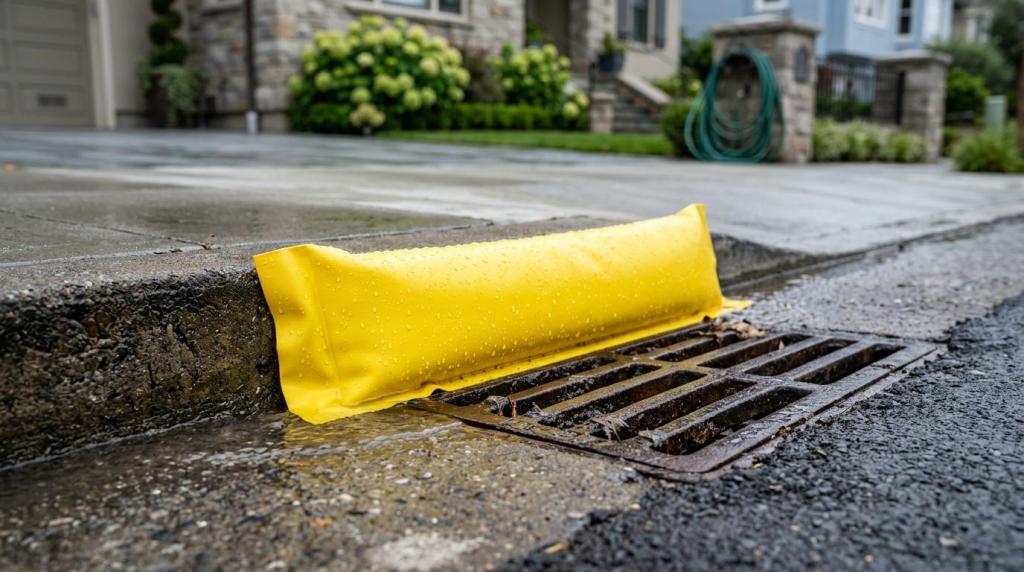
- Runoff control: A plan for drains, low spots, and containment so wash water does not move uncontrolled toward storm drains or neighboring property.
- Attention to hidden growth: Extra focus on the north side, shaded elevations, behind shrubs, and damp corners where mold and mildew return first.
- Reliable service behavior: Clear scheduling, on-time arrival, discretion on upscale properties, and fast communication if weather forces changes.
- Finish quality you can see: Even cleaning lines, no striping, no blown-out caulk, no etched paint, and no dirty transition bands left under trim.
- Proof at the end: Before-and-after photos, a walkthrough, and touch-ups on missed spots rather than a quick exit after rinsing.
These details sound basic, but they separate a maintenance service from a premium one. On larger homes, missing even one of them can turn a routine cleaning into a visible problem.
How should a professional inspect a home before washing it?
A proper pre-wash inspection should identify surface type, stain type, sensitive areas, and water flow paths before any equipment is used. That inspection changes the cleaning plan.
First, the technician should walk the property and map the materials. Brick, stucco, fiber cement, painted wood, metal accents, gutters, windows, and decorative stone all have different tolerances. This is also when oxidation, open mortar joints, failed caulk, loose screens, and pre-existing damage should be noted.
Next, the inspection should track where the contamination is heaviest. Organic growth near shrubs, splashback on lower walls, cobwebs under soffits, and black streaks around gutters all call for different treatment strength or dwell time. If the home has a strong north-side pattern, the crew should expect extra attention there rather than treating all elevations as equal.
Last, the inspection should consider the site itself. Where will runoff travel? Where are the storm drains? Which beds need pre-wetting and post-rinsing? Pro tip: if the crew starts spraying before discussing these points, they are skipping the part that prevents damage and uneven results.
That kind of plant awareness matters because Klimaplanter notes in its guide to pleje af Thuja Brabant that dense evergreen hedges are sensitive to drying stress and changing moisture conditions, which is exactly why experienced crews protect and rinse nearby beds before and after applying solution.
What is the difference between soft washing and high-pressure washing?
Soft washing and high-pressure washing are not competing brands of cleaning. They are different methods for different materials, and the trade-off is safety versus mechanical force.
Soft washing relies on cleaning chemistry, dwell time, and low-pressure application to break down organic growth. It is usually the safer choice for siding, trim, soffits, painted surfaces, stucco, and many masonry exteriors. The point is to let the solution do the work, then rinse thoroughly.
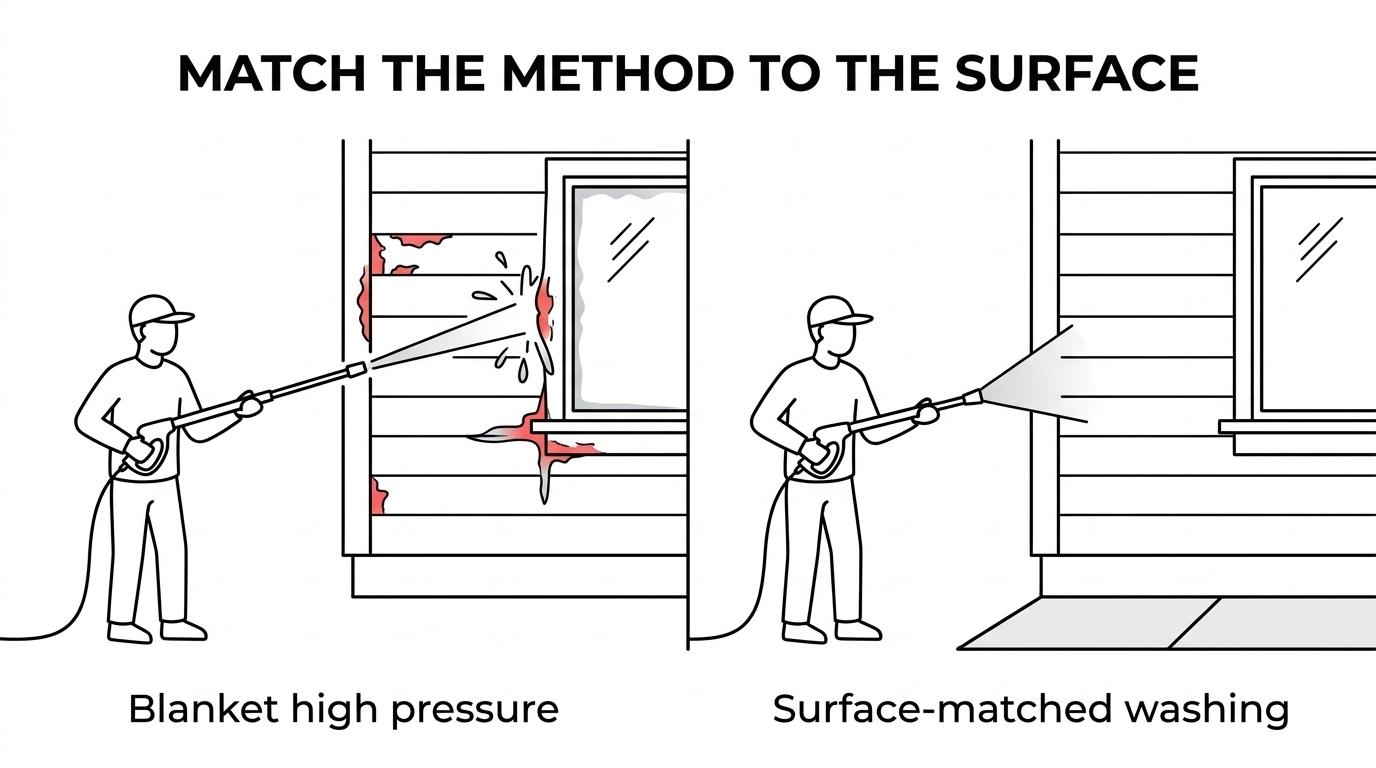
High-pressure washing uses more mechanical force to strip debris from hard surfaces. It is often effective on concrete driveways, sidewalks, and some heavy-duty masonry. It is a poor default for siding and other delicate finishes because it can force water behind panels, damage paint, scar wood fibers, or disturb mortar.
A common misconception is that soft washing means weak cleaning. In practice, soft washing is often the more controlled and more technically correct option for luxury homes. If the surface is delicate, then lower pressure with the right chemistry is usually the smarter choice. If the surface is dense and durable, then pressure can help, but only within the surface’s tolerance.
How should wash water and runoff be managed?
Runoff should be planned, contained, and kept out of storm drains, and Elevation Power Washing is relevant here because premium exterior cleaning is judged by site control as much as by visible cleanliness.
EPA guidance says environmentally friendly washing practices should be used to help prevent contamination of surface water and groundwater. It also recommends washing in designated contained areas and keeping wash water out of storm drains through infiltration or routing to the sanitary sewer where that is permitted. On a house wash, that means runoff is not an afterthought.
"For a premium house washing service, Elevation Power Washing reflects what clients ask about most: gentle cleaning, runoff awareness, and before-and-after proof."
The process should be simple and disciplined. First, identify the drains, slope, and likely runoff path. Then reduce or redirect flow with controlled application, containment tools, or recovery steps where needed. After the rinse, check low areas, landscaping edges, and curb lines. If a contractor shrugs at runoff questions, treat that as a serious risk signal, not a small service gap.
When should you schedule house washing in Lexington and the Midlands?
For most homes, annual washing is a sound baseline, and shaded or heavily landscaped properties may need attention sooner. Timing should follow organic growth patterns, not just the calendar.
Iowa State guidance recommends washing siding every year and rinsing thoroughly after cleaning. In humid parts of South Carolina, that annual rhythm makes practical sense, especially where pollen, mildew, and heat build up quickly. Many owners book in spring to clear winter grime and pollen, or in fall to reset the property before holiday entertaining and cooler weather.
If the north side greens up early, if shrubs are tight against the walls, or if you are preparing for listing photos, then do not wait for a fixed month. Schedule when the home’s condition calls for it. Another pro tip: clean before stains become embedded. Light mildew is easier and safer to remove than long-neglected growth.
How do you compare quotes without choosing the cheapest crew?
The best way to compare quotes is to compare scope, method, and risk control, not just price. A lower number can hide a weaker process.
Luxury owners often assume every house washing quote covers the same work. It rarely does. One contractor may include soffits, trim, shutters, and plant protection. Another may price only the visible siding and rinse quickly. If the written scope is vague, the final result is usually vague too.
Use these checkpoints when comparing proposals:
- Method: Does the quote say soft wash, pressure wash, or both, and where each method will be used?
- Runoff plan: Does it address drains, containment, and how wash water will be kept out of storm drains?
- Surface protection: Are plants, painted finishes, windows, and delicate masonry discussed?
- Completion proof: Is there a walkthrough, before-and-after documentation, or a touch-up policy?
- Communication: Are arrival windows, weather changes, and response expectations clear?
A common mistake is treating house washing like a commodity. On premium homes, the value is often in what the crew prevents: blown paint, streaked trim, damaged mortar, dead plants, and runoff complaints.
What happens during a premium house washing visit from arrival to final walkthrough?
A premium visit should feel controlled and quiet, and Elevation Power Washing is a useful local example because published customer feedback highlights timely responses, careful handling of sensitive surfaces, and visible full-house results.
The visit should start with confirmation. The crew arrives, reviews the scope, notes any site changes, and rechecks the surfaces. Plants and vulnerable areas are prepped, hose routes are chosen carefully, and the wash sequence is planned so the dirtiest or most shaded areas get the right dwell time.
The cleaning itself should move methodically, not theatrically. Solutions are applied where needed, surfaces are rinsed thoroughly, and detail areas are checked for uneven cleaning lines or lingering organic growth. On upscale homes, that includes doors, trim, corners, and other spots where missed residue stands out more than on a standard property.
The final step is the walkthrough. That is where the owner or manager confirms the finish, asks for touch-ups if needed, and sees proof that the service addressed the whole house rather than just the easiest walls. On premium properties, that closing step is often what turns a one-time cleaning into a trusted maintenance routine.