
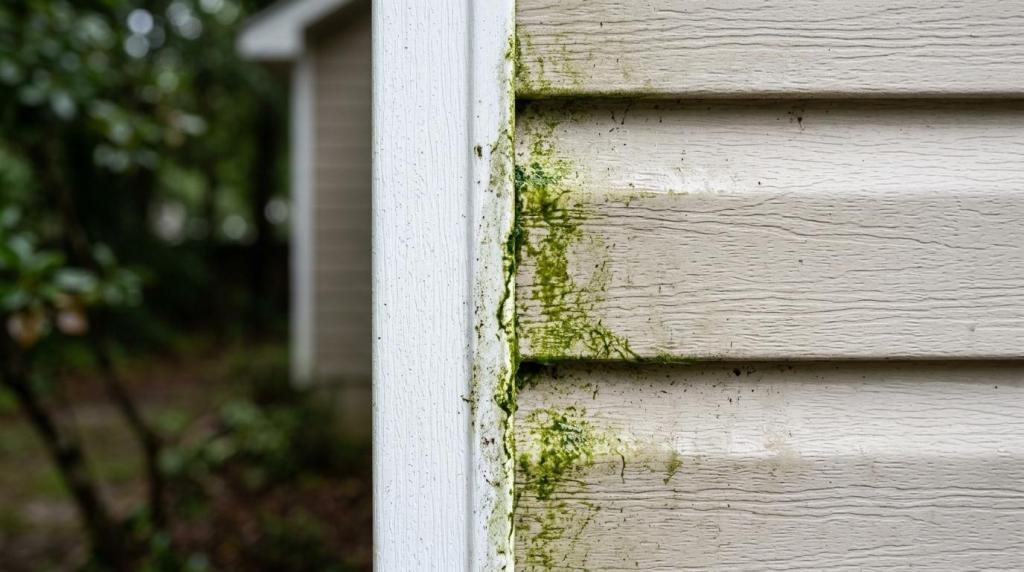
Most homes in South Carolina benefit from house soft washing about every 12 to 24 months. In the Lexington and Columbia area, many properties land closer to the 12 to 18 month range because heat, humidity, pollen, and shade help algae, mildew, and grime return faster than many owners expect.
That timeline is not fixed. A bright, open lot with strong sun and airflow may stay cleaner longer. A shaded home with tree cover, north-facing walls, gutter splashback, or sprinkler overspray may need attention every year, and sometimes sooner if staining shows up early.
What is house soft washing and why is it used on homes?
House soft washing is an exterior cleaning method that uses low pressure and cleaning solutions to remove organic growth and delicate exterior materials where high pressure can be too aggressive.
That distinction matters. A home can look dirty because of algae, mildew, pollen film, spider webs, and airborne residue, not because the surface itself is worn out. Soft washing treats the contamination instead of trying to blast it away.
In South Carolina, that lower-pressure approach is especially useful because many homes deal with recurring biological growth. Warm temperatures and moisture create a setting where green film, black streaking, and dingy siding can return long before paint or siding reaches the end of its life.
What house soft washing schedule fits South Carolina homes?
A practical starting point is simple: plan for a recurring maintenance cycle, not a one-time rescue cleaning. Once a home has been properly washed, the next service is usually about preserving curb appeal and limiting buildup before it becomes heavy.
Here is a useful rule of thumb for Midlands homes.
| Exterior condition | Typical soft-wash interval | Why it changes |
|---|---|---|
| Sunny lot with good airflow | 18 to 24 months | Surfaces dry faster and hold less moisture |
| Average home in Lexington or Columbia | 12 to 18 months | Humidity, pollen, and routine moisture support regrowth |
| Shaded or tree-covered exterior | 9 to 12 months | Less sun means longer dry times and more mildew pressure |
| North-facing walls or damp problem areas | 6 to 12 months | Surface moisture lingers and staining often returns sooner |
| Homes with drainage or overspray issues | As needed, often yearly | gutter overflow or splashback and sprinklers keep siding wet |
If visible staining comes back before your planned interval, trust the house, not the calendar.
Why does South Carolina humidity change exterior cleaning frequency?
South Carolina is widely described as a humid climate, and Columbia is often described as very humid year-round. That local weather pattern matters because mildew and algae thrive where moisture lingers.
The science behind mold and mildew is fairly straightforward. The EPA states that moisture control is the key to mold control.
AL Air’s overview of home air-conditioning basics for Florida homeowners makes the same point from a climate-control angle: when humid air is not managed well, surfaces stay damp longer and biological growth gets a better foothold.
Lawrence Berkeley National Laboratory also notes that surface humidity matters even more than general room-air humidity when mold risk is assessed. Even when the air does not feel extreme, a cooler or shaded surface can stay damp enough to support growth.
Exterior walls deal with that same basic issue. A section of siding under tree shade, behind shrubs, or near a clogged gutter can remain wet long after a rain shower ends. Add South Carolina pollen, summer heat, and regular humidity, and the house gets a steady supply of material for discoloration to feed on.
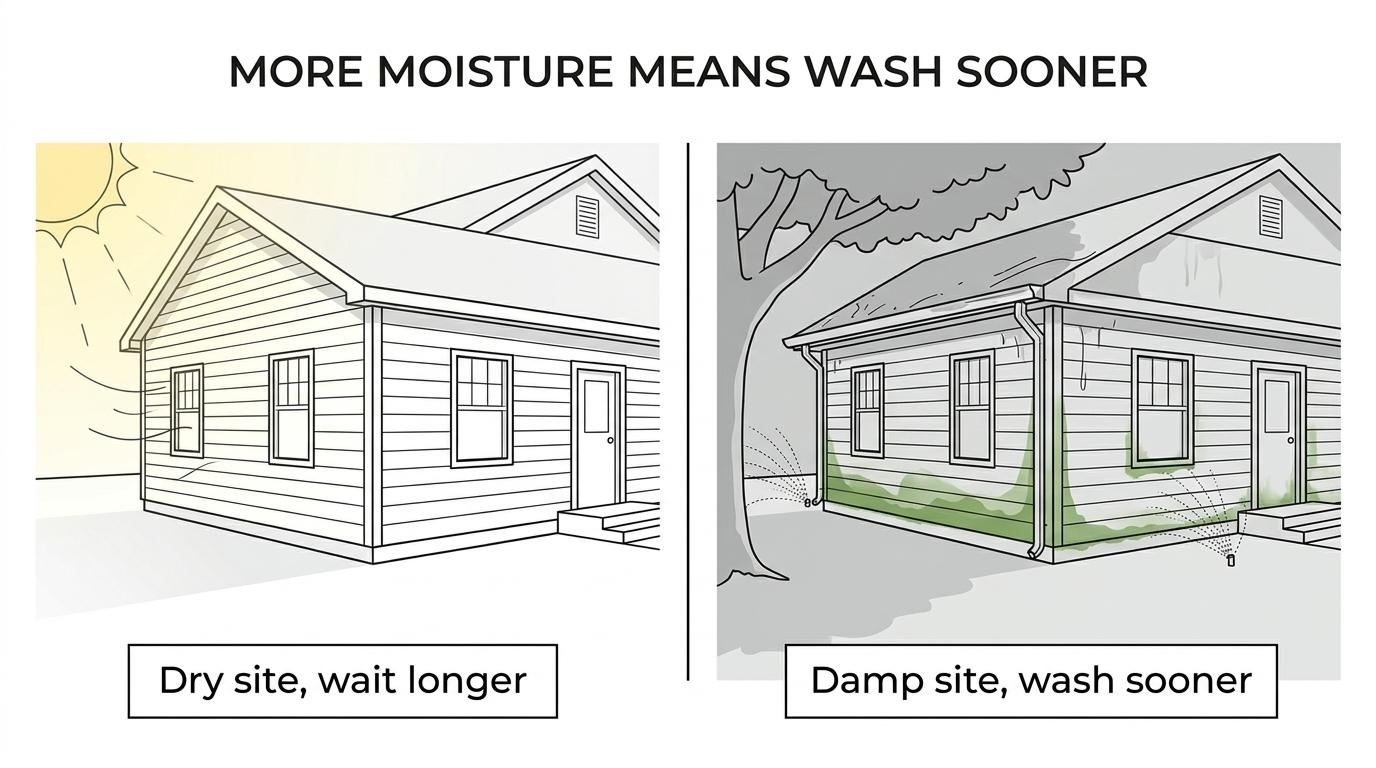
This is why two homes on the same street can have very different cleaning needs.
Which home conditions make soft washing necessary sooner?
Most early repeat cleanings trace back to a moisture pattern. The home is not “getting old” faster. It is just staying damp longer.
Common conditions that shorten the cleaning cycle include:
- heavy tree cover
- north-facing walls
- dense landscaping close to siding
- gutter overflow or splashback
- sprinkler overspray
- lakefront or wooded exposure
A shaded rear elevation often tells the story first. The front of the home may still look bright, while the back starts showing green film around trim lines, corners, and lower siding panels.
Homes with premium finishes are not exempt either. In fact, high-end paint, trim details, masonry accents, and carefully maintained outdoor spaces often make organic staining easier to notice.
What signs show that a house needs soft washing now?
Waiting for severe buildup rarely helps. Early cleaning is usually easier on the surface and better for overall appearance.
Look for these visible cues around the exterior:
- Green film: often appears on shaded vinyl, painted siding, or trim
- Black spotting or streaking: common mildew pattern on damp walls and soffits
- Dirty drip lines: runoff marks below gutters, windows, or roof edges
- Uneven color: one side of the house looks darker, duller, or stained
- Webbing and pollen residue: a dusty or sticky film that washing alone will not fix well
Another clue is speed. If the home looked clean after a wash but stains reappeared in less than a year, the property likely has one or more moisture traps that should be identified along with the next cleaning schedule.
How is soft washing different from pressure washing for house siding?
Pressure washing and soft washing are not interchangeable terms. Pressure washing relies on higher force to remove debris from tougher surfaces. Soft washing uses much lower pressure and cleaning chemistry to treat contamination on surfaces that can be damaged by aggressive blasting.
For many homes, that makes soft washing the preferred method for siding, painted surfaces, trim, and similar exterior materials. The goal is to clean thoroughly while reducing the chance of etching, water intrusion, lifted paint, or unnecessary wear.
That does not mean pressure washing has no place. Concrete, some hardscape areas, and certain exterior surfaces often benefit from it. The method should match the material.
A simple comparison helps:
| Cleaning method | Best use | Main advantage | Main caution |
|---|---|---|---|
| Soft washing | Siding, trim, delicate exteriors | Lower pressure, treats organic growth | Requires correct mix and application |
| Pressure washing | Concrete, some masonry, harder surfaces | Strong surface cleaning power | Too much force can damage house exteriors |
Why do moisture control and exterior maintenance belong in the same plan?
The EPA links mold prevention to moisture control and advises keeping humidity below 60 percent indoors when possible. While that guidance is aimed at indoor conditions, the principle carries over well to the outside of a home: wet surfaces that stay wet invite growth.
Berkeley Lab adds an important detail. Surface conditions matter. A wall can have enough moisture at the surface to support mold or mildew even when overall air conditions seem moderate. That helps explain why one shaded wall turns green while the sunny side still looks fine.
For homeowners, this leads to a better maintenance mindset. Soft washing removes buildup. Good drainage, trimmed landscaping, gutter care, and controlled irrigation help slow the return.
A strong exterior care plan often includes:
- Gutter performance: keep water moving away from siding and foundation lines
- Landscape spacing: allow airflow around walls, trim, and lower rooflines
- Sprinkler adjustment: avoid repeated spray on painted surfaces and windows
- Inspection timing: check the shady sides of the home after humid stretches
What schedule works well for Lexington and Midlands homeowners?
For many homeowners in Lexington, Columbia, and nearby Midlands communities, a 12 to 24 month soft-wash cadence is a realistic benchmark. That range fits both appearance goals and the local climate.
A home on an open lot may hold its clean look closer to the two-year mark. A wooded property with mature landscaping may be best on an annual plan. If the home has a recurring issue like overspray, splashback, or poor drainage, the right answer may be yearly service plus a correction to the moisture source.
This is also where a visual inspection helps more than a generic national rule. South Carolina homes do not weather the same way homes in dry climates do. Humid conditions shift the timeline.
If a property manager or HOA is setting community standards, recurring service tends to work better than waiting until staining becomes obvious across several buildings. The appearance stays more consistent, and buildup is addressed before it becomes heavy.
Should soft washing be done every year?
Sometimes yes.
Annual house soft washing makes sense when a home has strong mildew pressure, lots of shade, dense tree cover, or a consistently damp side that never seems to dry out fully. It is also common for owners who want the property presentation to remain sharp year-round, especially before listing, entertaining, or seasonal events.
Annual service is not automatically required for every property. A bright and breezy site may stay clean longer. The better question is not “What does everyone else do?” It is “How quickly does this house collect organic staining under its own conditions?”
Common questions about house soft washing in South Carolina
Can house soft washing be done year-round in South Carolina?
Yes, in many cases. South Carolina’s climate allows exterior cleaning during much of the year. Scheduling often depends more on weather windows, temperature, and site conditions than on the calendar alone.
Will rain right after soft washing ruin the cleaning?
Not necessarily. Timing and product dwell matter, but light rain after proper application does not always erase the result. The service provider should plan around the forecast and the cleaning method being used.
Is soft washing just about curb appeal?
No. Appearance is the obvious benefit, but regular cleaning also helps remove organic buildup before it settles in more heavily on siding, trim, and exterior details. That can support longer-lasting finishes and a better-maintained exterior.
Should you wait until the house looks very dirty?
Usually not. Once mildew and algae are clearly visible from the street, the buildup has often been forming for a while. A recurring schedule is usually more efficient than letting the exterior slide into a heavy-cleaning cycle.
What is the simplest rule for homeowners to follow?
Start with 12 to 24 months, then adjust based on what your property shows you. If the home stays shaded, damp, or surrounded by trees, move toward the shorter end of that range. If it gets strong sun and dries quickly, the longer end may be enough.