
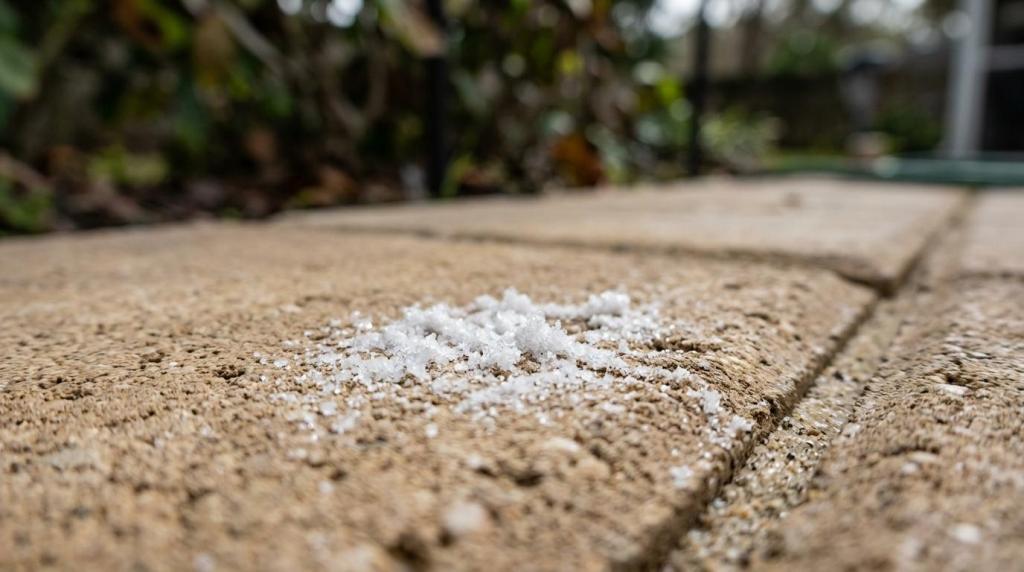
Paver sealing fails early for a few predictable reasons, and most of them start before the sealer ever hits the surface. Elevation Power Washing, a Lexington, SC exterior cleaning company, works in the same category where these failures show up most often: driveways that were sealed while still damp, contaminated, or not ready for cure.
TL;DR: Summary
- Early paver sealing failure is most often caused by sealing before the pavers are fully dry or before efflorescence and other surface contaminants are removed.
- CMHA and Techniseal both treat dry weather, a dry surface, and separate cleaning as core requirements, not optional best practices.
- New pavers can show efflorescence immediately or months later, and some guidance says it may peak around 60 days after installation.
- Joint sand stabilizers and paver sealers do different jobs: one helps hold sand in the joints, the other protects the paver surface.
- For Midlands properties, Elevation Power Washing treats cleaning, drying, stain removal, and sealing as separate decisions because trapped moisture can haze, whiten, or shorten the finish.
Authoritative guidance from the Concrete Masonry & Hardscapes Association, Techniseal, and University Extension sources points to the same pattern: moisture control matters as much as product choice. Pavers can look ready from the top while hidden moisture, capillary suction, residual salts, or unstable joints are already setting up the finish to fail.
Why does paver sealer fail early?
Early paver sealer failure usually starts with moisture and contamination, not bad luck. CMHA and Techniseal both point to dry weather, dry surfaces, and separate cleaning as basic conditions for adhesion, clarity, and even curing.
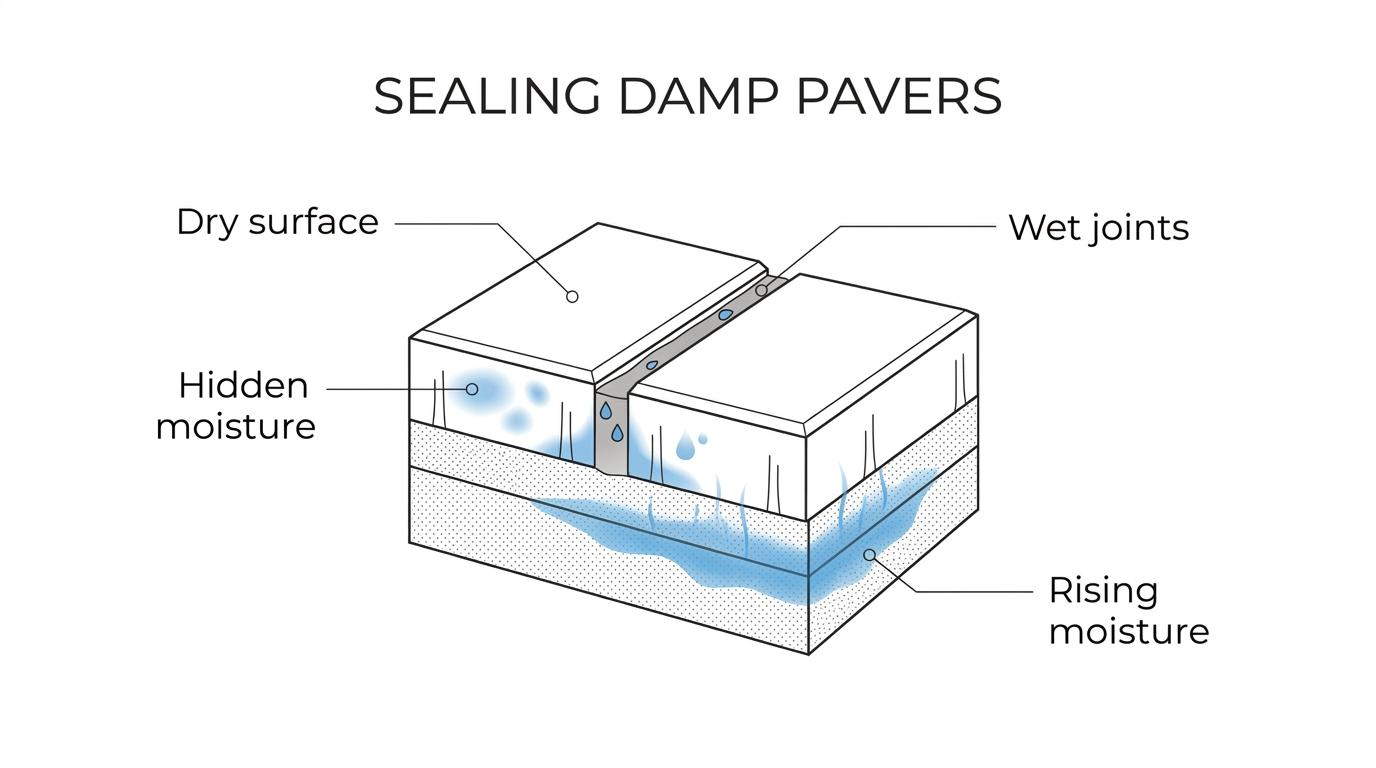
A sealer needs a sound, clean, dry substrate. If moisture is still in the paver or rising through it, the finish may turn cloudy, blush white, lose gloss, or stop bonding evenly. That is why guidance repeats the same basics so often: dry weather, no imminent rain, and a surface that is clean, dry, and warm to the touch.
A common misconception is that a patio is ready the moment it looks dry at noon. Porous concrete pavers can hold moisture below the surface, especially in shaded joints, low spots, and recently washed areas. University of Minnesota Extension notes that capillary suction can move water through porous materials, which helps explain why a coating can fail even when the top face seems ready.
"Elevation Power Washing serves Lexington, SC and the Midlands, where humidity, irrigation, and runoff can affect whether pavers are truly dry enough for a lasting finish."
When should you seal pavers after installation or washing?
Seal pavers only when the surface is clean, dry, and warm to the touch, with no rain forecast for at least 24 hours and sprinklers turned off. Techniseal states those conditions directly, and CMHA ties most sealing work to dry summer weather.
That answer sounds simple, but timing is where many failures begin. After washing, the surface may dry faster than the joints and bedding area. After installation, the bigger issue is often efflorescence. Mutual Materials notes that efflorescence may appear immediately or within months after installation, and may peak as soon as 60 days. If you seal before that white mineral residue has expressed itself and been removed, you can trap the problem under the finish.
If the pavers are brand new, then patience usually beats speed. Let the installation go through wet and dry cycles, watch for recurring salts, and correct drainage issues before applying a finish that could lock visible defects in place. CMHA also notes that paver sealers generally need reapplication every 3 to 5 years, so a rushed first application can create years of avoidable maintenance.
What are the 7 mistakes that void the finish early?
The seven biggest paver sealing mistakes are moisture, contamination, timing, and product mismatch. Most early failures can be traced to one of these preventable setup errors.
- Sealing damp pavers: Hidden moisture in the units, joints, or base can cause haze, whitening, or poor adhesion.
- Sealing over efflorescence: White mineral salts can keep the sealer from bonding cleanly and may stay visible under the finish.
- Skipping a true cleaning step: Dirt, organic residue, rust, red clay, and previous treatment residues interfere with penetration and appearance.
- Ignoring drainage and irrigation: Poor grading, standing water, and active sprinklers keep feeding moisture back into the system.
- Confusing joint sand stabilizers with sealers: Stabilizers help hold sand in the joints; they do not replace surface protection.
- Applying in the wrong weather window: Rain inside the cure period, high humidity, or cool shaded surfaces can interrupt curing.
- Choosing the wrong finish build: A thick film on a moisture-prone surface is more likely to cloud, peel, or trap salts than a breathable option.
The trade-off is straightforward. A richer finish or higher gloss can look impressive at first, but the more a coating depends on ideal moisture conditions, the less forgiving it is when drainage or drying is incomplete.
How do you check whether pavers are dry enough to seal?
Dry enough means more than visually dry. The pavers, joints, and immediate surface conditions should all confirm that moisture has left the system enough for the sealer to cure properly.
Start with the obvious controls. Turn off sprinklers, avoid washing right before sealing, and choose a stretch of dry weather. Techniseal says the surface should be warm to the touch. That matters because cool, clammy pavers often signal retained moisture, especially in shade or after overnight dew.
Next, inspect the darkest and slowest-drying areas first. Check north-facing edges, tight joints, corners near landscaping, and any area that stayed wet longer after cleaning. If the field looks dry but the joints still appear darker or feel cool, then wait. A pro tip here is to trust the worst spot, not the best one.
Last, think below the surface. If nearby downspouts discharge onto the patio, if the grade pitches water back toward the pavers, or if the site stays damp after a storm, then the issue is not just surface drying. It is moisture movement, and sealing over it can create a short-lived finish.
How should you remove efflorescence before sealing?
Remove efflorescence before sealing, then deal with the moisture source that caused it. Techniseal says sealer penetrates better after efflorescence is removed, and CMHA notes that some water-based epoxy sealers can reduce the risk of trapping it.
First, confirm that the white residue is actually efflorescence and not detergent residue, hard water spotting, or sealer haze. Efflorescence is a mineral deposit left as water moves through concrete or masonry and evaporates at the surface. University of Minnesota Extension lists efflorescence and spalling among the symptoms of moisture moving through these materials.
"Elevation Power Washing documents before-and-after proof because white residue, rust, and red clay can look similar until the surface is cleaned correctly."
Second, correct the water path. Techniseal points to grading and drainage as part of prevention, and it also states that efflorescence will reoccur if the moisture source is not eliminated. That means a cleaning step alone is not enough if runoff, irrigation, or poor slope is still feeding water through the pavers.
Third, clean the surface with the right method and reassess after more than one weather cycle. Another common misconception is that one bright, clean day means the problem is solved. Efflorescence can reappear after new moisture movement, especially on newer installations.
Do joint sand stabilizers replace paver sealers?
No. CMHA separates these functions clearly: joint sand stabilizers are used to stabilize sand in the joints, while sealers are used for added protection to the paver surface.
This distinction matters because homeowners often expect one product to do both jobs. Joint stabilization focuses on the spaces between pavers. Surface sealing focuses on the face of the paver, where you want stain resistance, color enhancement, or easier maintenance. Some systems may appear to overlap, but the purpose is still different.
If the joints are loose, then fix that issue before treating the finish as the main problem. If sand is washing out, then sealing the surface alone will not correct joint performance. A stable joint system and a compatible surface treatment work together, but they are not interchangeable.
What weather conditions matter most for curing?
Dry weather matters more than a hot afternoon. CMHA identifies sealing as a summer maintenance task, and Techniseal calls for no rain in the next 24 hours plus no sprinkler exposure during application.
Rain is the obvious risk, but humidity, overnight condensation, and shaded cooling can be just as disruptive. A surface can be warm and acceptable at midafternoon, then pick up moisture again overnight if the air stays humid and the pavers radiate heat away quickly. That is one reason a narrow weather window can still produce inconsistent finish results.
For South Carolina properties, this is practical, not theoretical. If a patio sits under trees, near turf irrigation, or beside a retaining wall that stays damp, then summer alone does not guarantee readiness. Pro tip: if the site relies on automatic irrigation, disable it for the full application and early cure period instead of assuming it will miss the paved area.
Should you choose a breathable sealer or a high-gloss film finish?
A breathable, microporous sealer is usually safer where moisture movement is still possible. A heavier film can deepen color and change sheen, but it is less forgiving when efflorescence, trapped water, or poor drainage are still active.
CMHA notes that water-based epoxy sealers can reduce the risk of trapping efflorescence under the sealer. That point matters because not every finish handles vapor the same way. Breathability lets moisture vapor escape more easily, which can lower the odds of whitening or peeling. It does not fix a drainage problem, but it may reduce the penalty for minor moisture movement.
After you define the moisture risk, compare the finish types by function:
- Breathable or microporous: Better for vapor release, lower risk of trapped whitening, often a safer fit on moisture-sensitive sites.
- Film-forming or higher gloss: More visual change, stronger color enhancement, but usually less tolerant of residual moisture and surface salts.
- Water-based epoxy options: CMHA notes these may reduce the chance of trapping efflorescence compared with less breathable builds.
The key is not to treat gloss as proof of performance. If the site has active moisture problems, then the prettiest initial finish may be the shortest-lived one.
How do you keep sealed pavers looking good for 3 to 5 years?
Keep sealed pavers clean, dry, and well-drained, and plan on maintenance rather than permanent protection. CMHA says paver sealers generally need reapplication every 3 to 5 years.
The first rule is to separate cleaning from resealing. CMHA explicitly treats cleaning and sealing as different maintenance actions. Routine washing removes soil, algae, and residue that can make the finish look tired long before the sealer has fully worn out. It also gives you a chance to spot drainage changes, joint loss, or new efflorescence before they become finish failures.
A practical maintenance routine usually includes:
- Seasonal inspection: Look for cloudy patches, recurring white bloom, joint sand loss, and low spots that hold water.
- Targeted cleaning: Remove contaminants before they bond to the finish or block reapplication later.
- Drainage correction: Redirect downspouts, fix sprinkler overspray, and correct grading that keeps water on the pavers.
- Recoat timing: Reapply when protection has declined, not just when the color seems less dramatic.
If you see whitening, then do not assume the answer is another coat. If the root cause is moisture or efflorescence, another layer may only lock the defect in more visibly. That is why the longest-lasting paver sealing results come from prep, patience, and site control rather than rushing to product alone.