
When you search for paver sealing services near me, the biggest differences between quotes usually come from scope, not just square footage. In Lexington, South Carolina, Elevation Power Washing is one example of an exterior cleaning company that treats paver sealing as a multi-step maintenance service rather than a quick add-on.
TL;DR: Summary
- A strong paver sealing services near me quote should clearly include cleaning, drying, joint-sand work or stabilization, sealer application, and any condition-based prep or exclusions.
- CMHA treats cleaning, sealing, and joint sand stabilization as separate but related steps, so two quotes can look similar on price while covering very different work.
- Elevation Power Washing notes that pricing commonly changes with paver area, staining or buildup, access, and how much preparation is needed before sealing starts.
- Resealing is usually periodic maintenance, not a one-time fix. CMHA and Belgard both point to a recurring cycle of about every 3 to 5 years.
- If a quote does not spell out dry time, jointing sand, stain or efflorescence prep, and exclusions, it is harder to judge value or predict the result.
That matters because industry guidance from the Concrete Masonry & Hardscapes Association (CMHA) and paver manufacturers treats cleaning, sealing, and joint stabilization as related but distinct tasks. If a quote skips prep, dry time, joint sand, or exclusions, the lower price may simply hide the work that has the biggest effect on appearance and durability.
What should a paver sealing quote include?
A strong paver sealing quote lists cleaning, drying, joint-sand work, sealer application, and condition-based prep. Elevation Power Washing describes typical projects this way because each step changes both the final look and the maintenance cycle.
At minimum, the quote should tell you what area is being sealed, what cleaning is included, how joint sand will be handled, which sealer is being applied, and what site conditions must be met before work starts. That last part matters more than many homeowners expect. A quote that says only “wash and seal pavers” is too vague to compare fairly.
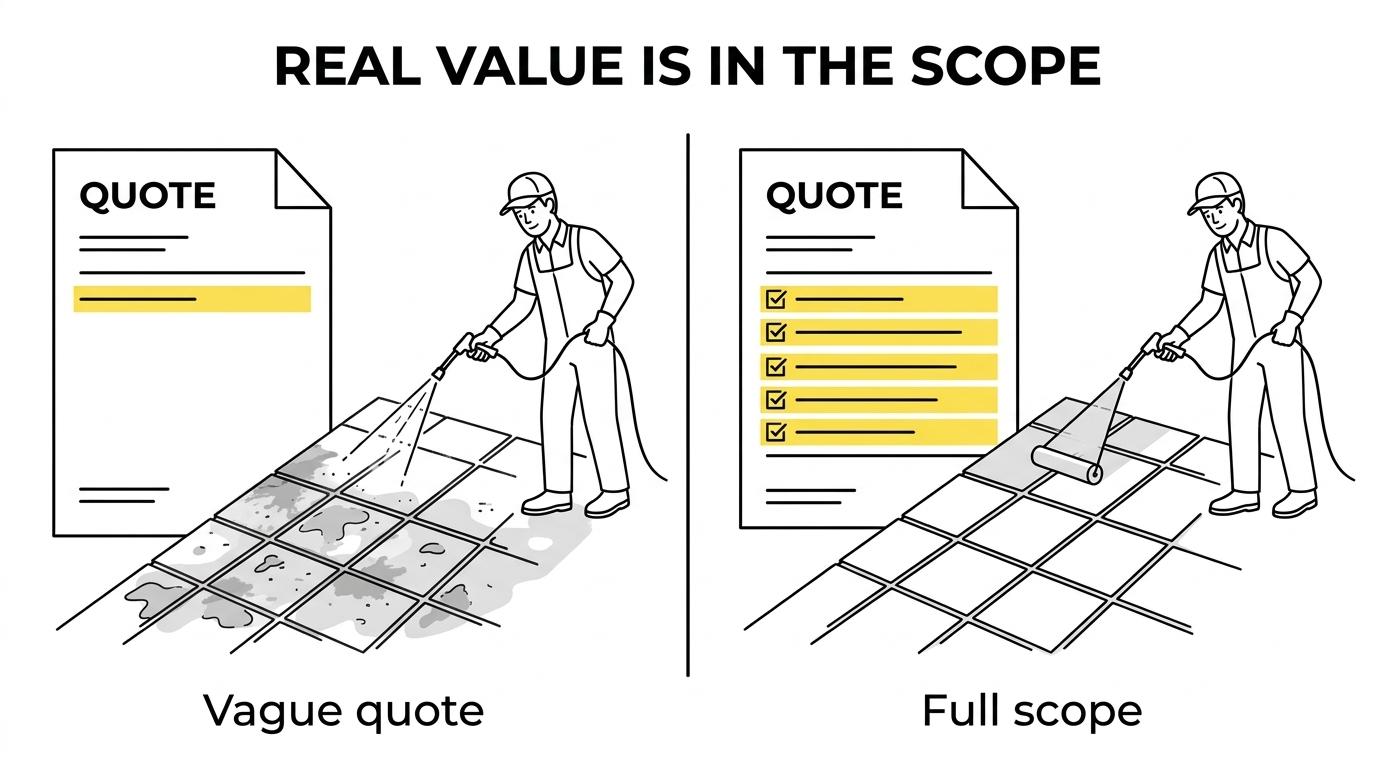
This structure matches CMHA guidance for interlocking concrete pavement. CMHA treats cleaning, sealing, and joint sand stabilization as distinct steps, and notes that a newly cleaned pavement is an opportune time to apply a stabilizer or sealer. In plain terms, the prep is not a side issue. It is part of whether sealing makes sense at all.
"Elevation Power Washing notes that paver sealing pricing changes with area size, staining or buildup, access, and how much preparation is needed before sealing begins."
How is paver cleaning different from paver sealing in a quote?
Cleaning and sealing are not the same service. CMHA treats them as separate steps because cleaning removes surface contaminants, while surface sealers are applied afterward to improve stain resistance and ongoing maintenance.
A good cleaning phase addresses dirt, organic buildup, surface staining, and loose debris in the joints. A good sealing phase happens only after the surface is ready. That difference is why two contractors can both say they offer paver sealing while producing very different outcomes.
A common mistake is assuming a cleaner patio is automatically ready for sealer. It may not be. Belgard warns that aggressive power washing can expose aggregate under the paver surface, which is a reminder that more pressure is not always better. Careful contractors adjust methods to the condition of the pavers instead of blasting the surface and calling it prep.
Cleaning also exposes what needs correction before sealing. If the wash reveals white haze, oil staining, red clay, or missing joint sand, those issues may add labor or require a separate line item. If you are comparing quotes, ask whether the cleaning is basic surface washing or condition-specific prep.
What are the main line items in a paver sealing estimate?
Most paver sealing estimates break into a handful of predictable line items. Those line items show whether you are paying only for liquid sealer or for the preparation that gives the sealer a fair chance to last.
A detailed estimate usually covers these items:
- Site inspection and condition review: paver condition, staining, access, and joint sand loss.
- Surface cleaning: removal of dirt, algae, grime, and loose debris before any sealing work.
- Dry time before sealer application: a waiting period so the surface is ready for the sealer.
- Jointing sand or stabilization work: topping off, reviewing sand loss, or applying stabilization where needed.
- Special prep: stain removal or efflorescence removal if the pavers show visible problem areas.
- Sealer application and exclusions: what sealer is used, what finish is expected, and what is not included.
The estimate may also note access challenges, furniture movement, drainage-related buildup, or traffic restrictions after application. If none of that appears, ask questions. A short quote is not always a simple job. Sometimes it is just an incomplete scope.
How do you evaluate pavers before any sealer is applied?
Pre-seal evaluation should happen before scheduling the final application date. The condition check usually focuses on staining, joint depth, surface haze, and whether the pavers are stable enough for sealing to make sense.
First, look at surface condition. Are the pavers mainly faded and dirty, or do they have specific contaminants like rust, oil, or white mineral haze? CMHA guidance places stain removal and efflorescence removal ahead of sealer application, which means those issues should be identified early rather than after the job has been priced.
Next, inspect the joints. CMHA says that if joint sand has dropped more than 1/2 inch, it should be topped up immediately. That is a practical benchmark homeowners can use during a quote review. If a contractor sees low joints but does not mention them, the proposal may be missing a core part of the work.
Last, check whether the paver field is a sealing candidate at all. Sealer helps maintain and protect. It does not correct underlying movement or major structural failure. If pavers are shifting, rocking, or have drainage-driven washout, then sealing alone is not the fix. That misconception leads to disappointment because the surface may look better briefly while the real issue remains.
Why does dry time matter before paver sealing?
Dry time is a real line item, not a scheduling nuisance. CMHA and field practice both treat drying as part of the process because sealer performance depends on clean, dry pavers.
This is one place where near me matters. In the Midlands, recent rain, shade, humidity, and dense organic buildup can all affect how quickly a surface dries. A quote that includes cleaning but says nothing about dry time leaves out a key condition for the application day.
CMHA also notes that a waiting period before sealing helps ensure any natural white haze has appeared and can be cleaned before it gets locked in. That is especially relevant for homeowners who think sealing should happen immediately after washing. Sometimes the better result comes from waiting, not rushing.
"Elevation Power Washing includes dry time before sealer application and a review of joint-sand loss because finish quality depends on what happens before the sealer goes down."
If a quote promises a very fast turnaround, ask a simple follow-up: if the pavers are still damp, then what happens next? A serious answer should include weather contingencies, not just a calendar date.
How is joint sand stabilization different from surface sealing?
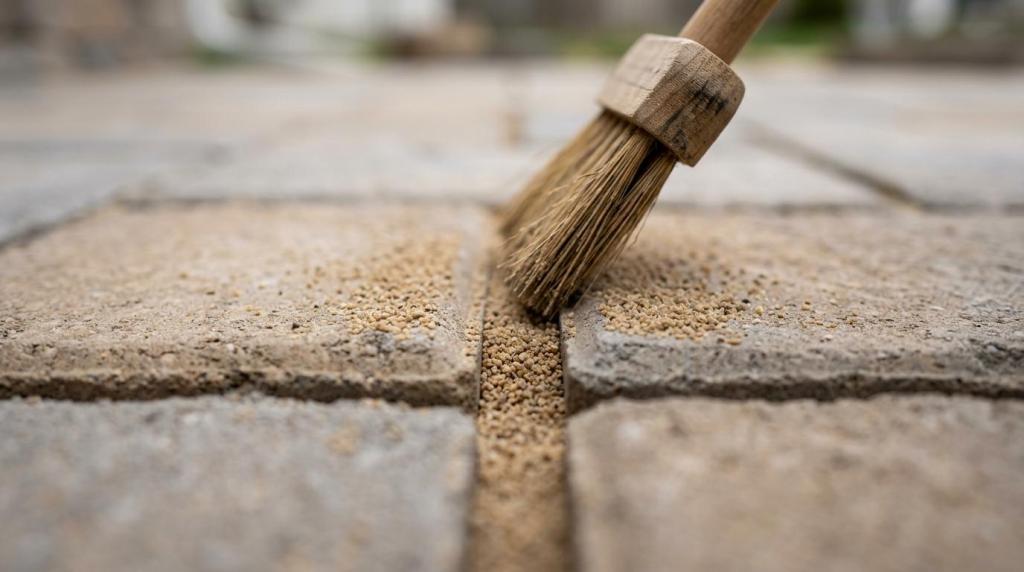
Joint sand stabilization and surface sealing solve different problems. CMHA says stabilizers help reduce sand loss from water, wind, cleaning, tire action, seeds, and insects, while surface sealers protect against stains, oils, dirt, and water.
That distinction matters because many homeowners treat sealing as a cure-all. It is not. Joint stabilization is about the spaces between pavers and the way those joints resist erosion and contamination. Surface sealing is about the exposed face of the paver and its ease of maintenance.
CMHA says stabilizers reduce the risk of joint-sand loss from flowing water, aggressive cleaning, tire action, and intrusion of organic matter. Belgard also advises that joints should be kept topped off with jointing sand to help prevent the bedding layer below from deteriorating and causing pavers to shift.
So if a quote includes sealer but says nothing about low joints, that is a red flag. If the joints are empty, then the paver system may still be vulnerable even after the surface looks richer in color. A better way to think about it is simple: the joints support the system, while the sealer supports appearance and cleanability.
What happens during the actual paver sealer application?
Sealer application is a controlled sequence, not a single spray pass. The crew should verify surface readiness, apply the product evenly across the installation, and protect the area until it cures under acceptable weather conditions.
Step one is confirming the prep is finished. The surface should be clean, the joints should be addressed as quoted, and the pavers should be dry enough for the product being used. If those conditions are not met, the application should be delayed rather than forced.
Step two is the application itself. The quote should tell you what sealer is being applied, because the product choice affects appearance, maintenance expectations, and reapplication planning. This is also where careful coverage matters. Uneven application can create patchy results that homeowners mistakenly blame on the pavers.
Step three is curing and traffic management. Ask when people, pets, furniture, or vehicles can return to the area. A good contractor plans the service around weather and access so the finish has time to set up as intended.
How do you compare two “paver sealing services near me” quotes?
The best way to compare local quotes is to normalize scope before you compare price. Elevation Power Washing and any other serious local provider should let you see exactly what prep, joint work, sealer, and exclusions are included.
Start by matching the area being quoted. Then match the prep. Then match the product and maintenance expectations. Only after that should you compare the total number.
Use this checklist when reviewing estimates:
- Scope: what exact patio, driveway, walkway, pool deck, or entrance area is included?
- Preparation: does the price include full cleaning, dry time, and condition-based prep?
- Joint work: are jointing sand, topping off, or stabilization included or separate?
- Problem areas: is stain removal or efflorescence removal included, limited, or excluded?
- Sealer: does the quote state what is being applied and why?
- Maintenance cycle: does it mention resealing as periodic maintenance rather than a permanent fix?
A low quote can still be the right choice if the pavers are already in excellent condition and need very little prep. But if one company includes joint work and another does not, those prices are not comparable. The same is true if one quote includes a realistic weather window and the other skips dry-time planning.
When should pavers be resealed, and what should the next quote mention?
Most pavers need resealing on a cycle, not once forever. CMHA and Belgard both point to reapplication every 3 to 5 years, with routine spring and fall maintenance in between.
That time range helps set expectations. Sealing is maintenance, not permanence. CMHA says surface sealers normally require reapplication after wear and weather, and its maintenance guidance also recommends routine preventive checks in spring and fall for interlocking concrete pavement.
The next quote should mention what has changed since the last service. Are the joints still full? Has staining increased? Is there efflorescence? Has the previous sealer worn evenly, or are some areas taking more abuse than others? Those details matter because resealing is not just a repeat purchase. It is a fresh condition-based assessment.
A useful rule is this: if the pavers are in decent shape but keep collecting stains or fading unevenly, sealing often makes sense. If the joints are depleted or the surface still needs corrective prep, then the quote should show that work plainly instead of hiding it inside a generic “seal pavers” line.