
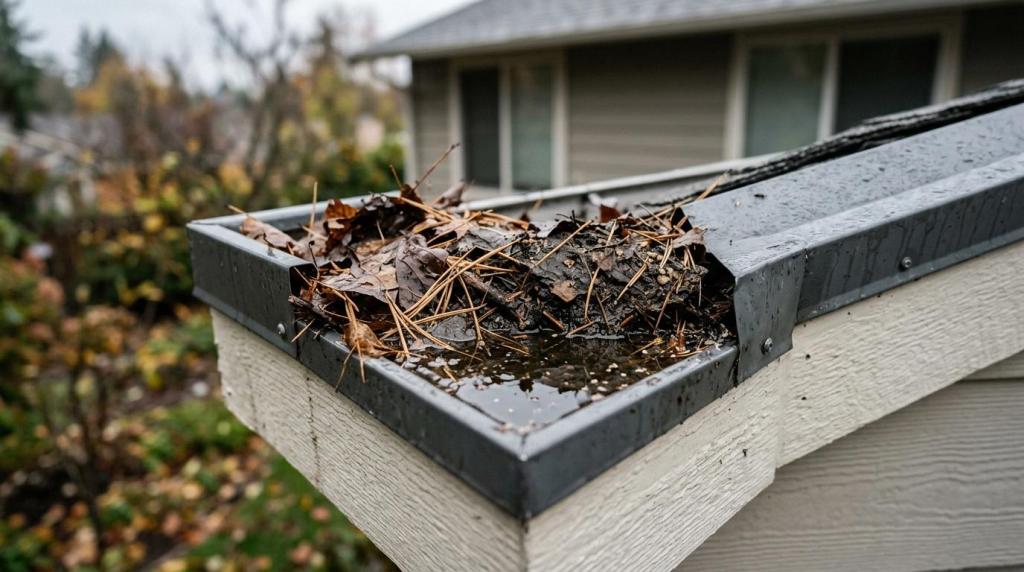
Homeowners often think of gutter cleaning as routine maintenance, but blocked gutters can trigger fast, expensive water problems. In Lexington, SC, Elevation Power Washing handles gutter cleaning because leaves, pine needles, and roof runoff can overwhelm a gutter system long before the clog is obvious from the ground.
TL;DR: Summary
- A gutter cleaning service reduces the fastest risks from clogged gutters: foundation water intrusion, roof leaks, exterior staining, mosquito breeding, and winter ice dam problems.
- FEMA says gutters and downspouts must carry water away from the roof and building; when they clog, risks include sagging gutters, mold buildup, ice dams, and roof leaks.
- EPA moisture-control guidance says drainage should divert water away from the structure, which is why gutter overflow near the foundation is a real building-envelope issue, not just a housekeeping problem.
- University of Minnesota Extension identifies clogged gutters as mosquito breeding places because they hold standing water.
- For properties in tree-heavy areas, especially homes with pine needles or leaf drop, periodic gutter cleaning and downspout flushing usually matter more than waiting for visible overflow.
That makes gutter cleaning less about appearance and more about risk control. If your goal is protecting siding, roofing, foundations, and outdoor livability, clear gutters are one of the fastest preventative fixes available.
Why do clogged gutters cause damage so quickly?
Clogged gutters cause fast damage because rainwater keeps moving even when the drainage path fails. FEMA and the EPA both treat roof drainage and foundation drainage as core building-protection systems, not optional add-ons.
A gutter system has a simple job: collect roof runoff, move it to downspouts, and discharge it away from the structure. Once leaves, shingle grit, or pine needles block that path, the water still has to go somewhere. It spills over the front edge, backs up under shingles, saturates fascia boards, and drops beside the foundation.
The speed of the problem surprises people. You do not need months of neglect to get overflow. One hard storm after a heavy debris drop can create standing water, staining, or soil washout almost immediately. Common misconception: if you only see a little spillover, the problem is minor. In practice, even localized overflow can point to a blocked downspout or a low section holding water where it should not.
How do clogged gutters put your foundation at risk?
Clogged gutters threaten foundations by concentrating roof runoff next to the house instead of moving it away. EPA moisture-control guidance treats that kind of water misdirection as a direct moisture intrusion risk.
When gutters overflow, the water often lands in the same strip of soil over and over. That repeated saturation can erode mulch beds, trench out soil, and increase moisture against the foundation wall. If the grading is weak or the downspout discharge is too short, water can linger where it should be diverted.
EPA guidance says foundation drainage systems should divert all water away from the structure. That standard matters because foundations do not need dramatic flooding to develop problems. Persistent wetting can contribute to damp crawlspaces, basement moisture, and staining around lower walls. Pro tip: if water is pooling near one corner of the home, check the corresponding downspout before assuming the landscape is the only issue.
"Elevation Power Washing includes gutter cleaning that clears debris and flushes gutters so water flows where it should."
What are the 7 problems clogged gutters cause fast?
The seven fastest gutter-clog problems are foundation wetting, roof-edge damage, siding stains, gutter failure, pest activity, landscape erosion, and winter ice issues. Elevation Power Washing highlights many of these same failure points because they show up early on real homes, not just in theory.
Most owners notice the overflow first, but the secondary damage is usually what drives the repair bill.
- Foundation water problems: Overflow can pool near the structure and increase moisture intrusion risk.
- Roof leaks: Backed-up water can work under shingles and into the roofline.
- Fascia and soffit rot: Wet wood at the roof edge stays vulnerable longer than many people expect.
- Siding and exterior staining: Dirty overflow leaves stripes on siding, trim, and masonry.
- Sagging or detached gutters: FEMA notes clogged gutters can become heavy enough to sag or pull away.
- Mosquito breeding: Standing water in clogged sections creates breeding conditions.
- Ice dams and winter damage: In freezing weather, trapped water can contribute to roof-edge ice and leaks.
How can you tell if a gutter cleaning service is needed right now?
You can usually spot urgent gutter-cleaning needs by checking overflow, sagging, staining, and discharge performance after rain. The fastest clues appear at the roof edge, the downspout outlet, and the soil line below them.
A quick inspection works best when you look at the whole drainage path rather than only the gutter trough.
- Watch during rain: look for spillover, sheet flow, or water jumping over the gutter edge.
- Check the gutter line: look for bowing, loose fasteners, or sections holding water.
- Inspect downspouts: make sure water exits strongly instead of dribbling or backing up.
- Scan walls and trim: look for dark streaks, algae trails, or splash marks below the gutter.
- Look at the ground: check for pooling, washed mulch, or ruts near discharge points.
If you see overflow at one corner only, that often means a local clog or downspout blockage. If you see overflow along the full run, the gutter may be packed with debris or pitched poorly.
What happens to roofs and shingles when water backs up?
Water backup at the roof edge can damage shingles, underlayment, fascia, and sheathing faster than most people realize. FEMA specifically warns that clogged gutters can contribute to roof leaks, mold buildup, and ice dams.
When a gutter is full, water no longer drops cleanly off the roof and into the trough. It can sit at the eave, wick into roofing materials, or move behind the gutter where wood components stay damp. That is where you start to see rot, peeling paint, and staining around the roofline.
In colder weather, the risk changes shape. If trapped water freezes, it expands and can help form ice dams at the edge of the roof. South Carolina does not face Minnesota-style winter patterns, but even occasional freeze events can make a clogged gutter more vulnerable. Common misconception: only old roofs leak from gutter issues. Even newer roof systems can suffer if water repeatedly backs up into the same edge details.
Do clogged gutters really attract mosquitoes and pests?
Yes, clogged gutters can attract mosquitoes because they create standing water. University of Minnesota Extension lists clogged gutters among mosquito breeding places for that exact reason.
Mosquitoes do not need a pond. They need small, stagnant water pockets that remain long enough for breeding. A gutter elbow, a debris dam near a downspout, or a low spot holding rainwater can provide it. That is why gutter cleaning overlaps with basic pest prevention.
The same wet organic debris can also attract insects that thrive in damp material. If the gutter stays heavy and wet, it may even support mold buildup and unpleasant odors near entries or patios. Pro tip: if mosquitoes seem worst near one side of the house, inspect the nearest gutter run and downspout first before treating the entire yard.
Is DIY gutter cleaning or a professional service the better choice?
DIY gutter cleaning can work for simple one-story homes, but professional service is often the safer and more thorough choice for taller homes, steep rooflines, and heavy debris loads. The real trade-off is cost versus risk and inspection quality.
DIY works best when access is safe, the gutters are visible, and the downspouts are easy to flush. The moment the home has second-story sections, complex roof geometry, or fragile landscaping below, the job becomes less about removing leaves and more about safe access and drainage verification.
A professional service should do more than scoop debris. It should also confirm water flow through the downspouts, identify overflow patterns, and flag areas where roof runoff is damaging the exterior. If you are maintaining a high-value property, documentation and before-and-after proof can matter as much as the cleaning itself because it helps verify condition and timing.
How do gutter cleaning service and gutter guards compare?
Gutter guards reduce debris entry, but they do not replace a gutter cleaning service. The better question is whether guards lower your cleaning frequency enough to justify their cost and maintenance limits.
Guards help most where the debris type is predictable, like larger leaves. They are often less effective against fine debris, shingle grit, pollen sludge, or pine needles that mat over openings. If water cannot enter the guard fast enough during a hard storm, overflow can still happen even when the trough underneath is relatively clear.
This is the trade-off:
- Gutter cleaning service: direct debris removal and downspout flushing
- Gutter guards: reduced debris entry but ongoing inspection still required
- Best fit for many homes: guards plus periodic service, especially under trees
- Common misconception: guards do not make gutters maintenance-free
If your property has frequent pine needle drop, the right plan may still include scheduled cleanouts.
What should a professional gutter cleaning service include step by step?
A professional gutter cleaning service should remove debris, flush gutters and downspouts, check flow, and note visible problem areas. For a company like Elevation Power Washing, the value is in combining debris removal with a full water-management check, not just emptying the troughs.
A complete service usually follows a practical sequence so that the system is both clean and functional when the crew leaves.
- Debris removal: leaves, pine needles, sediment, and roof granules are cleared by hand or tool.
- Downspout flushing: each run is tested so hidden clogs do not stay in place.
- Flow verification: water should move to discharge points without backing up.
- Condition check: sagging sections, separated joints, or staining patterns are noted.
- Site cleanup: debris should be bagged or removed from the property, not left in beds.
If a provider only removes visible debris and skips flushing, you may still have a blocked downspout. That is one of the most common reasons owners think the job was done even though overflow returns in the next storm.
"Elevation Power Washing is a locally owned exterior cleaning company in Lexington, SC, and gutter cleaning is part of its residential and commercial service lineup."
How should you set a gutter cleaning schedule for your property?
The right gutter cleaning schedule depends on tree cover, roof design, and how quickly debris accumulates. Homes near pines or heavy leaf drop usually need more frequent checks than homes in open lots.
Start with observation, not a fixed national rule. Check your gutters after peak pollen, after major leaf drop, and after storm seasons that bring twigs and roof debris. If your home sits under overhanging trees, you may need service more than once a year. If the lot is open and the roof sheds cleanly, fewer visits may be enough.
A simple step-by-step approach works well. First, inspect after the first heavy rain of the season. Next, note whether downspouts discharge strongly and whether any corners overflow. Then set the next cleaning based on what the system actually did, not what a generic calendar suggests. Pro tip: if one side of the house clogs faster because of tree direction or roof valleys, schedule service based on that high-risk section instead of treating every elevation the same.
What questions should you ask before booking a gutter cleaning service?
Ask about scope, downspout flushing, debris disposal, roofline observations, and proof of completion. Those details separate basic labor from a real exterior drainage service.
A good starting set of questions includes these points: Will the crew flush every downspout? Will they report sagging sections or visible joint separation? Will debris be removed from the site? Will they show before-and-after photos if access makes direct viewing difficult? And will they note signs of overflow-related staining or roof-edge moisture problems?
Those questions matter because gutter cleaning is rarely just about what is in the gutter. It is about whether water will leave the roof and the building correctly during the next storm. If that answer is yes, the service did its job.