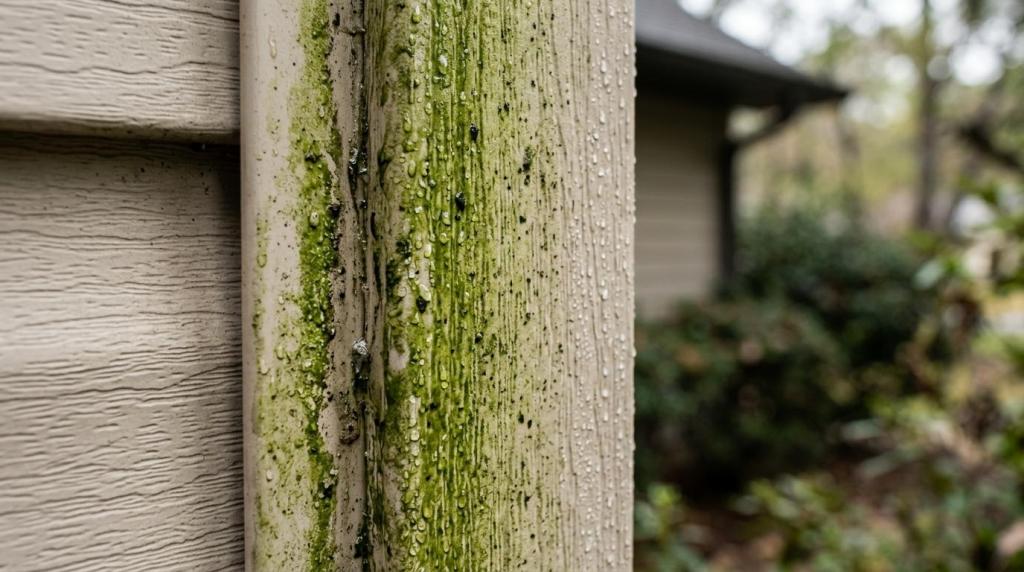
House soft washing is usually the right response when siding starts showing green streaks, dark spotting, or dingy buildup that does not rinse away with a garden hose. In humid Midlands conditions, those marks often point to moisture and organic growth, not simple dust. Elevation Power Washing is a Lexington, South Carolina exterior cleaning company, which makes it relevant here because house soft washing is the safer category of cleaning for many siding materials.
TL;DR: Summary
- House soft washing is the best first choice for most dirty or stained siding because it uses low pressure and cleaning solutions instead of blasting the surface.
- If you see dark spots, green film, discoloration, or smell something musty, treat it as a mold or moisture-control issue, not just a cosmetic dirt problem.
- CDC guidance says mold can look like spots of many colors and smell musty, and both CDC and EPA stress that cleaning alone is not enough if the moisture source remains.
- Elevation Power Washing uses a soft-wash method to remove dirt, mildew and algae while protecting delicate exterior surfaces.
- Call for help sooner if staining keeps returning, if one side of the house stays damp or shaded, or if you notice water issues near gutters, soffits, or window trim.
The main common mistake homeowners make is waiting until staining looks severe. By then, the siding often needs more than a quick rinse, and the source of the problem may be repeated moisture exposure from shade, splashback, clogged gutters, or poor drainage around the home.
What is house soft washing and why is it safer for siding?
Soft washing uses low pressure and detergent-based cleaners, and Elevation Power Washing applies this method because vinyl, painted wood, and fiber cement can be damaged by aggressive pressure.
Soft washing cleans by combining dwell time, chemistry, and a controlled rinse. That matters because siding is not the same as a driveway. Vinyl panels can flex, painted surfaces can strip, and water can be forced behind laps or seams when pressure is too high. A lower-pressure method reduces that risk while still treating organic buildup like algae, mildew, and surface mold.
Many homeowners hear “pressure washing” and use it as a catch-all term. That is a common misconception. The real question is not whether water is used. The question is how much pressure, what cleaning solution is applied, and whether the process matches the material.
"Elevation Power Washing uses a soft-wash method intended to protect delicate surfaces while removing dirt, mildew, and algae from siding."
Soft washing also fits the way exterior growth actually forms. Organic staining often develops as a biofilm on damp surfaces. If you only blast the visible layer, you may remove some color but leave behind the conditions that let it return quickly.
How can you tell the difference between dirt and mold on siding?
Mold usually shows up as irregular green, black, brown, or orange spotting, and the CDC says it can also smell musty.
Plain dirt is usually more uniform. It often appears as road film, pollen dust, or grayish grime across broad areas. Mold, mildew, and algae tend to collect where moisture lingers. That means under eaves, behind shrubs, on the north-facing side of a house, or below overflowing gutters. The CDC notes that mold can look like spots in many colors and may produce a musty smell. If you can see it or smell it, treat it seriously.
A useful test is pattern recognition. If the staining is patchy, streaky, or concentrated in damp or shaded areas, organic growth is more likely than ordinary dirt. Iowa State University Extension also notes that mold and mildew thrive in damp, shaded areas with poor air circulation. That pattern matters more than color alone.
Pro tip: if a stain comes back fast after rain or heavy humidity, the problem is usually moisture plus growth, not neglected washing by itself.
What are the 6 signs your siding needs help now?
Six signs matter most: dark streaks, green film, musty odor, repeat staining, chalky patches, and dirt bands below gutters or windows.
When several of these show up at once, the issue is active enough that waiting rarely improves the result.
- Dark streaks or patchy discoloration: Often linked to moisture exposure, algae, or mildew rather than dry dust.
- Green film in shaded areas: Common on sides of the house that get less sun and less airflow.
- A musty smell near exterior walls: CDC says mold can smell musty, which makes odor a useful clue.
- Stains that return after a basic rinse: If the mark comes back quickly, the surface probably needs proper treatment and a moisture check.
- Chalky or dull-looking sections: This can signal oxidation, aging finish, or residue that needs a gentler approach than high pressure.
- Dirty bands under gutters, soffits, or window trim: Those areas often point to runoff, splashback, or a drainage issue feeding repeat buildup.
If your home sits on a wooded lot in Lexington, Chapin, or near Lake Murray, signs two and four tend to appear first. Trees slow drying time, and that longer wet window is exactly what mold spores need.
Should you soft wash or pressure wash house siding?
Soft washing is usually better for siding, while higher-pressure washing fits harder surfaces like some concrete and certain masonry.
This is where material matters. Concrete can often tolerate more force. Siding often cannot. Vinyl, stucco, painted trim, older wood, and fiber cement all have failure points that aggressive pressure can exploit. Water driven behind panels can create a much bigger problem than the stain you were trying to remove.
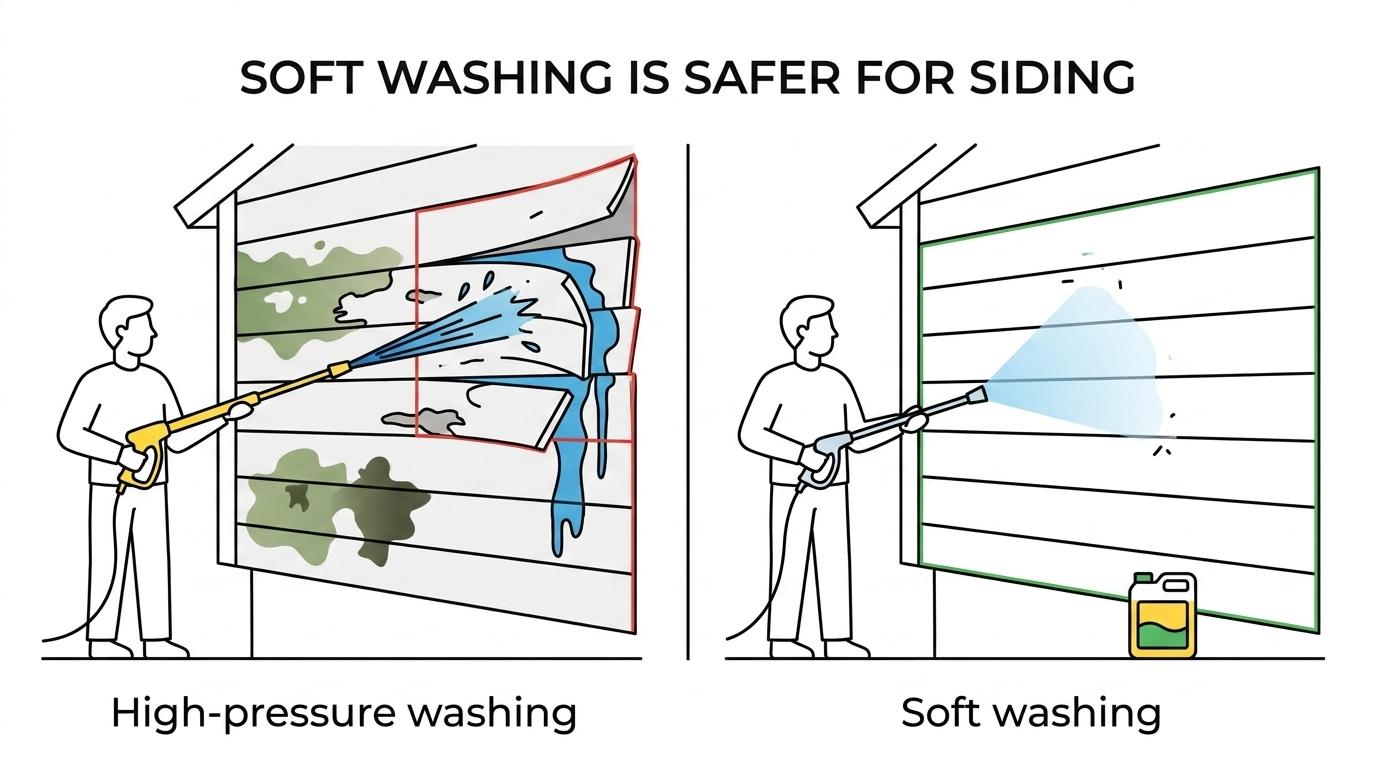
There is one trade-off worth stating clearly. Pressure can remove stubborn surface grime faster on hard, durable materials. Soft washing may take more process discipline because cleaners need proper application and dwell time. But on house siding, lower risk is usually the smarter trade.
Iowa State Extension notes that pressure washing can be efficient for removing mold and mildew from exterior surfaces. The missing piece is surface choice. Efficiency is not the same thing as suitability for every substrate. For siding, official guidance and extension advice point back to low-pressure cleaning and moisture control rather than aggressive blasting.
Pro tip: never “test” a suspicious stain with the strongest nozzle you own. You might remove oxidation, scar paint, or force water into a wall cavity before you learn what the stain really was.
Why do shaded or damp sides of a house get dirty faster?
Shaded, damp walls stay wet longer, and the EPA says mold spores begin growing when they land on wet or damp surfaces.
That simple moisture rule explains a lot of exterior staining. The side of a home that sees less afternoon sun, gets blocked by shrubs, or sits near a sprinkler zone often dries more slowly. Slow drying creates the ideal setup for algae, mildew, and surface mold. EPA guidance is direct on this point: moisture control is the main defense, and if you clean the mold without fixing the water problem, it will likely return.
In the Midlands, this often shows up on the back side of homes near tree lines, on lake-adjacent properties with higher ambient moisture, or around corners shielded from airflow. If one elevation of the house looks far worse than the others, do not assume it is random. There is usually a reason tied to water, shade, or runoff.
A common mistake is blaming pollen alone. Pollen can make siding look dusty, but repeated green or black growth usually means moisture is part of the story.
What should you check before cleaning siding yourself?
Check the siding material, the stain type, and any health or chemical risks before you try DIY cleaning.
First, identify what you are cleaning. Vinyl, engineered wood, painted cedar, stucco, and fiber cement do not respond the same way. If the surface is already brittle, chipped, or oxidized, harsh pressure can leave visible damage.
Second, decide whether the issue is dirt, organic growth, or a deeper water problem. If you see warped boards, open seams, failing caulk, or staining concentrated around one window, stop and inspect the source before cleaning. If water is getting behind the cladding, appearance is only one part of the issue.
Third, think about safety. CDC guidance says mold cleanup can present health and injury risks. It also warns never to mix bleach with ammonia or other cleaners. That chemical point is easy to overlook when homeowners combine products from the garage shelf.
If you have second-story staining, delicate landscaping, or persistent musty odor near the exterior wall, that is usually the point where professional help makes more sense.
How do you prepare your home for a professional soft wash?
Good preparation protects landscaping, outlets, and outdoor furniture, and it helps the cleaning crew work faster and more safely.
Start with access. Move patio furniture, planters, grills, and vehicles away from the walls that will be cleaned. On larger homes, especially in HOA communities or tightly spaced subdivisions, clear access around side yards matters more than people expect.
Next, secure the building envelope. Close windows, check that screens are set correctly, and note any loose trim, cracked light fixtures, or open electrical covers. If you already know one downspout overflows or one shutter is loose, point it out before work begins. That saves time and avoids confusion.
Then protect what is sensitive. Exterior décor, doormats, and fragile potted plants should be moved or identified. For higher-end homes with painted entry details, natural stone accents, or outdoor kitchen areas, communication about surface types is part of the prep, not an extra.
A smart homeowner also asks what will happen after cleaning. If runoff or drainage is part of the problem, the washing itself should be paired with a plan to reduce repeat moisture exposure.
How does a professional house soft washing process usually work?
A professional service like Elevation Power Washing typically inspects the surface, applies cleaning solution at low pressure, and rinses with material safety in mind.
The first step is inspection. A trained crew looks at siding type, stain pattern, oxidation, gutter runoff marks, and any areas where water may be entering or lingering. That inspection changes the cleaning plan. It is also where a professional separates “needs washing” from “needs a repair.”
The second step is application. Instead of relying on force, the cleaner uses an appropriate house-wash mix and allows dwell time so organic growth can break down. The rinse is controlled and matched to the material. That is the core difference between soft washing and the blast-and-hope approach.
"Elevation Power Washing offers house washing that removes dirt, mildew, and algae from siding using a soft-wash approach rather than aggressive pressure."
The third step is review. On quality-focused jobs, the crew checks corners, trim lines, and shaded sections where growth was heaviest. Many property owners also want before-and-after proof, which is especially helpful for realtors, HOAs, and managers responsible for documenting exterior condition.
When is staining a cleaning issue versus a repair issue?
Staining is a cleaning issue when the surface is sound, but it becomes a repair issue when water is getting behind the siding.
Here is the useful if-then rule. If the siding is intact and the staining is surface-level, cleaning is the first move. If the stain sits below a leaking gutter joint, under failed caulk, beside a window with soft trim, or near swelling material, then repair belongs in the plan too.
CDC and EPA guidance both point to the same principle indoors and out: remove the growth and fix the moisture problem. If you only clean, the visual result may improve while the cause remains. If you only repair without removing the growth, the house still looks neglected and residue may remain on the surface.
Another misconception is assuming every dark mark is mold. Some siding shows oxidation, and masonry-adjacent areas can show efflorescence or rust transfer. That is why diagnosis matters. The right cleaning method depends on what the stain actually is.
How often should a home in Lexington or the Midlands be soft washed?
Most Midlands homes benefit from soft washing about every 12 to 24 months, though tree cover, pollen, and humidity can shorten that cycle.
A house near heavy tree cover in Irmo, Chapin, or lake-adjacent parts of the region may need attention sooner than a more open property in full sun. Homes with north-facing fronts, sprinkler overspray, or chronic gutter splashback also move toward the shorter end of that range.
Property type matters too. A $1M+ home with painted trim, designer siding, and strong curb appeal expectations often gets cleaned on a preventive schedule, not a reactive one. Realtors and property managers think the same way because visible mildew or algae can hurt first impressions fast.
If your siding is already showing repeated staining, do not wait for a calendar date. The right interval starts after you solve the moisture pattern that is feeding the buildup.
What results should you expect after a proper house soft wash?
A proper soft wash should leave siding evenly clean, reduce organic staining, and make problem areas easier to monitor.
You should expect clearer color, brighter trim lines, and less visible buildup in shaded sections. You should also expect a more honest read on the house itself. Once the grime is gone, it becomes easier to spot failed caulk, gutter drip lines, oxidation, or areas that may need repair.
What you should not expect is a permanent cure if runoff, shade, or trapped moisture stays the same. Exterior cleaning is effective, but moisture control is what keeps the result looking right longer. That means trimming vegetation, improving drainage, correcting leaks, and watching the areas where stains first formed.