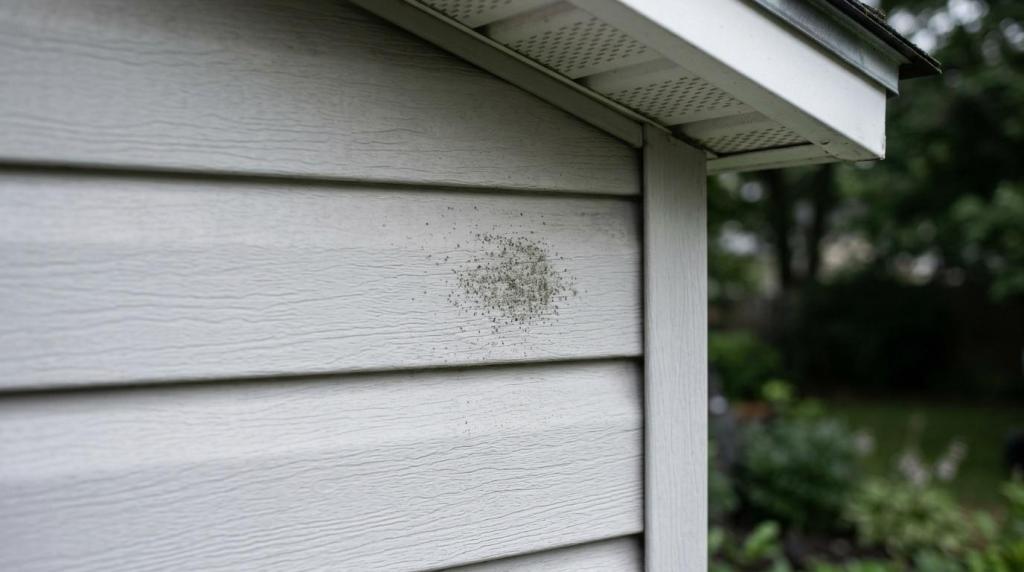
Mildew on an exterior wall often looks minor at first. A little gray or green haze near the gutters, a few dark specks on shaded siding, a faint film on painted trim. In Lexington, SC, that can happen quickly. Warm air, frequent rain, pollen, and long humid stretches through the Midlands give mildew a steady supply of moisture.
The bigger issue is not just appearance. Mildew removal helps protect the finish beneath it. On painted exteriors, that can mean less risk of peeling and premature paint failure. On vinyl siding, it helps preserve a cleaner surface and prevents that tired, neglected look that stands out fast in neighborhoods where curb appeal matters.
The U.S. Environmental Protection Agency is clear on one point: moldy surfaces should be cleaned and dried before painting, and paint applied over moldy surfaces is likely to peel. That makes mildew removal part of protecting the home, not just tidying it up.
Why mildew forms on painted surfaces and vinyl siding
Mildew thrives where moisture hangs around. Iowa State University Extension notes that mold and mildew spores do well in damp, shaded areas with poor air circulation. That matches what many property owners see around Lexington and the greater Columbia area. The north-facing side of a home in Golden Hills, a shaded wall near mature trees in Governors Grant, or a tight side yard off Corley Mill Road may stay damp longer than the sunny front elevation.
Painted trim, soffits, and siding are common trouble spots because they collect pollen, dust, and organic residue. Once the surface stays moist long enough, mildew can settle in. Vinyl siding has a similar problem. Even though it is a low-maintenance cladding, it still develops mildew where humidity, shade, and surface residue meet.
This is especially common around:
- Tree-lined lots near Lake Murray
- Homes with dense landscaping in Red Bank and White Knoll
- Rear elevations with limited airflow
- Gutter lines, soffits, and shaded fencing
- Walls exposed to irrigation overspray
A clean-looking home from the street can still have active mildew growth on the sides and rear. That is one reason routine exterior inspections matter, especially for larger homes with multiple rooflines and landscaping beds that hold moisture near the foundation.
How mildew removal protects exterior paint
Paint needs a sound, dry surface to hold properly. If mildew is left in place, the paint film is no longer bonding to a clean substrate. The EPA advises scrubbing mold off hard surfaces with detergent and water, then drying the surface completely. It also warns against painting or caulking over moldy areas because the finish may peel.
That guidance matters for any repainting plan, but it also matters between paint cycles. Mildew can trap moisture against the painted surface, stain it, and make existing wear look worse. NC State Extension recommends checking painted surfaces for peeling, chipping, blistering, chalking, water damage, and mildew. Those symptoms often show up together because moisture problems rarely stay isolated.
When mildew is removed early, paint has a better chance of lasting as intended. When it is ignored, the home may need prep work sooner, spot repairs may expand, and a premium exterior can start to look uneven well before its expected repaint schedule.
| Surface area | What mildew does | What can happen if ignored | Better maintenance response |
|---|---|---|---|
| Painted siding | Holds moisture and stains the finish | Peeling, discoloration, shortened paint life | Clean, dry, and inspect before repainting |
| Painted trim | Builds in shaded detail areas | Blistering, dark spotting, visible wear | Gentle washing and routine touchpoint checks |
| Vinyl siding | Leaves film and streaking on panels | Dingy appearance, heavier buildup over time | Regular house washing with the right method |
| Soffits and fascia | Grows near gutter moisture and shade | Ongoing staining and recurring surface growth | Clean and correct moisture sources |
For owners of high-value homes, this is more than routine upkeep. A dark mildew band under a second-story soffit can make a freshly landscaped property look neglected. On a repaint project, skipping mildew removal can undermine the finish before the first season is over.
How mildew removal helps preserve vinyl siding
Vinyl siding does not peel like paint, but it still benefits from prompt mildew removal. The Vinyl Siding Institute notes that vinyl siding is relatively easy to maintain and may often be cleaned with a garden hose, with rain washing away some light surface residue. That is true when buildup is mild. It is less true on shaded elevations with established mildew.
Once mildew settles into textured panels, around seams, or beneath overhangs, simple rinsing may not be enough. The siding can start to look blotchy, with dark streaks or green-gray patches that make the whole elevation feel older than it is. In HOA communities or listing prep situations, that change in appearance becomes noticeable fast.
A clean vinyl exterior also helps owners spot other issues more easily. When mildew and dirt are removed, it becomes easier to see cracked caulk, gutter overflow patterns, insect activity, and failing trim details nearby. For property managers and realtors, that makes cleaning a practical part of exterior review, not just a curb appeal item.
Signs mildew removal is overdue on siding and painted exteriors
Mildew does not always appear as dramatic black staining. On many homes, it begins as a muted haze that blends into shade lines or collects where roof runoff hits the wall.
Common signs include:
- Gray-green film on shaded walls
- Black speckling below gutters
- Dark patches behind shrubs
- Streaks under window sills
- Paint that looks dull and dirty even after rain
There are also subtler warning signs that deserve attention before repainting or seasonal maintenance.
- Recurring spotting: The same wall shows staining every humid season
- Paint distress: Peeling, blistering, or chalking appears near mildew growth
- Moisture pattern: Downspouts, splashback, or irrigation keep one area wet
- Airflow problem: Tight side yards or dense plants prevent drying
- Listing concern: Photos make the exterior look tired even when the structure is sound
In neighborhoods where presentation matters, small signs can have an outsized effect. A rear poolside elevation in Saluda River Club or a front-facing vinyl wall near Sunset Boulevard traffic dust may only need cleaning, but the visual difference afterward is often substantial.
Why cleaning method matters for mildew removal
Not every mildew issue should be handled the same way. Extension guidance commonly references pressure washing or detergent-based washing for exterior cleaning, and pressure washing can be highly effective on durable surfaces. Iowa State University Extension calls it one of the more efficient solutions for removing mold and mildew from exterior home surfaces.
Still, method matters. High pressure is not the first choice for every painted wall or vinyl panel. On more delicate finishes, a lower-pressure soft washing approach with the right cleaning agents is often the safer option. The goal is to remove mildew thoroughly without forcing water behind siding, scarring paint, or damaging surrounding materials.
That distinction is especially relevant on larger homes with custom finishes, painted trim packages, stained wood accents, screened porches, and detailed landscaping. Premium properties need a measured process, not a one-size-fits-all rinse.
Soft washing for painted siding and vinyl siding
Soft washing is commonly used where mildew needs chemical treatment and careful surface cleaning without aggressive pressure. This approach helps address organic growth while reducing the risk of damage to paint films and siding panels.
A careful mildew removal service should include:
- Surface assessment: Identify paint condition, oxidation, and active growth
- Property protection: Pre-wet plants, protect furnishings, and manage runoff
- Right cleaning mix: Use solutions suited to mildew, not just surface dirt
- Controlled application: Clean evenly without leaving striped results
- Full rinse and review: Check missed areas and confirm a clean finish
For homeowners along Old Cherokee Road or on heavily landscaped lots near Lake Murray, this matters because mature trees and irrigation systems often create recurring mildew zones. A thoughtful wash plan accounts for those conditions instead of treating the whole home the same way.
Pressure washing for adjacent hardscapes
Pressure washing still has a clear place in exterior maintenance. Driveways, sidewalks, retaining walls, pool decks, and some masonry surfaces often respond well to it. Cleaning these areas alongside siding can also reduce the dirt and organic matter that splashes back onto lower walls during storms.
That is one reason many full-service exterior cleaning plans pair house washing with concrete cleaning, gutter cleaning, or spot stain treatment. The home looks more consistent, and the cleaned siding stays that way longer.
Moisture control after mildew removal helps stop quick return
The EPA says the key to mold control is moisture control. That idea applies outdoors too. If mildew is cleaned off but the wall keeps staying wet, growth tends to come back.
After cleaning, it is smart to look at the reasons mildew formed in the first place.
- Gutter performance: Overflow and drips can keep fascia and siding damp
- Landscape trimming: Shrubs pressed against walls block airflow
- Irrigation adjustment: Sprinklers should not spray siding day after day
- Drainage review: Splashback near the foundation can soil lower panels
- Shade management: Dense branches can slow drying after rain
Many Lexington-area homes have exactly these conditions. Lots near wooded sections of Highway 378, homes close to the river corridor, and properties with lush privacy plantings often deal with repeat moisture exposure. Cleaning helps immediately. Moisture correction helps longer term.
Why mildew removal matters before repainting or listing a home
When a home is preparing for repainting, mildew removal is not optional prep. It is basic surface readiness. Painting over mildew risks adhesion problems and a shorter finish life, which can turn a major investment into a frustrating do-over. The EPA guidance on this point is direct, and it should shape any repaint timeline.
For realtors and sellers, mildew removal also has a strong visual return. Exterior listing photos pick up contrast, and dark mildew on light paint or vinyl stands out quickly. A home may be structurally excellent, professionally landscaped, and well maintained inside, yet exterior growth can still send the wrong signal. That matters in upper-tier markets where buyers expect crisp presentation from the driveway to the back patio.
HOAs and property managers benefit for the same reason. Regular mildew removal helps maintain community standards, protects the appearance of shared structures, and reduces the chance that minor exterior neglect turns into broader repainting or repair costs later.
A premium service approach usually looks for more than just a quick clean. Clear communication, careful methods, before-and-after proof, punctual scheduling, and a satisfaction guarantee all matter when the property is valuable and the expectations are high. That is true whether the job is a custom home in Lexington, a managed community entrance off Augusta Highway, or a listing refresh near downtown Columbia.
A home does not need to be visibly dirty from top to bottom to benefit from mildew removal. Often, the key areas are the quiet ones: shaded siding, painted trim, soffits, and rear elevations that stay damp longer than the front. Cleaning those surfaces before paint work or as part of routine maintenance helps protect the finish, preserve curb appeal, and keep the exterior in step with the rest of the property.