
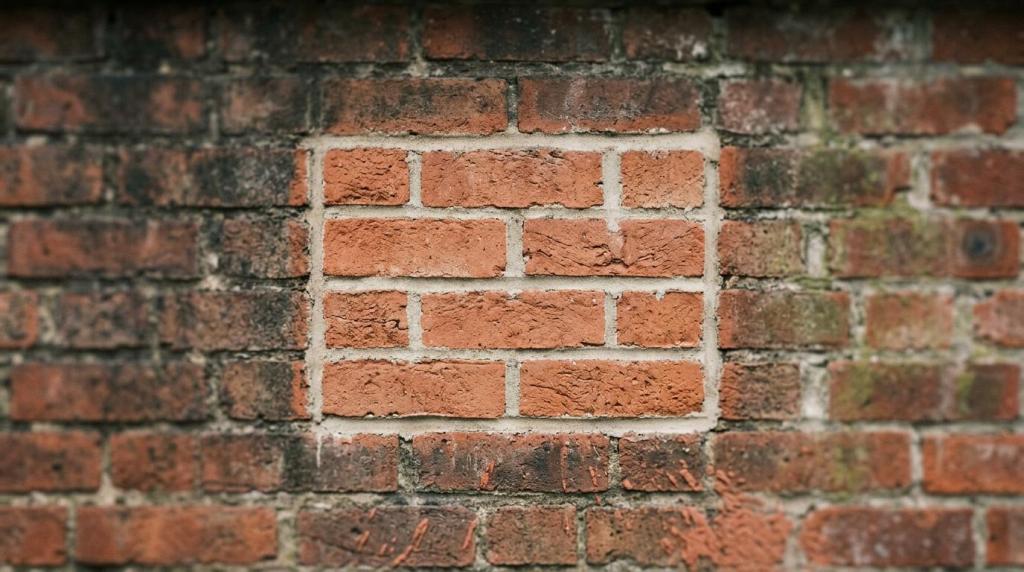
Brick has a reputation for strength, but strength does not mean every brick wall should be cleaned the same way. A painted brick exterior and an unpainted brick facade react very differently to moisture, chemistry, and pressure, especially when the surface is older, softer, or highly porous.
That distinction matters in places like Lexington, Lake Murray, and the greater Columbia area, where humidity, pollen, red clay, and shaded elevations can leave brick looking dingy long before the masonry is actually failing. For high-end homes, HOA communities, and listing prep for realtors, the goal is not just a cleaner wall. The goal is a result that looks refined while protecting paint, mortar, landscaping, and the home’s finish.
Painted Brick vs Unpainted Brick Cleaning Methods
Painted brick is protected by a coating, while unpainted brick is the finish itself. That sounds simple, but it changes almost every cleaning decision.
On painted brick, the cleaner is usually working with surface contaminants sitting on top of the paint film. Mildew, algae and mildew, dust, pollen, and runoff staining can often be treated with low-pressure washing and gentle chemistry. The risk is less about penetrating deep into the masonry and more about avoiding premature paint failure, streaking, or forcing water behind loose coatings.
On unpainted brick, the surface is open and porous. That means growth, dirt, and stains can settle deeper into the face of the brick and mortar joints. It also means the wall may absorb water, hold cleaner residue, or show uneven results if the process is too aggressive. Preservation guidance for masonry has long favored testing first, then using low-pressure spray and non-acidic or neutral cleaners where the brick is sensitive.
Here is a simple side-by-side view:
| Surface type | Main concern | Safer starting point | Bigger risk |
|---|---|---|---|
| Painted brick | Paint condition and adhesion | Soft washing, low-pressure rinse, spot treatment | Peeling paint, water intrusion behind failing coating |
| Unpainted brick | Porosity, mortar condition, stain absorption | Test patch, low-pressure rinse, non-acidic cleaner, hand work when needed | Etching, mortar damage, ghosting, embedded stains |
| Older or historic brick | Soft masonry and aged mortar | Very gentle cleaning and repeated testing | Permanent surface loss from pressure or harsh chemicals |
For homes in established areas near downtown Lexington, Olde Saluda, or older brick neighborhoods off Main Street and Columbia Avenue, that distinction becomes even more important because older masonry can be less forgiving than newer construction.
Brick Cleaning Risks From High Pressure and Harsh Chemicals
A brick wall can survive decades of weather and still be damaged in a single afternoon by the wrong cleaning method.
High pressure can scar brick faces, open up mortar joints, drive water into wall assemblies, and leave a striped appearance that looks clean at first but ages poorly. Acidic products can also create new problems. They may brighten some mineral deposits for a moment, yet they can stain adjacent areas, react badly with certain mortar blends, or leave the wall looking patchy.
Porous masonry introduces another issue: ghosting. That is the faint stain or pigment shadow left behind after the visible mark seems to be removed. Guidance from the National Park Service notes that porous materials can show ghosting after stain or graffiti removal, which is one reason testing matters so much.
Common problems from aggressive brick cleaning include:
- Mortar joint erosion
- Surface etching
- Paint failure
- Uneven color
- Water intrusion
- Lingering ghosting on porous masonry
For painted brick, there is a second layer of caution. If paint is already chipping, chalking, or peeling, cleaning can disturb a failing coating. On older homes, deteriorated painted surfaces may also raise lead-exposure risks. EPA guidance has long pointed toward wet cleaning methods and careful maintenance of painted surfaces rather than dry abrasion or reckless pressure.
Painted Brick Cleaning Basics for Exterior Homes
Painted brick is often easier to clean than raw masonry, but only when the paint is sound. If the coating is intact, many exterior stains sit at the surface and can be lifted with a soft wash approach rather than a forceful blast.
A careful process usually starts with an inspection. Is the paint stable? Are there hairline cracks near windows? Is chalking present? Are there areas where sprinklers keep the wall damp? If the surface passes that review, a low-pressure application of appropriate cleaner followed by a gentle rinse is often the safer path.
That is why painted brick homes in neighborhoods like Saluda River Club, Governors Grant, and Hallmark are usually better served by a method that treats the finish as a decorative coating, not as raw concrete. Premium curb appeal depends on keeping the paint film intact and the color even from wall to wall.
A few painted brick conditions call for extra care:
- Peeling paint: cleaning may need to stop until coating failure is addressed
- Older painted surfaces: wet methods are generally safer than dry scraping or aggressive blasting
- North-facing walls: algae and mildew often return faster where shade holds moisture
- White or light-painted brick: streaking and oxidation marks can stand out quickly
If a painted brick home has black runoff under gutters, green growth near foundation beds, or oxidation around trim lines, spot treatment and staged rinsing often produce a cleaner, more even result than trying to rush the entire wall at once.
Unpainted Brick Cleaning Basics for Masonry Exteriors
Unpainted brick asks for more restraint, not less. Since the brick itself is the visible finish, every cleaning decision affects the final appearance of the wall.
The first question is not “How dirty is it?” but “What kind of brick is this?” Hard-fired newer brick may tolerate more than soft masonry, handmade brick, or older mortar. Even within one house, chimney sections, garden walls, and front elevation brick may react differently depending on weather exposure and repairs over time.
Testing a small area is the smartest place to begin. That caution is especially relevant around mortar joints, where Mikkel Bro’s review of omfugning explains how worn or weakened joints can deteriorate further if cleaning is too forceful. Preservation standards commonly favor low-pressure spray, hand scrubbing where needed, and non-acidic cleaning agents on sensitive masonry. On softer material, water pressure may need to stay extremely low. Some preservation guidance keeps hard masonry under 400 psi and soft masonry under 100 psi, which is far below what many people picture when they think of pressure washing.
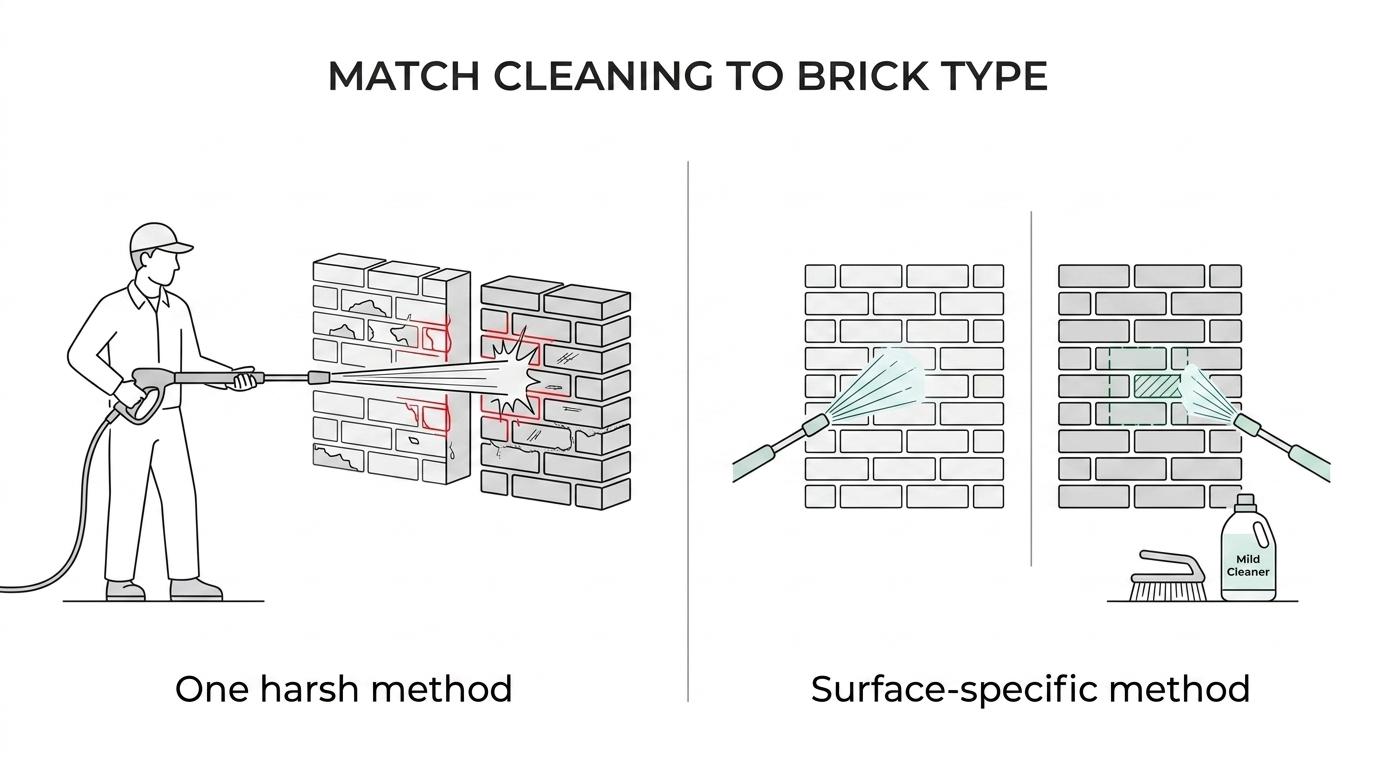
This matters across the Midlands, where brick homes often pick up a mix of organic growth and mineral staining. Near Lake Murray or in shaded lots off Corley Mill Road and North Lake Drive, brick may stay damp longer and support algae growth. Around new construction zones or clay-heavy landscaping, red clay splash can settle into the lower courses of brick and into the mortar.
Unpainted brick also reacts differently to spot removal. Rust, efflorescence, red clay, and graffiti do not all clean the same way. A one-product-fits-all approach can push pigment deeper into porous masonry or move staining to nearby areas.
Lexington SC Brick Cleaning Challenges for Homes and Communities
Local conditions shape cleaning results more than many property owners expect.
In Lexington, and the broader Columbia market, spring pollen coats ledges and sills, summer humidity feeds mildew, and afternoon storms can leave splashback staining around patios, stoops, and lower brick veneer. Communities near Lake Murray often deal with moisture exposure and tree cover, while homes in open subdivisions may show oxidation and dust faster on sun-facing elevations.
Property managers and HOA boards also face consistency issues. A brick entrance monument off Highway 378, a clubhouse near Sunset Boulevard, and perimeter walls along Old Cherokee Road may all need different treatment plans even if they appear to be made from similar brick. Matching the method to the material is part of what separates routine washing from real exterior cleaning.
Typical local brick staining sources include:
- Algae on shaded walls
- Red clay splash near beds and walkways
- Efflorescence from moisture movement
- Gutter runoff marks
- Irrigation overspray
- Rust transfer from metal fixtures
For realtors preparing listings in sought-after pockets near Golden Hills, Longs Pond, or custom homes close to the lake, brick cleaning is often part of a larger presentation plan. Buyers notice blotchy brick, mildew shadows, and dingy entry walls quickly, especially on premium homes where expectations are high.
Choosing Soft Washing, Low-Pressure Rinsing, and Spot Stain Removal
The best brick cleaning method is usually the lightest one that can still produce the target result.
A good service plan often looks like this:
- Inspect first: review brick hardness, mortar condition, paint stability, and stain type before any full-wall cleaning begins.
- Test a small area: confirm how the surface reacts to moisture, chemistry, and rinse pressure.
- Use the least aggressive method: soft washing, low-pressure spray, and hand work often make more sense than force.
- Treat stains individually: rust, efflorescence, graffiti, and red clay usually need different products and rinse methods.
That process may sound slower, yet it is often what protects the finish and delivers the cleaner final appearance. Premium properties benefit from patience.
At companies that specialize in upscale exterior cleaning, the method often shifts by surface. Lower-pressure soft washing may be the safer choice for painted brick, white brick, and delicate finishes, while stronger pressure is saved for surfaces that can actually handle it, like certain concrete areas away from sensitive masonry.
What Premium Homeowners and Property Managers Should Expect From Brick Cleaning Service
Results matter, but so does the way the work is carried out.
On a high-value home or managed property, brick cleaning should feel organized and protective from the first walkthrough to the final rinse. That means communication about what can be cleaned, what may remain visible, and what should be repaired before washing begins.
A premium service standard should include:
- Clear scope: what surfaces will be cleaned, what stain types are included, and where special treatment may be needed
- Surface-specific methods: painted brick, soft masonry, concrete, trim, and windows should not all be cleaned the same way
- Property protection: landscaping, fixtures, surrounding finishes, and runoff-sensitive areas should be considered before work starts
- Before-and-after proof: photo documentation helps owners, HOAs, and realtors verify the result
- Reliable communication: arrival timing, method changes, and post-cleaning care should be explained plainly
- Satisfaction guarantee
That last point matters more than many people realize. Brick can vary from one wall to the next, and some stains are permanent or only partly correctable. Trust starts with honest expectations, careful testing, and a service team that values long-term condition over fast, risky cleaning.
Brick Cleaning Questions to Ask Before Scheduling Work
A short conversation before service can prevent expensive mistakes later.
Ask what method is planned for painted brick versus raw brick. Ask whether a test spot will be performed. Ask how the crew handles failing paint, older masonry, efflorescence, and red clay. Ask whether the process changes for homes with lake exposure, heavy shade, or extensive landscaping.
In Irmo, Columbia, and nearby communities, brick homes range from freshly painted modern exteriors to older traditional masonry with age-softened mortar. They should not be treated alike. A careful, low-pressure, surface-specific plan is usually the safer path, especially when the property calls for polished results, discretion on site, and protection that matches premium expectations.