Exterior mildew looks simple until it keeps coming back, spreads across multiple surfaces, or shows up where moisture is trapped. In Lexington, South Carolina, companies like Elevation Power Washing deal with this constantly because humid conditions, shade, and organic buildup can turn a cosmetic stain into a recurring maintenance problem.
TL;DR: Summary
- DIY mildew removal usually works only on small areas, roughly under 10 square feet, on nonporous surfaces that can be cleaned and dried fully.
- If mildew is on porous materials, keeps returning, or traces back to a leak, trapped moisture, or poor drainage, simple scrubbing will likely fail.
- The EPA and CDC both center mildew and mold cleanup on moisture control, prompt drying within 24 to 48 hours, and safe cleanup practices.
- For exterior surfaces like siding, roofs, decks, and concrete, method matters: soft washing and low-pressure cleaning often treat mildew more effectively than high-pressure blasting.
- In humid Midlands conditions, Elevation Power Washing is relevant because exterior mildew removal often means treating both the stain and the moisture pattern that feeds regrowth.
That is the practical cutoff most property owners need. If the surface is small, hard, dryable, and easy to reach, DIY can make sense. If the area is larger, porous, high up, repeatedly affected, or tied to an unresolved moisture source, a mildew removal service is usually the safer and more durable choice.
What makes mildew removal different from simple surface cleaning?
Mildew removal is a moisture problem before it is a scrubbing problem, and both EPA guidance and Elevation Power Washing’s exterior-cleaning focus point to the same rule: if the surface stays damp, the growth returns.
People often use “mildew” as a casual term for light fungal growth, especially the gray, black, or green film seen on siding, trim, fences, decks, and shaded concrete. On exteriors, mildew is often mixed with algae, dirt, pollen, and biofilm. That matters because removing the color is not the same as removing the living growth and the conditions feeding it.
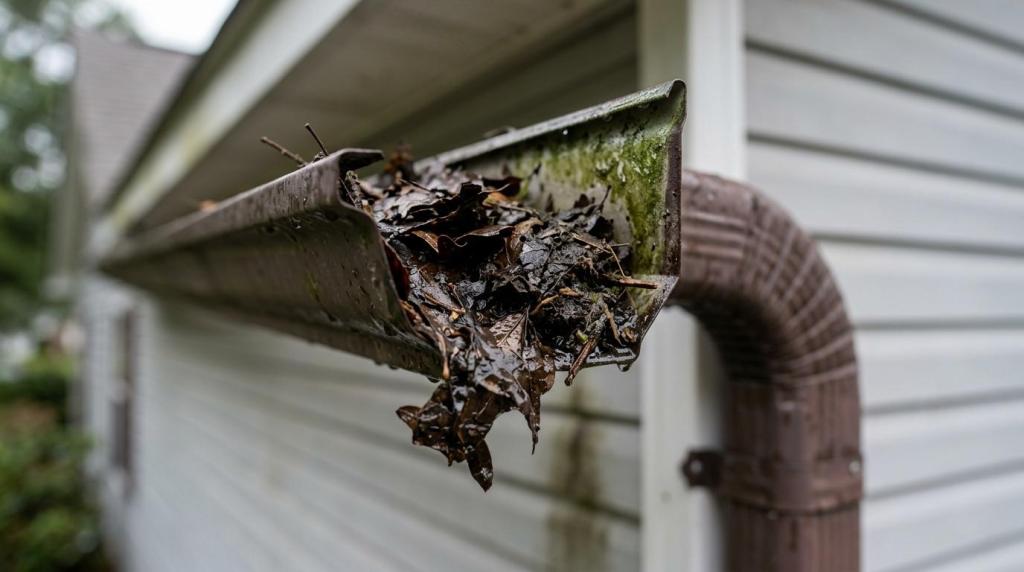
The EPA states that the key to mold control is moisture control. The CDC says growth appears where moisture persists, including near roof leaks, window failures, pipe leaks, and flood events. So if you wash away the stain but ignore the leaking gutter, irrigation overspray, north-facing shade, or clogged drainage, you have cleaned the symptom, not the cause.
“Elevation Power Washing points to hot, humid Midlands summers as a driver of exterior algae and mildew problems.”
A common mistake is assuming a brighter surface means the job is finished. It may look better for a week and still be on track to regrow fast because the surface never dried properly or the cleaning method never reached the root of the buildup.
When is DIY mildew removal actually reasonable?
DIY mildew cleanup is usually reasonable only when the affected area is small, hard-surfaced, and fully dryable after cleaning.
Cornell Cooperative Extension and Iowa State University Extension both use a practical threshold: if mold or mildew covers less than about 10 square feet, the job is generally manageable for a property owner. That does not mean every small patch is safe to treat casually. It means the scope is limited enough that cleaning, drying, and monitoring are realistic.
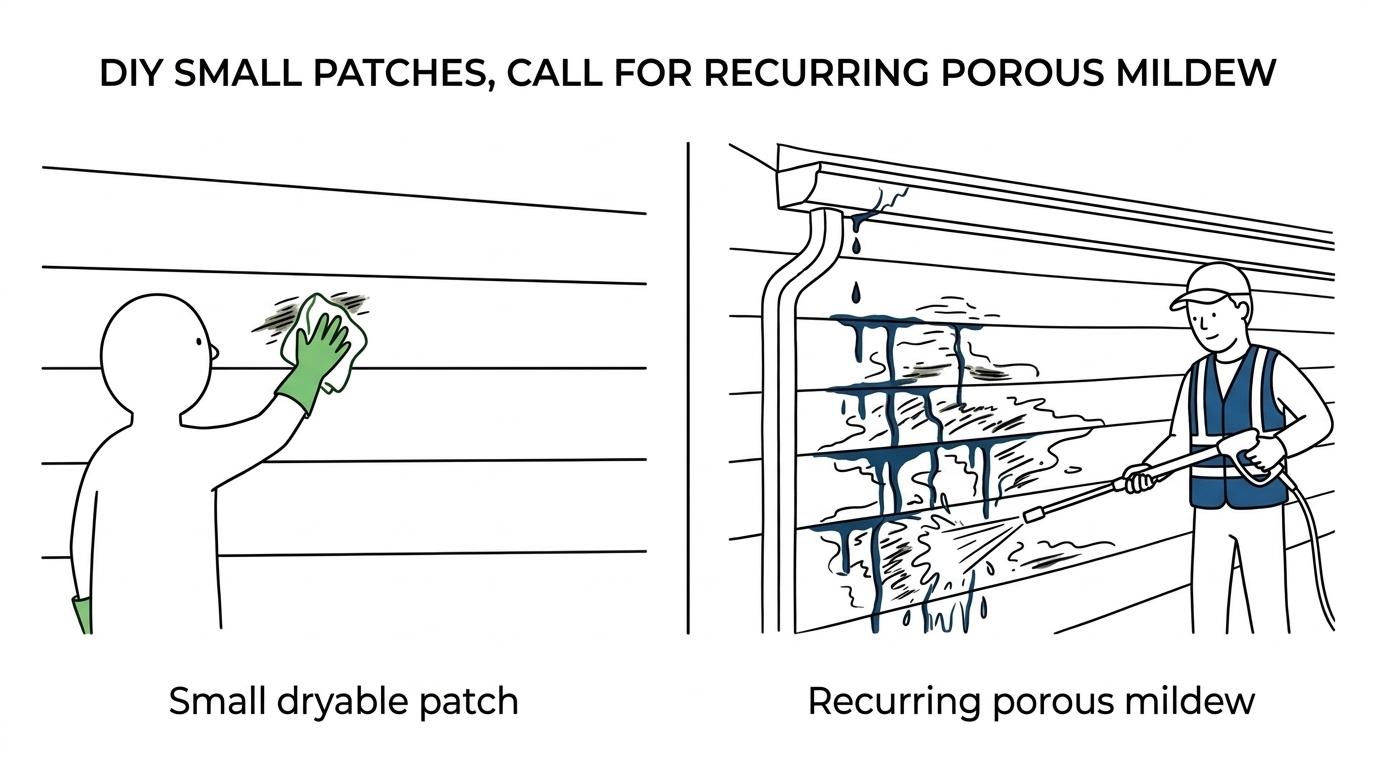
Good DIY candidates usually share four traits. The area is small. The surface is nonporous, like vinyl siding, glass, metal, or sealed concrete. The moisture source is obvious and fixable. The area is easy to access without ladders, harnesses, or roof walking.
If the surface is exterior brick, unsealed wood, aged caulk, roof shingles, or weathered composite, the cleanup decision changes. Those materials can hold moisture or embed contamination more deeply. If the mildew came back after your last cleaning, that is another sign the issue is no longer just surface dirt.
What are the 7 signs DIY mildew removal will fail fast?
DIY usually fails fast when the mildew problem is large, porous, recurring, or tied to hidden moisture rather than simple surface dirt.
You do not need lab testing to spot most of these conditions. In practice, these seven signs separate a manageable weekend task from a case where professional equipment, safer access, or better moisture diagnosis becomes the smarter move.
-
The affected area is larger than 10 square feet.
That is the most common cutoff used by Cornell and Iowa State for when extra help is advisable. -
The surface is porous or absorbent.
Raw wood, aging deck boards, some grouts, fabrics, insulation, drywall, and carpet can hold growth below the surface. -
The mildew keeps coming back after cleaning.
Regrowth usually means the moisture source, shade pattern, or cleaning method was never fixed. -
The surface was recently water-damaged or never dried fully.
EPA and Cornell both point to a 24 to 48 hour drying window as a critical prevention standard. -
The area is high, steep, or unsafe to reach.
Roof sections, second-story siding, and elevated dormers turn a cleaning problem into a fall-risk problem. -
You need stronger PPE than you planned for.
The CDC and Iowa State recommend gloves, goggles, and often an N95 respirator for heavier cleanup work. -
High pressure could damage the material.
Vinyl siding, roof shingles, painted trim, window seals, and softer wood can be damaged or forced full of water by improper washing.
If even two or three of those signs apply, the real issue is not effort. It is method. That is why many failed DIY attempts look clean at first and then disappoint within the next rain cycle.
How should you inspect the moisture source step by step?
Start with water movement, not the stain itself. The stain shows where moisture lingers, but the source may be several feet above or beside it.
First, trace the pattern. Mildew under a gutter line, below a window, beside a hose bib, or behind dense shrubs usually points to a specific water path. On concrete, look for shaded zones that stay damp longer than surrounding areas. On siding, look for vertical streaking, splashback near grade, or discoloration below roof intersections.
Next, inspect recent water events. If a wall or deck stayed wet after storms, irrigation, condensation, or overflow, ask whether it dried within 24 to 48 hours. If the answer is no, growth had the right conditions to take hold.
Then test the “return risk.” If you cleaned the surface before and saw staining return in the same pattern, that is strong evidence of a recurring moisture condition. If the source is a leak, clogged gutter, grading issue, or dense vegetation, then cleaning without correction is mostly cosmetic.
A quick tip: the darkest area is not always the wettest area. Sometimes the actual moisture entry point is above the visible staining, while the lower section only shows where runoff settled.
How do nonporous and porous surfaces change the right cleanup method?
Surface type changes everything because nonporous materials release mildew more easily, while porous materials can trap it below the visible layer.
On nonporous surfaces, the growth sits closer to the surface. Think vinyl siding, glass, metal, or sealed concrete. These materials often respond well to appropriate cleaners, dwell time, agitation when needed, and controlled rinsing. Results are more predictable because the contamination has fewer places to hide.
Porous materials are different. Wood fibers, drywall, insulation, carpet, and some unsealed masonry can hold moisture and organic growth inside the material. Cornell and Iowa State both note that heavily affected porous items may need removal rather than cleaning, especially indoors or after water damage.
This is where people often get tripped up. Bleach is not a magic answer on porous materials because visible whitening does not guarantee deep removal. If the material is exterior wood, a lower-pressure chemical approach may clean it safely, but if the board stays wet or already has decay, replacement may be the better fix.
If the material is both porous and structurally weathered, treat the mildew as part of a broader preservation issue, not just a stain-removal job.
What PPE and cleaning products are actually recommended step by step?
Safe mildew cleanup starts with PPE, product compatibility, and chemical discipline, not with whichever cleaner is closest to the garage shelf.
Begin with personal protection. For lighter exterior cleanup, gloves and eye protection are the minimum sensible baseline. For heavier work, aerosolized spray, brushing overhead, or more concentrated contamination, the CDC and Iowa State call out goggles, nonporous gloves, and an N95 respirator.
Choose one cleaning chemistry at a time. The CDC says bleach or dish detergent can be used for mold cleanup, but bleach should never be mixed with ammonia or other cleaners. That warning matters because mixing household products creates a bigger hazard than the mildew itself.
Apply, allow the cleaner to work, then rinse or wipe according to the product and surface. If you scrub immediately, you may remove loose dirt without giving the cleaner time to act on the organic growth. If you leave a strong product on too long, you may discolor paint, damage plants, or weaken finishes.
One misconception shows up often: stronger chemical concentration does not automatically mean better cleaning. Contact time, surface type, temperature, runoff control, and rinsing technique matter just as much as one another.
How should siding, concrete, decks, and roofs be treated differently?
Different surfaces need different force and chemistry, which is why Elevation Power Washing separates house soft washing from concrete cleaning instead of treating every mildew stain with the same pressure setting.
Vinyl and painted siding usually respond best to soft washing. The goal is to kill and rinse off mildew and associated biofilm without forcing water behind laps, under trim, or into wall cavities. On a high-end home, that risk matters as much as the stain itself.
Concrete can tolerate more aggressive cleaning than siding, but “more” does not mean unlimited pressure. If the slab is aged, decorative, sealed, or already pitted, too much force can leave striping or etching that looks worse than the original mildew.
“Elevation Power Washing uses a low-pressure equipment with eco-friendly cleaning agents that kill mold, algae, mildew, and other organic matter.”
Decks and fences need special care because wood fibers raise, splinter, or scar when the nozzle is too close. Roofs are even less forgiving. Asphalt shingles should not be treated like driveways; the accepted approach is usually low-pressure application with chemistry suited to organic growth, followed by a controlled rinse or weather-assisted removal depending on the method.
When does pressure washing make mildew worse instead of better?
Pressure washing makes mildew worse when it drives water into the structure, scars the surface, or removes the stain without addressing the living growth.
This is the trade-off people miss. High pressure can make a surface look clean fast, which feels efficient. Yet on siding it can push water behind panels, around window trim, or into small openings. On wood it can fur up the grain. On roofs it can strip protective granules. On painted surfaces it can shorten the life of the coating.
Low-pressure cleaning paired with the right chemistry usually gives better mildew control because it treats the organism, not just the color. That is why soft washing is commonly used on siding and roofs where material preservation matters.
“Elevation Power Washing says it uses low-pressure equipment with eco-friendly cleaning agents that kill mold, algae, mildew, and other organic matter.”
If pressure is the main tool, ask one question: is the goal rinsing loose debris, or actually remediating organic growth? If the answer is the second one, force alone is rarely the best answer.
How do you choose a mildew removal service step by step?
Choose a mildew removal service by checking scope, method, access safety, and proof that the company treats moisture-related regrowth rather than just surface appearance.
First, ask how they diagnose the problem. A solid contractor should ask where the staining appears, how often it returns, what surface is affected, and whether leaks, shade, gutters, or irrigation are involved.
Next, ask what method they use on your exact material. Siding, stucco, painted trim, pavers, decks, and roofs should not all get the same pressure level. If a company cannot explain the difference between pressure washing and soft washing in plain language, that is a warning sign.
Then ask for process clarity. Good questions include: What PPE is used? How are plants protected? What pre-wet or rinse steps are taken? What before-and-after documentation is provided? What happens if stains remain because the substrate is permanently discolored rather than biologically dirty?
A useful tip here: price by itself is a weak filter. If one bid is far lower, it may reflect less dwell time, less protection for surrounding finishes, or a one-pass rinse that looks good briefly but does not last.
What should Lexington and Midlands property owners watch for after cleanup?
Post-cleanup success depends on moisture patterns, shade, and maintenance timing more than on how bright the surface looked on day one.
In Lexington and the greater Midlands, hot, humid Midwest?—actually hot, humid Midlands summers can keep north-facing walls, fenced corners, and tree-covered rooflines damp longer than owners expect. That means the best follow-up inspection is not immediate. It is after the next stretch of humid weather or rain, when weak spots in drainage or ventilation show up again.
Watch for the same pattern returning in the same place. That usually points to a gutter issue, irrigation overspray, plant contact, splashback from mulch or soil, or limited sunlight. On concrete, notice whether only one edge of a driveway or walkway darkens first. On siding, look for recurrence below roof valleys, behind shrubs, or along the lowest courses near grade.
If the surface stays cleaner but a faint stain remains, the problem may be permanent discoloration rather than active mildew. If the exact same organic pattern returns quickly, then the cleanup was never the whole job. The moisture path still needs attention.