
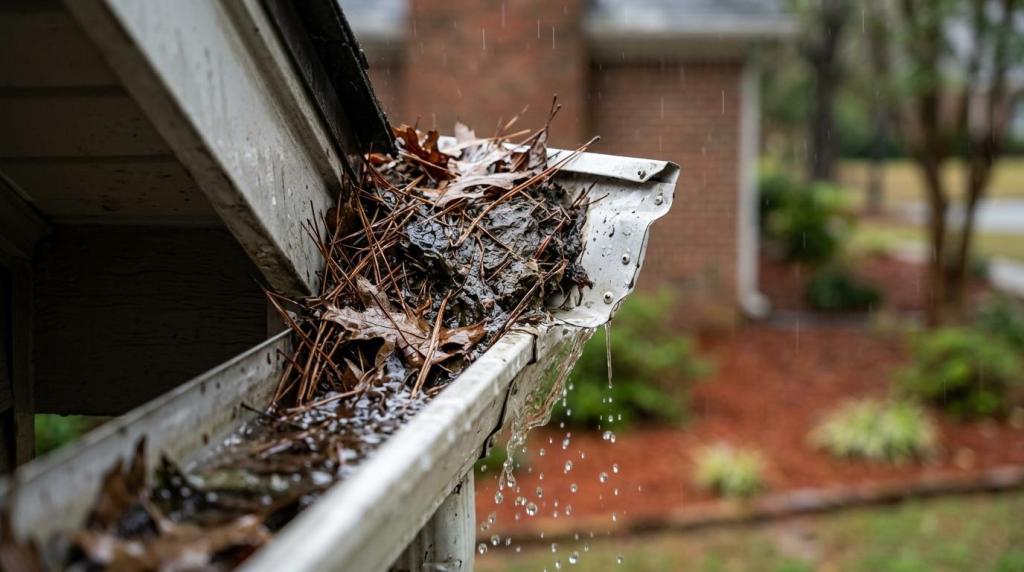
Booking a gutter cleaning service before storms is usually smartest 2 to 4 weeks before your highest local rain and wind risk, not the day before a warning. In Lexington, SC, that often means planning around spring thunderstorms, late summer tropical weather, and fall leaf drop from pines and hardwoods across neighborhoods near Lake Murray, Old Cherokee Road, and Red Bank.
TL;DR: Summary
- Book a gutter cleaning service before storm season, ideally 2 to 4 weeks ahead, because FEMA and FloodSmart both include clearing gutters and downspouts in pre-storm preparation.
- If a hurricane or tropical storm warning is issued, time is already tight. FEMA says warning conditions are usually expected within 36 hours, so earlier scheduling is safer than last-minute booking.
- Homes in Lexington, SC with pine needles, oak leaves, roof valleys, or frequent overflow often need cleaning at least twice a year, and some need an extra visit before late-summer storm activity.
- A proper service is not just leaf removal. It should include debris clearing, downspout flushing, and water-flow checks so runoff moves away from siding, fascia, and the foundation.
- DIY cleaning can work on some low, accessible gutters, but two-story homes, steep rooflines, hidden downspout clogs, and storm-prep time pressure usually make professional service the lower-risk choice.
That timing matters in the Midlands because clogged gutters do not fail quietly. They overflow onto siding, soak fascia, dump water near foundations, and can turn a routine downpour into a preventable repair problem, especially on homes near sloped lots or red-clay soils common around Lexington and Columbia.
When should you book a gutter cleaning service before storms?
Book gutter cleaning 2 to 4 weeks before storm-prone periods in Lexington, and sooner if you already see overflow. FEMA and FloodSmart both treat cleared gutters and downspouts as part of practical storm preparation.
For most homes, the best window is not based on the calendar alone. It is based on your tree cover, roof design, and recent weather. If your property sits under pines in areas like White Knoll or Golden Hills, debris can build faster than homeowners expect, even when the gutters looked fine a month earlier.
A common mistake is waiting until a storm watch or warning appears in the forecast. At that point, crews are busy, ground conditions may be unsafe, and your gutters may already be packed with wet debris that is harder to remove efficiently.
"Elevation Power Washing says clogged gutters cause water damage and foundation problems, and its gutter cleaning service clears debris and flushes gutters to keep water flowing where it should."
Why does pre-storm gutter cleaning matter for water damage and flooding?
Pre-storm gutter cleaning reduces overflow risk at the roof edge and near the foundation. FloodSmart and FEMA both point to clearing gutters and downspouts before severe weather because blocked drainage can add to flood and water-intrusion problems.
When gutters clog, water often spills over the front lip or backs up behind the system. That can stain soffits, loosen fasteners, rot fascia boards, and dump concentrated runoff next to the foundation. On red-clay lots around Lexington, that runoff can also carve mulch beds and wash sediment onto walkways and driveways.
The connection between gutters and flooding is often misunderstood. Cleaning gutters does not stop a regional flood, but it does improve how your building handles the rainwater that lands on your own roof. If then logic is simple here: if the roof sheds thousands of gallons during a storm, then every blocked outlet raises the chance that water goes somewhere you do not want it.
"Federal storm-prep guidance and Elevation Power Washing point to the same practical step: clear gutters and downspouts before severe weather to protect water flow."
What are the most practical gutter cleaning booking windows in the Midlands?
The best booking windows follow tree debris cycles and storm timing, not just one annual reminder. In Lexington and nearby Columbia, the strongest schedule usually blends seasonal service with one flexible pre-storm check.
A single yearly cleaning works for some low-debris homes, but many Midlands properties need more attention because of pines, oaks, and storm-driven debris. These are the most practical windows to consider:
- Elevation Power Washing pre-storm review: A local Lexington-based provider can check debris load, roof valleys, and downspout flow before you commit to a spring or late-summer service date.
- Early spring cleanup: Good for pollen buildup, seed pods, and winter debris before thunderstorm season starts.
- Late summer pre-tropical window: Best scheduled 2 to 4 weeks before the period when tropical remnants and heavy rain bands are more likely.
- Late fall leaf-drop service: Useful after the bulk of oak and deciduous leaves come down, especially in shaded neighborhoods.
- Post-wind-event cleanup: Worth booking after a severe thunderstorm if branches, pine needles, or shingle grit visibly entered the gutter line.
How far ahead should you book before a hurricane warning or heavy rain?
Book before a warning, not during one. FEMA says hurricane or tropical storm warning conditions are usually expected within 36 hours, which is too little time to rely on a last-minute appointment.
Routine scheduling and urgent storm prep are not the same thing. If the forecast shows a wet pattern next week, booking now may still work. If the National Weather Service begins highlighting tropical impacts or widespread severe weather, appointment availability shrinks fast and safe work windows get smaller.
Here is the trade-off. Booking early may feel less urgent, but it gives you options and lets the service happen under safer conditions. Waiting may seem efficient, yet it often means fewer openings, rushed decisions, and a higher chance that your gutters stay clogged when the rain arrives.
A useful rule is simple: if your gutters overflow in ordinary rain, book immediately. If they appear functional but sit under heavy tree cover, schedule before your local peak storm period rather than after the first warning headline.
What happens during a professional gutter cleaning service?
A proper gutter cleaning service includes inspection, debris removal, and downspout flushing. On homes in Lexington or Irmo, trained crews typically check how the entire roof-edge drainage path is performing, not just whether leaves are visible from the ground.
Step 1 is visual review. The crew looks for packed debris, standing water, loose joints, sagging sections, and discharge issues near the foundation. Step 2 is debris removal, which may include pine needles, leaf sludge, seed pods, and shingle granules. Step 3 is flow testing by flushing the system and confirming that downspouts are open.
One misconception is that cleaning equals repair. Cloud9 Roofing’s review of six signs your gutters need replacing makes the same distinction, noting that sagging runs, failed joints, and recurring leaks point to system wear rather than a cleaning issue. It does not. A good service can reveal problems like detached elbows or poor pitch, but those issues may need a separate fix. Another practical detail is discharge distance: many contractors want runoff carried several feet away from the foundation, often around 4 to 6 feet depending on grade and layout.
Should you choose professional gutter cleaning service or DIY ladder work?
Professional service is usually the lower-risk option for two-story homes and steep roofs. DIY cleaning can make sense on some one-story homes, but ladders, hidden clogs, and wet debris change the risk quickly.
The DIY case is strongest when the home is single-story, the gutters are easy to reach, and you have stable ladder footing, the right tools, and time before the weather turns. The professional case becomes stronger when the roofline is high, the landscape is uneven, or the downspouts may be packed well below the top opening.
A common misconception is that blowing leaves out from the top solves the whole problem. It often does not. A downspout can stay clogged even when the trough looks clean. If the clog remains, the next storm still forces water over the edge.
The trade-off comes down to cost versus exposure. DIY may save money on simple setups. Professional service reduces fall risk, saves time, and can catch drainage issues before they turn into fascia rot or foundation wetting.
"Elevation Power Washing lists gutter cleaning as a residential service and emphasizes safe, damage-free exterior cleaning methods."
How can you tell your gutters are already too clogged to wait?
Overflow during normal rain is the clearest sign you should not wait. In Lexington and West Columbia, other warning signs include visible plant growth, black streaks, sagging sections, and downspouts that barely discharge during a storm.
Watch the roof edge during a regular shower. If water sheets over the gutter lip instead of exiting through the downspout, that is active evidence of reduced capacity. You may also see muddy splashback on siding, washed-out mulch beds, or red-clay staining near walkways and porch slabs.
Do not assume gutter guards remove the need for service. Guards can reduce larger leaf buildup, but fine debris, pine needles, grit, and roof sediment still collect. If your home backs up to dense tree cover near Lake Murray or Chapin, a guarded system can still clog enough to matter before a heavy rain event.
How do you prepare your property for a pre-storm gutter cleaning visit?
Preparation is simple: clear access, move vehicles, and point out drainage concerns. In neighborhoods with narrow driveways or fenced backyards, those small steps help the crew work faster and help you get a clearer result.
Start by moving cars away from the garage and downspout areas so ladders and hoses can be placed safely. Next, unlock gates and secure pets. Then mention any trouble spots you have noticed, like overflow above a porch, a splash zone near the AC pad, or pooling by the foundation after rain.
This is also the right time to mention local property details. A home near a wooded stretch off Old Cherokee Road may have a different debris pattern than a commercial storefront closer to Sunset Boulevard. That context helps the technician focus on the sections most likely to fail first in a storm.
"Elevation Power Washing serves Lexington, Columbia, Irmo, Chapin, Blythewood, Elgin, West Columbia, Cayce, Gilbert, Batesburg-Leesville, and Prosperity from Lexington, SC."
What should commercial properties and HOAs book before storm season?
Commercial sites and HOAs should book earlier and more systematically than most homes. Multi-entry buildings in Lexington and Columbia have more drainage points, more liability exposure, and less room for reactive scheduling.
Step 1 is identifying roof-edge zones that protect entrances, dumpster pads, loading areas, sidewalks, and storefront glass. Step 2 is booking during a low-disruption window so parking, deliveries, and tenant access stay manageable. Step 3 is documenting conditions, especially if recurring overflow affects signage, stucco, or shared concrete surfaces.
This matters in busy corridors where runoff can quickly become a public-facing problem. Think of retail strips near Sunset Boulevard, mixed-use properties near downtown Lexington, or office locations with long concrete walks. If those gutters back up before a storm, the issue is not just maintenance. It becomes a risk-management problem.
Can gutter cleaning reduce foundation problems and landscape washout?
Yes, gutter cleaning can reduce localized water concentration near the foundation. Elevation Power Washing and standard exterior drainage practice point to the same issue: when gutters clog, roof runoff often lands too close to the building.
No gutter cleaning service can fix grading, failed drains, or regional flooding by itself. Still, it can improve the first stage of water control by getting roof runoff into open downspouts and away from the structure. That matters because the roof collects a large volume of water even in a short storm.
If then logic applies again. If the gutter and downspout stay open, then water has a defined path. If they clog, then water usually takes the shortest path over the edge, where it can erode beds, soak lower walls, and add moisture pressure near foundation edges.
How often should homes near pines, oaks, and Lake Murray book service?
Many homes near pines and hardwoods need gutter cleaning at least twice a year. Properties with heavy tree cover, roof valleys, or repeated overflow may need a third visit or a pre-storm check.
Homes around Lake Murray, Chapin, and wooded parts of Lexington often collect fine needle debris that compacts tightly after rain. That compacted debris can be more troublesome than dry leaves because it mats together and slows flow even when the gutter does not look full from the yard.
A practical schedule is this: one service before the main storm period, one after the heaviest leaf drop, and one extra visit if a severe wind event loads the roofline with debris. If your gutters stay clean, great. If they clog fast, the schedule should match the property, not a generic once-a-year rule.