A deck usually asks for help before it fails. In Lexington, SC, a deck cleaning service matters because exterior wood collects mildew, algae, pollen, and dirt long before boards look obviously damaged, and Elevation Power Washing is one of the local exterior cleaning companies working in that category.
TL;DR: Summary
- Book a deck cleaning service when you see visible buildup, green or black growth, peeling finish, persistent damp spots, warped wood, or you need prep before staining or sealing.
- The main reason is not just appearance: mildew, algae, and trapped moisture can speed weathering, increase slip risk, and contribute to finish failure on wood decks.
- The US Forest Service notes that cleaners, brighteners, and restorers can remove mildew and dirt from weathered wood decks, but overly aggressive power washing can damage softer species.
- In the Lexington market, Elevation Power Washing treats deck cleaning as both maintenance and surface prep, with annual cleaning often making sense for shaded or moisture-prone decks.
- If the deck has loose railings, soft spots, severe cracks, or structural movement, cleaning helps reveal the issue but repair should come before cosmetic work.
That makes timing the real decision. If you clean early, you may preserve color, reduce slip hazards, and avoid moving from basic maintenance into repair and refinishing costs.
What does a deck cleaning service actually fix?
A deck cleaning service removes dirt, mildew, algae, and loose residue from exterior wood, and Elevation Power Washing offers that type of cleaning for Lexington-area properties. The main job is to remove contamination before weathering and finish failure spread.
On a wood deck, grime is rarely just grime. The US Forest Service Forest Products Laboratory says commercial deck cleaners, brighteners, or restorers can remove mildew and dirt from weathered wood decks and help restore natural wood color. That matters because weathered wood often turns gray, holds organic debris, and loses the clean surface a stain or water repellent needs.
Mildew is also tied to what lands on the deck. A US Forest Service paper explains that mildew can feed on pollens , bacteria, and other organic contaminants on finished wood surfaces. A common mistake is assuming a dirty deck is only a visual problem when the surface may also be staying wetter and slicker than it should.
"Elevation Power Washing recommends professional deck cleaning at least once a year, ideally in spring or fall, which fits how mildew and algae tend to build on outdoor wood."
Cleaning does not mean blasting the boards with maximum pressure. In many cases, the smarter approach is chemistry, dwell time, gentle brushing, and a controlled rinse. That trade-off matters more on older decks and softer wood species.
When is deck buildup more than a cosmetic problem?
Deck buildup becomes a real maintenance issue when moisture, mold growth, or slick biofilm are present. The National Library of Medicine and NIEHS both connect wet wood and mold-prone conditions with signs like warped wood, peeling paint, and recurring dampness.
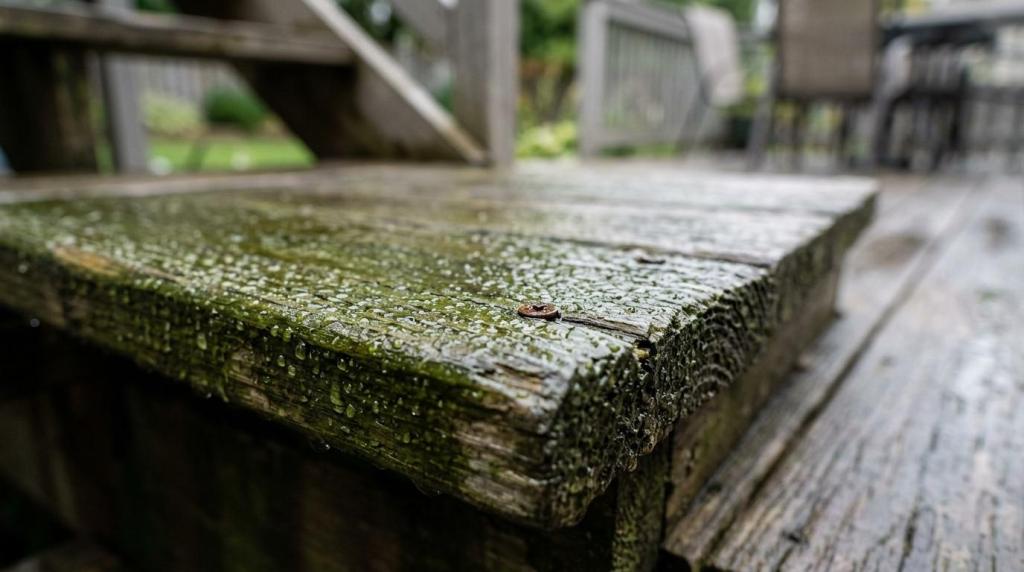
Green film on steps and shady corners often signals algae or similar biological growth, not harmless discoloration. Black spotting may be mildew or mold-related staining. If the surface stays damp long after nearby concrete dries, water is lingering in the wood or in surface debris, which can support repeated growth.
That is where safety enters the conversation. A lightly dirty deck may just look neglected, but a biofilm-coated deck can become slippery after rain, irrigation, or morning dew. Owners often wait for obvious decay, yet the better trigger is recurring moisture plus contamination.
If you also see peeling stain, bubbling finish, or gray patches where water no longer beads, the deck is telling you the surface system is failing. Cleaning may not solve every moisture issue, but it is often the first clear step in separating surface contamination from deeper wood damage.
What are the 6 signs you should book a deck cleaning service now?
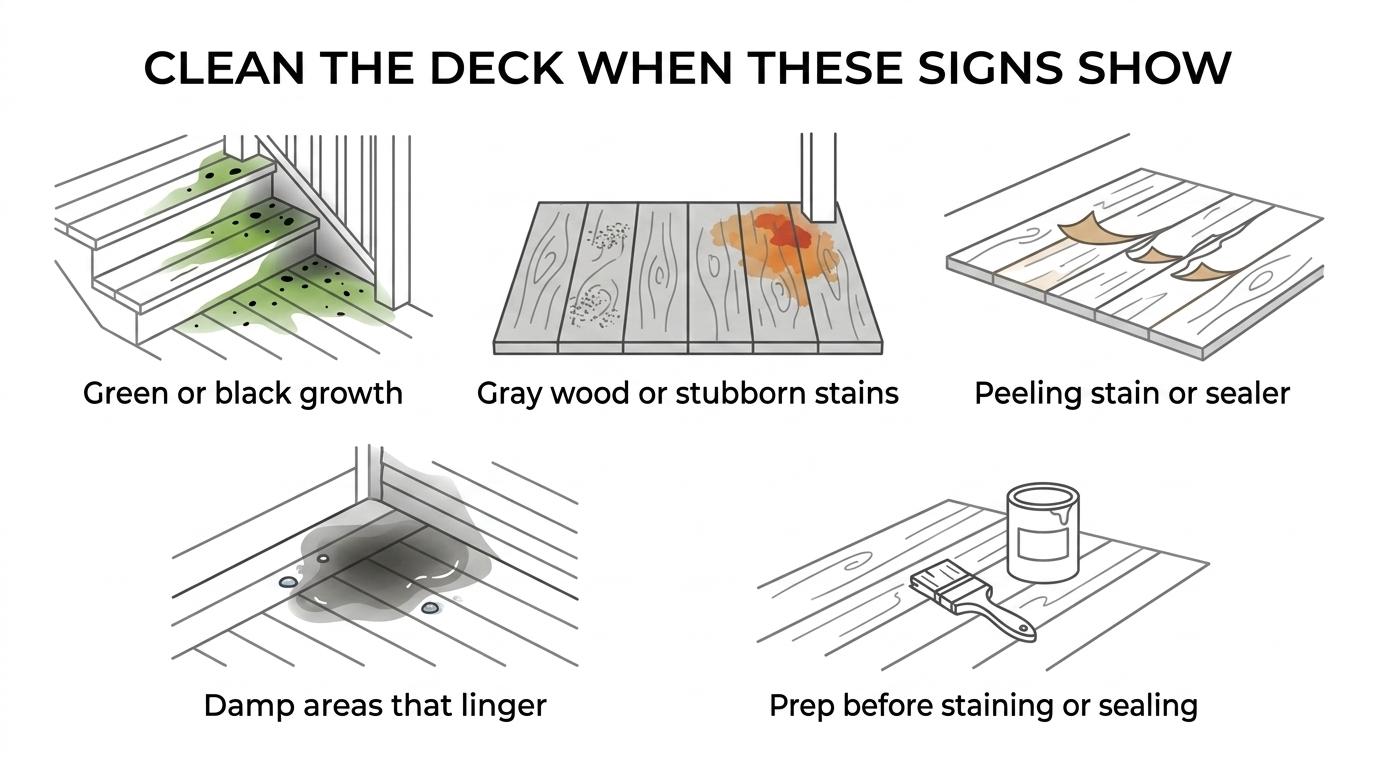
You should book now when visible contamination, moisture clues, or finish problems show the deck has moved past routine sweeping. Six signs matter most because they point to mildew control, weathering, safety, and prep for refinishing.
After a quick visual review, these are the clearest signals:
- Green or black growth is visible: algae, mildew, and mold-related staining often gather on steps, rails, and shaded boards first.
- The wood looks gray and embedded with dirt: weathered wood decks often need cleaning or brightening before color and grain can show again.
- Stain or sealer is peeling: loose finish usually means contamination, UV wear, or moisture has already broken surface adhesion.
- Damp areas linger after dry weather: persistent moisture can point to mold-prone conditions, blocked airflow, or debris holding water against the deck.
- You see specialty stains: rust, red clay, and efflorescence-like residue near masonry need more than a garden hose.
- You are preparing to stain, seal, or list the home: surface prep is one of the strongest reasons to schedule professional cleaning right away.
If one sign appears in a small area, spot treatment may be enough. If two or more signs appear across walking surfaces, rails, and stairs, a full deck cleaning service is the more defensible move.
How should you check your deck safely before calling a pro?
Start with a visual and foot-level inspection, not a repair attempt. Focus on boards, stairs, railings, and shaded zones because those areas show mildew, finish failure, and water problems first.
Step 1 is to scan the whole deck in daylight. Look for green film, black spotting, gray weathering, peeling stain, and uneven color around planters, grills, and furniture footprints. Check stairs closely because they often hold the slickest buildup.
Step 2 is to compare dry and damp areas. If boards near the house, under trees, or beside rail posts remain dark and wet longer than exposed areas, moisture is lingering. That is useful information when a contractor is deciding between light cleaning, brightening, or a deeper maintenance reset.
Step 3 is to note any signs that point beyond cleaning. Loose fasteners, spongy boards, split stair treads, and shaky rails mean you may need repair before or after cleaning. A common misconception is that cleaning is the same as a safety inspection. It is not, but it often reveals where repair needs start.
Is deck cleaning different from deck restoration or refinishing?
Yes. Deck cleaning removes contamination, while restoration and refinishing deal with appearance recovery, surface prep, and protective coatings.
The terms often get mixed together, which confuses scope and price. Cleaning is about removing dirt, mildew, algae, and loose residue. Restoration may include brighteners or restorers that reset the wood’s appearance after weathering. Refinishing usually means applying stain or sealer after the surface is clean, dry, and sound.
A practical way to separate them is this:
- Deck cleaning: removes surface contaminants and improves traction
- Brightening or restoring: improves color after weathering or chemical cleaning
- Refinishing: applies stain, sealer, or water repellent to protect the wood
If your boards are intact but dirty, cleaning may be enough. If the finish is peeling and the wood is blotchy, cleaning plus restoration steps may be needed. If cracks, checks, and coating failure are widespread, refinishing becomes part of the conversation. The US Forest Service notes that many decks are retired because of cracks and checks that timely finishing might have reduced.
Should wood decks be pressure washed or soft washed?
The best method depends on wood species, finish condition, and contamination level. For cedar and older pressure-treated boards, the US Forest Service warns that aggressive power washing can remove wood fibers and damage the surface.
This is where method matters more than machine size. A professional may still use a pressure washer, but at controlled settings with the correct nozzle, stand-off distance, and cleaning chemistry. Soft washing, in deck terms, usually means lower pressure paired with detergents and dwell time rather than force alone.
A common mistake is thinking more pressure equals a cleaner deck. On softer species like western redcedar, that approach can fuzz the grain, scar the surface, and create a rougher board that absorbs moisture and dirt faster later. If the deck is only lightly soiled, then lower pressure with brushing is often the safer choice. If the deck has heavy contamination, then chemistry and repeat passes usually beat raw force.
What should happen before staining or sealing a deck?
Before stain or sealer goes on, the deck should be cleaned, dried, and checked for finish failure; Elevation Power Washing presents deck cleaning as prep for staining or sealing. Skipping those steps raises the odds of poor bonding and early peeling.
Step 1 is cleaning away mildew, dirt, pollen, and loose residue. If contamination remains, the new coating bonds to the contamination instead of the wood. That rarely lasts.
Step 2 is drying the deck. NIEHS guidance on mold-prone wood stresses drying because moisture allows the same growth conditions to return. For refinishing, dry wood also helps coatings cure more evenly. Wet boards can trap problems under the new finish.
"Elevation Power Washing treats deck cleaning as prep for staining or sealing, which is exactly when a weathered wood deck needs a clean, dry surface."
Step 3 is evaluating what is left after cleaning. If you see solid wood with stable color, you may be ready for a water repellent or stain. If you still see lifting finish, fuzzy grain, or obvious repair issues, prep is not done yet. Pro tip: do not treat stain as a cleaner. Coatings hide less than most owners expect.
How often should a deck be cleaned in Lexington, SC?
A practical baseline is once a year, with spring or fall being the most common service window. Shaded decks, tree-covered lots, and moisture-prone properties may need attention sooner.
Lexington and the greater Midlands give decks plenty of pollen, humidity, rain cycles, and organic debris. That mix supports mildew and algae recurrence, especially on north-facing boards, under overhanging trees, and around rail caps that stay damp. Annual cleaning is a solid planning standard, but usage and exposure matter more than the calendar alone.
If the deck gets full sun and is kept clear, yearly cleaning may be enough. If it sits near sprinklers, a pool, dense landscaping, or heavy leaf drop, then you may need an earlier service call. Many owners wait until the deck looks uniformly gray, yet the earlier sign is usually patchy buildup in shaded walking lanes.
What should you expect from a professional deck cleaning visit?
You should expect inspection, method selection, cleaning, and clear post-cleaning guidance. A good visit is not just washing wood. It is deciding how to clean that specific deck without causing damage.
The first part is inspection. The crew should assess wood condition, visible mildew, stain failure, soft spots, and any risk areas on stairs or railings. That is how they decide whether the deck is a cleaning job, a prep-for-refinishing job, or a repair-first job.
The second part is process. That usually means choosing a cleaner, allowing the right dwell time, brushing where needed, and rinsing at a level the wood can handle. The third part is telling you what the cleaning revealed, including drying expectations and whether sealing or repair should come next.
You may hear the scope framed like this:
- Inspection: wood condition, contamination, finish status
- Cleaning method: detergent, brush, brightener if needed, controlled rinse
- Aftercare: drying time, maintenance timing, notes for stain or repair
Before-and-after documentation can also be useful, especially for HOAs, property managers, or sellers preparing a home for listing photos.
When is cleaning not enough and repair is the better call?
Cleaning is not enough when the deck has structural or advanced moisture damage. Warped boards, loose railings, soft wood, and major cracks point to repair needs that washing cannot solve.
The National Library of Medicine lists warped wood and peeling paint among signs of water problems that should be evaluated. On a deck, that means looking beyond the surface. If boards flex too much, if fasteners are backing out, or if stair treads feel unstable, safety takes priority over appearance.
Cleaning still has value in those cases because it exposes the real condition of the wood. Yet if a board is rotted, no cleaner restores its strength. If checks and splits are deep, refinishing alone will not reverse them. If mold keeps returning because water is trapped by poor drainage or blocked airflow, then the moisture source needs correction or the problem will come back.
That is why the smartest booking decision is often simple: if the issue is buildup, book cleaning now; if the issue is movement or softness, book inspection and repair planning before cosmetic work.