
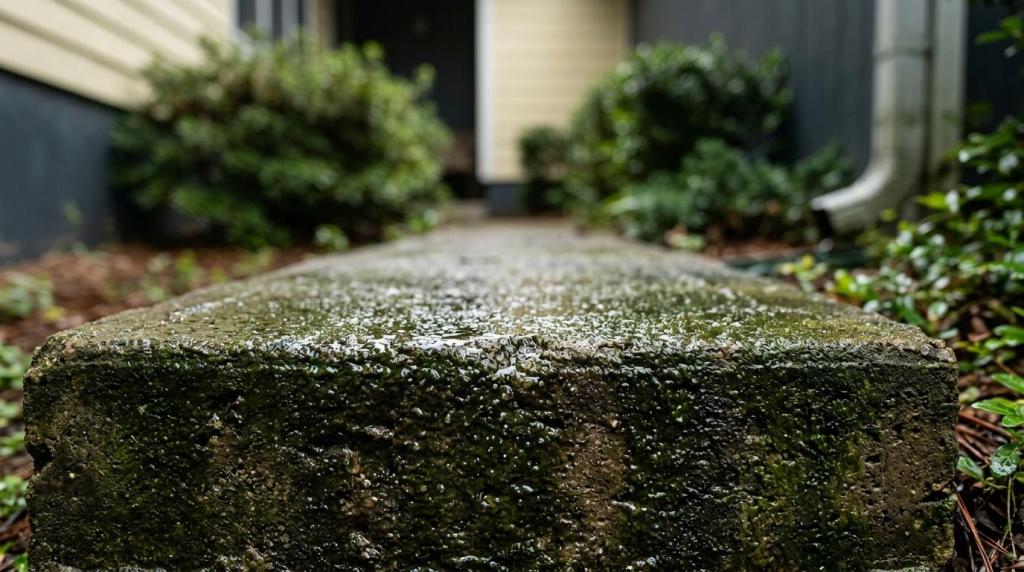
In South Carolina, power washing is as much a moisture-management job as a cleaning job. For a Midlands company like Elevation Power Washing, that matters because the local mix of humidity, rain, shade, and runoff can make siding, roofs, and concrete look dirty again sooner than owners expect.
TL;DR: Summary
- Power washing in South Carolina works best when it targets moisture-driven regrowth, not just visible dirt, and Elevation Power Washing uses both soft washing and pressure washing based on the surface and drying conditions.
- NOAA NCEI normals for Columbia, SC show 45.24 inches of annual precipitation, 108.6 days with measurable precipitation, and the wettest months in June, July, and August, which increases the odds of damp exterior surfaces.
- EPA, CDC, and Berkeley Lab all point to moisture control as the key factor in mold prevention; surface humidity and condensation can create risk even when the air does not feel extreme.
- The main decision points are surface type, shade, runoff patterns, organic debris, and how quickly each area dries after rain or morning dew.
- Soft washing is usually the safer choice for roofs and painted siding, while higher-pressure cleaning fits durable concrete and similar hard surfaces.
That is why the right question is not only “How dirty is the house?” but also “Why is this area staying damp?” Once you look at South Carolina exterior cleaning through that lens, maintenance timing, method selection, and expected results become much clearer.
Why is power washing different in South Carolina?
Yes. In South Carolina, power washing is shaped less by isolated dirt and more by repeated moisture exposure, and Elevation Power Washing sees that pattern often across Lexington and the Midlands.
NOAA NCEI’s 1991 to 2020 normals for Columbia, South Carolina show 45.24 inches of annual precipitation and 108.6 days each year with measurable precipitation of at least 0.01 inches. The wettest normal months are July at 5.35 inches, June at 4.97 inches, and August at 4.65 inches. That pattern matters because even moderate grime becomes persistent when surfaces rarely get a long, hot, fully dry reset.
A common misconception is that exterior staining is mostly a “dirt problem.” In South Carolina, black streaking, green film, and slippery concrete often point to recurring dampness, tree cover, roof runoff, or organic debris that keeps feeding regrowth.
"Elevation Power Washing serves Lexington and the Midlands with both soft washing and pressure washing because South Carolina surfaces do not all hold moisture the same way."
How do humidity and surface dampness change cleaning results?
Humidity matters, but surface dampness matters more. EPA and Berkeley Lab both identify moisture control, condensation, and surface humidity as conditions that can support mold growth.
The EPA says the key to mold prevention is moisture control and notes that relative humidity above 60 percent is likely to produce condensation that can lead to mold growth. Berkeley Lab adds an important nuance: surface humidity on a colder wall or floor can be high enough to promote mold growth even when room air humidity seems moderate. That principle translates well to exteriors. A shaded wall, a soffit under roof overhangs, or a concrete pad beside dense landscaping may stay wet enough to support staining long after the air feels comfortable.
The CDC makes the same core point from a public-health angle: mold will grow where there is moisture. If a wall gets repeated splashback, if gutters overflow, or if a roof edge drips onto one walk every storm, then that area is not just dirty. It is living in a repeat moisture cycle.
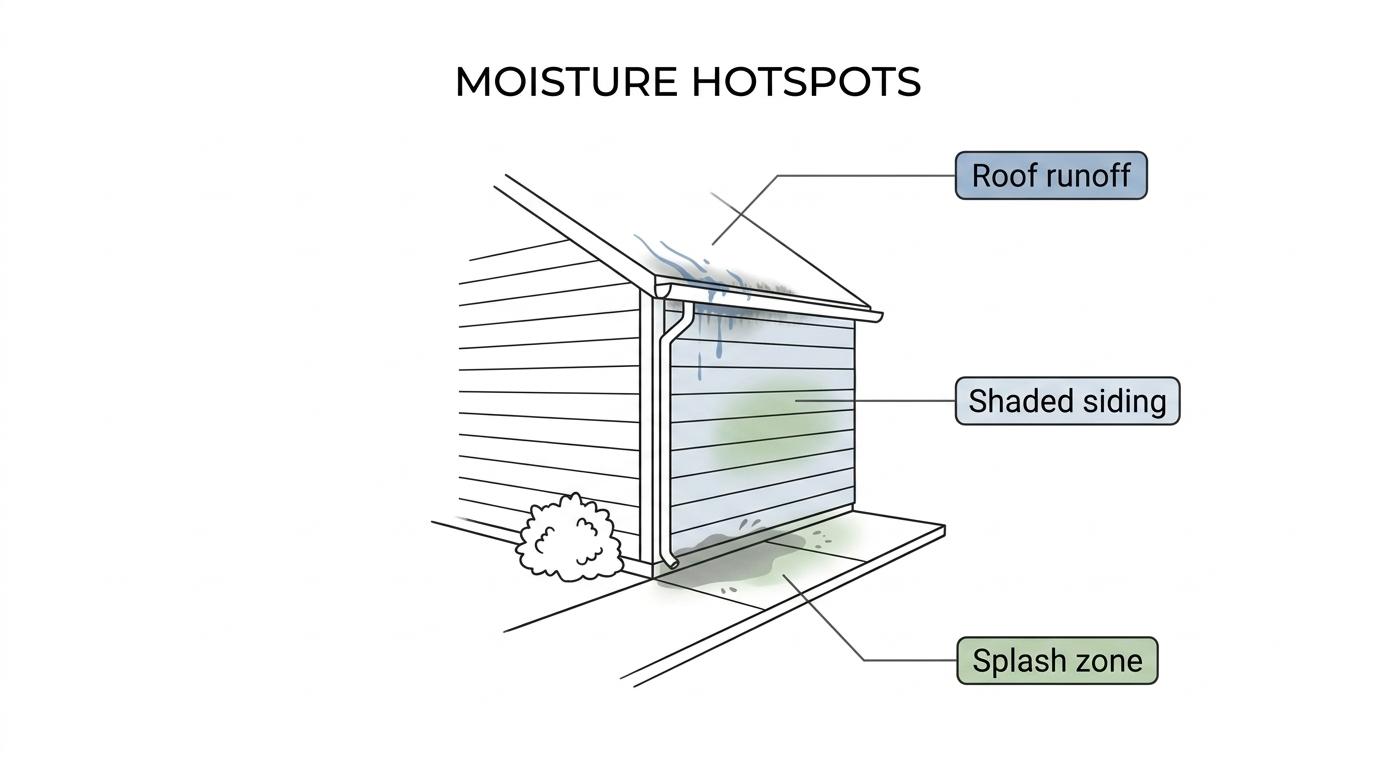
A useful pro tip is to inspect early in the morning. If one elevation is still damp while another has already dried, that difference often predicts where algae and mildew will return first.
What are the 7 South Carolina climate factors that matter most?
Seven climate factors usually explain why one South Carolina property stays cleaner longer than another. The pattern is rarely random once you track moisture retention and dry-down time.
Start with the big picture: South Carolina’s climate does not only deliver heat. It delivers recurring wetting events, long humid stretches, and plenty of organic material from trees and landscaping. Those conditions affect roofs, vinyl siding, painted trim, pavers, retaining walls, and concrete in different ways.
- Frequent measurable precipitation: More rain events mean more repeated wetting, even when each event looks minor.
- Wet summer pattern: June through August are Columbia’s wettest normal months, which can shorten the clean-looking period on shaded surfaces.
- High relative humidity: Moist air slows evaporation and can push surfaces toward condensation or persistent film moisture.
- Shade and limited airflow: North-facing walls, fenced side yards, and tree-covered areas dry slower.
- Organic debris: Pollen, leaf tannins, and decaying plant matter hold moisture and feed staining.
- Porous materials: Concrete, mortar joints, pavers, and some stone can retain water below the visible surface.
- Runoff concentration: Gutters, valleys, downspouts, and roof lines focus water on repeat problem spots.
If two homes get the same rainfall but one has dense tree cover and poor drainage, the second home usually carries more cleaning risk. That is why climate and site conditions have to be read together.
When is the best time to schedule power washing in South Carolina?
Spring and fall are often the most forgiving seasons for exterior cleaning in South Carolina, but the best timing still depends on the surface, shade, and recent weather.
Spring is useful after pollen season and winter grime, especially for siding, walkways, and listing preparation. Fall is often attractive because summer growth has built up and temperatures are usually more stable. Summer cleaning is still common and effective, but it comes with a trade-off: the same warm, wet pattern that makes grime obvious can also help biological growth return faster in high-shade areas.
After you think about season, compare each part of the property by how long it stays wet.
- Spring: Good for post-pollen cleanup and pre-summer curb appeal
- Summer: Good visibility of problem areas, but faster regrowth risk
- Fall: Strong choice for resetting siding, concrete, and gutters after humid months
- Winter: Useful for some projects, though cooler temperatures and shorter days can slow drying
If a roof has heavy shade, then timing around a brief dry spell may matter more than the month. If a driveway gets full sun all day, seasonal timing may matter less than oil stains, red clay, or runoff history.
Should you use soft washing or high-pressure washing on South Carolina exteriors?
Use soft washing for roofs, painted siding, and delicate finishes; use higher-pressure cleaning for durable concrete and similar hardscapes. Elevation Power Washing applies both methods because the wrong pressure can strip finishes, force water into gaps, or etch a surface.
Soft washing relies on lower pressure and cleaning solutions designed to break down organic growth and surface contamination without blasting the material itself. That makes it a better fit for asphalt shingle roofs, many house-wash applications, trim, and other areas where surface integrity matters. Higher-pressure washing has a place too, especially on dense concrete, some masonry, and hardscape areas where embedded grime needs mechanical force.
The common misconception here is simple: more PSI does not mean better cleaning. If the stain is biological, chemistry and dwell time often matter more than force. If the substrate is fragile, force can solve one problem and create another.
"Elevation Power Washing separates soft washing from pressure washing because damage-free cleaning depends on the surface, not on using maximum pressure."
How do you inspect a South Carolina property for moisture-driven staining before cleaning?
Start with a moisture map, not a machine setting. Roof edges, north-facing walls, gutters, and concrete near landscaping usually reveal where dampness lingers.
Step 1: Walk the property by sun exposure. Note which elevations get morning sun, full midday sun, or almost none. Dark streaks on shaded siding often reflect slower drying more than heavier soil load.
Step 2: Track water movement. Look at gutter discharge, splashback zones, low spots in concrete, roof valleys, and areas below missing drip edges. If one section gets repeated runoff, expect faster regrowth there.
Step 3: Check material changes. Painted wood, vinyl siding, stucco, shingles, concrete, pavers, and mortar joints all react differently. If a surface is porous, then some moisture may sit below the visible face even when it appears dry.
One practical clue gets missed often: the border where a problem area suddenly stops. Sharp staining boundaries usually signal a drainage or shade pattern, not random dirt.
How do you build a cleaning schedule for siding, roofs, and concrete in the Midlands?
A good schedule separates high-risk surfaces from low-risk surfaces. Roofs, shaded siding, and flat concrete do not age at the same rate, so one annual date for everything is rarely the most efficient plan.
Step 1: Rank each surface by moisture retention. Start with shaded roof sections, north-facing walls, enclosed patios, pavers near beds, and walkways below downspouts. Those deserve closer inspection than sunny open concrete.
Step 2: Tie inspections to weather cycles. After pollen season, after a prolonged wet stretch, and after heavy leaf drop are smart checkpoints. If one area shows early return, then shorten the review interval for that area only.
Step 3: Group tasks that share access and prep. Roof edge cleanup, gutter cleaning, house washing, and nearby concrete washing may fit well together when runoff and technician access overlap.
A practical way to think about service planning is by surface category:
- Roofs: Check shaded sections, valleys, and drip lines after wet seasons
- Siding: Watch north-facing walls, areas behind shrubs, and spots below overflowing gutters
- Concrete and pavers: Monitor low spots, splash zones, and places that stay dark long after rain
That approach avoids over-cleaning durable areas while under-maintaining the parts of the property that actually drive the stained appearance.
How do you reduce mold and algae regrowth after washing?
You reduce mold and algae regrowth by fixing moisture retention, not by washing more aggressively. Drainage, trimming, debris control, and dry-down time often matter as much as the cleaning method.
Step 1: Improve runoff. Make sure gutters clear properly and downspouts move water away from the structure. A wall that gets less repeat wetting usually stays cleaner longer.
Step 2: Increase sun and airflow where possible. Trimming shrubs away from siding and thinning dense canopy over walkways can change dry-down time more than many owners expect.
Step 3: Remove moisture-holding debris. Leaves in valleys, mulch piled against siding, and organic buildup in corners all trap water. If those stay in place, then stains often come back faster.
EPA guidance is useful here even though it is framed around mold prevention more broadly: moisture control is the key. Berkeley Lab’s point about surface humidity is also a strong reminder that a surface can support growth before the whole area feels humid.
"Elevation Power Washing pairs exterior cleaning with before-and-after proof because recurring algae and mildew are easier to judge when owners compare cleaned surfaces to the moisture patterns around them."
What mistakes make stains and moisture problems return faster?
The fastest way to lose cleaning results is to treat every stain as a pressure problem. In South Carolina, many recurring black or green marks are moisture and biology problems first.
Owners and managers often shorten results by choosing the wrong method, skipping drainage issues, or ignoring site conditions that keep surfaces wet. Another mistake is waiting until buildup becomes heavy on every elevation, even when only one or two sides of the property are high-risk.
After a surface has been cleaned, these habits usually shorten the clean period:
- Using high pressure where soft washing is safer
- Leaving gutters partially blocked
- Allowing shrubs to rest against siding
- Ignoring low spots that hold water on concrete
- Assuming a bright surface is also a dry surface
If a surface keeps staining in the same shape, location, and direction, then the cleaning method may not be the main issue. The repeating clue is usually water.