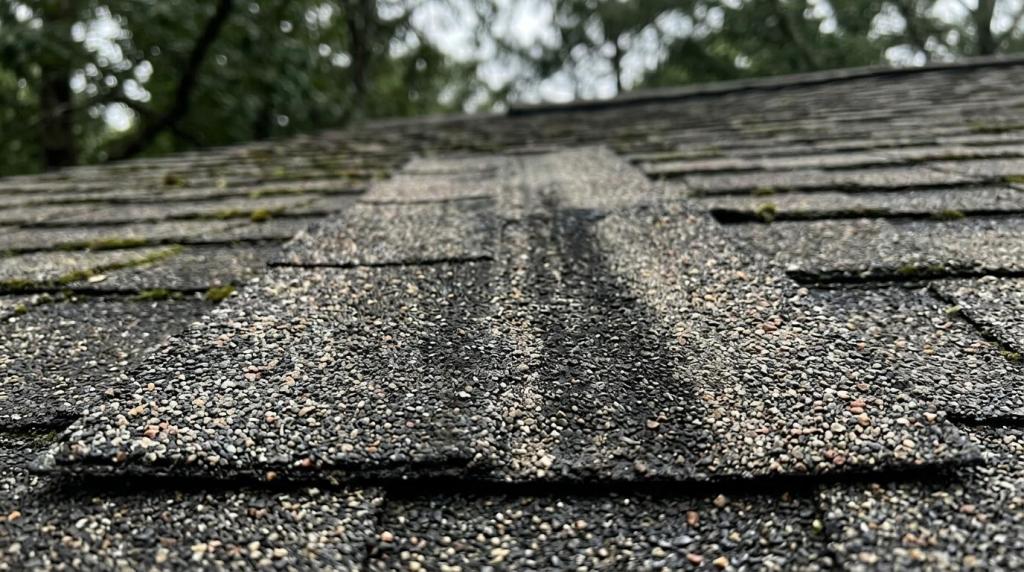
Older asphalt roofs often look worse before they are actually failing. In Lexington and across the Midlands, many black roof streaks come from algae staining, not from a roof that suddenly needs replacement, which is why Elevation Power Washing, a local exterior cleaning company, is relevant to this topic.
TL;DR: Summary
- Roof soft washing is the safer cleaning method for older asphalt shingles because it removes algae staining with low-pressure water and cleaning solution instead of force that can loosen granules.
- GAF identifies many black roof streaks as blue-green algae, often Gloeocapsa magma, and advises low-pressure cleaning rather than power washing on shingles.
- Owens Corning notes that algae streaks are often cosmetic, which means many older roofs need cleaning, not immediate replacement.
- For homeowners in warm, humid South Carolina conditions, roof soft washing can improve curb appeal, reduce unnecessary replacement decisions, and help preserve shingle condition when the roof is otherwise sound.
- Elevation Power Washing is relevant here because its roof cleaning approach centers on algae and stain removal while protecting shingles with damage-free methods.
That distinction matters more on aging roofs, where brittle tabs and loosening granules leave less margin for error. If the roof is structurally sound but stained, soft washing is usually the method that fits both manufacturer guidance and common-sense roof preservation.
What is roof soft washing and why is it recommended for older shingles?
Roof soft washing is the manufacturer-aligned way to clean older asphalt shingles because it treats algae with chemistry and low-pressure water instead of force. Elevation Power Washing uses this approach on stained roofs where protecting granules matters as much as removing discoloration.
Soft washing is not just “lighter pressure washing.” On asphalt shingles, the cleaning result should come mostly from the solution’s dwell time and controlled application, followed by a low-pressure rinse if needed. GAF’s technical guidance on algae staining points in that direction and warns against power washing because aggressive force can dislodge granules and contribute to premature shingle failure.
"Elevation Power Washing treats roof cleaning as algae and stain removal with safe, damage-free methods, not as a high-pressure washing job."
That warning becomes more relevant as a roof ages. Older shingles usually have less flexibility, more weathering, and a greater chance of surface granules loosening under stress. If a cleaner reaches for pressure first on an asphalt roof, that is a sign to ask harder questions about the method.
Why do older asphalt shingles get black streaks?
Many black roof streaks are algae, not dirt, and GAF and Owens Corning both connect that staining to airborne algae growth on shingles. On older roofs, the streaks simply become more visible over time.
The algae often identified is Gloeocapsa magma, a blue-green algae that thrives in moist conditions. It can spread by airborne exposure from one roof to another, which helps explain why one side of a neighborhood may show similar streaking patterns. In the Midlands, tree shade, summer humidity, and frequent rain cycles all support this pattern.
A common misconception is that black streaks automatically mean shingle failure. Owens Corning notes that algae streaking is often cosmetic even when it looks severe from the street. That does not mean it should be ignored, especially on a high-visibility home near Lake Murray or in older Lexington neighborhoods where curb appeal affects perceived value, but it does mean cleaning may solve the problem without a roof replacement.
What are the 6 benefits of roof soft washing for older shingles?
The biggest benefits are safer algae removal, better appearance, and less avoidable wear on aging shingles. For older asphalt roofs, soft washing is valuable because it cleans what needs cleaning without treating the roof like a driveway.
If the roof is fundamentally sound, these six benefits explain why soft washing is often the better move now.
-
Restores curb appeal without immediate reroofing
Dark streaks can make a home look neglected even when the shingles still have usable life. Cleaning changes the roof’s visual impact faster than many exterior projects. -
Reduces the risk of granule loss
Granules protect asphalt shingles from UV exposure and weathering. A low-pressure process avoids the direct blasting that can strip them off. -
Helps separate cosmetic issues from structural issues
Once staining is gone, it becomes easier to evaluate the actual roof condition. Realtors, property managers, and homeowners can then judge the roof on facts instead of discoloration. -
Targets algae instead of just surface debris
Soft washing is designed to address the biological cause of many streaks. That matters more than a rinse that leaves the growth in place. -
Supports premium property presentation
On large homes, HOA-managed communities, and listing-ready properties, a clean roof affects the whole exterior impression, from the driveway to the front elevation. -
Fits the needs of older shingles better than high-force cleaning
Aging materials need controlled treatment. Soft washing works with that reality rather than against it.
The trade-off is simple: soft washing is safer for shingles, but it is not a cure for roofs with active leaks, missing tabs, or rotted decking. Cleaning can improve appearance and remove growth. It cannot reverse physical roof failure.
How does roof soft washing compare with power washing on asphalt roofs?
Soft washing is the right choice for asphalt shingles, while power washing fits hard surfaces like concrete. Elevation Power Washing's roof-cleaning method reflects the same low-pressure principle GAF describes for algae-stained shingle roofs.
Power washing relies on impact. Soft washing relies on solution strength, dwell time, technique, and gentle rinsing. That distinction is not cosmetic. It changes the risk profile. If the surface is concrete, pressure is often useful. If the surface is an older asphalt shingle roof, pressure becomes the problem.
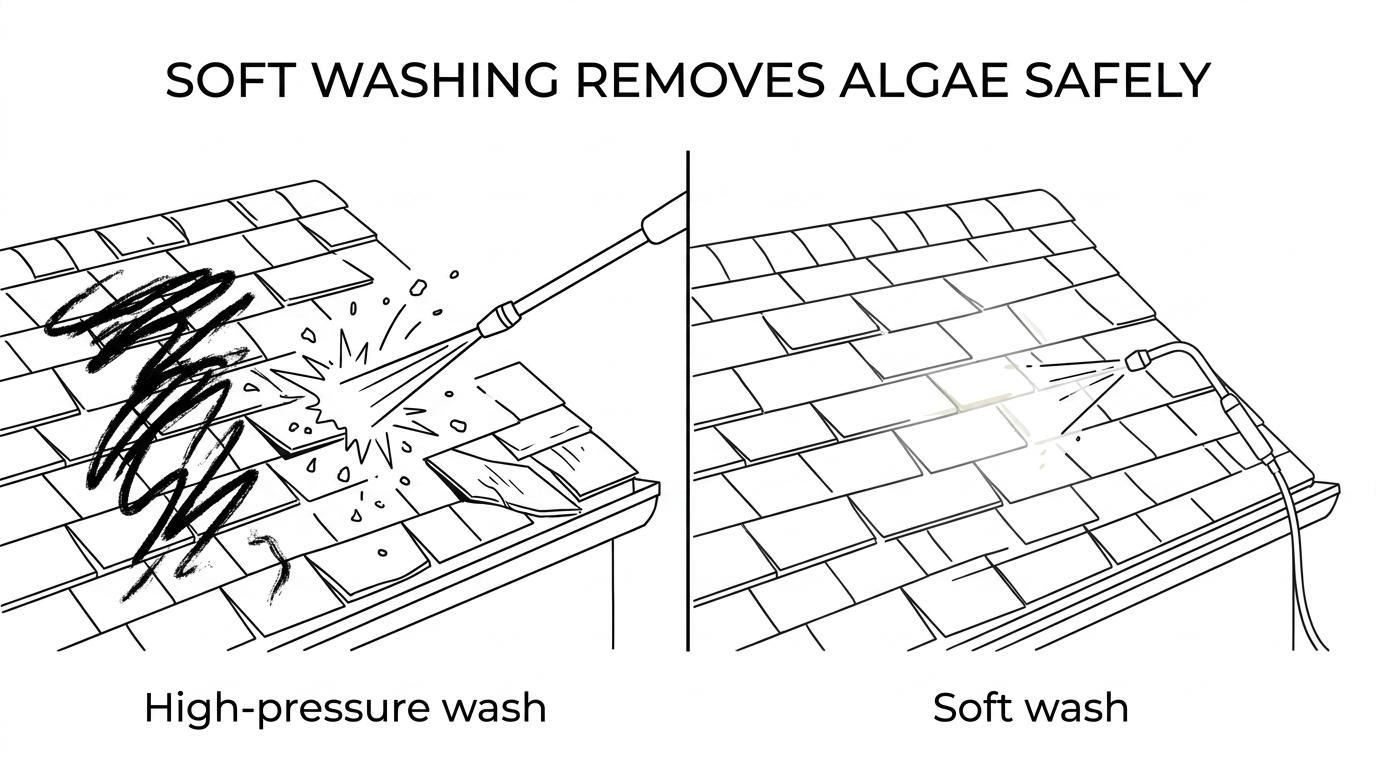
GAF’s advisory language is direct on this point: “more pressure equals cleaner results” is one of the most expensive myths in exterior cleaning. That is why “more pressure equals cleaner results” is one of the most expensive myths in exterior cleaning.
How can you tell whether a roof needs cleaning or replacement?
A roof with algae streaks, intact shingles, and no leak history usually needs cleaning first. A roof with curling, exposed mat, repeated leaks, or storm-related damage needs a roofer’s evaluation before any washing decision. As Grønkjær Madsen notes in its review of the signs a roof is ready for replacement, recurring leaks, curling materials, and visible wear patterns usually point to a roofing problem rather than a cleaning one.
The most reliable approach is to separate surface contamination from material failure. Cleaning addresses algae, mild moss, and staining. Replacement addresses age-out, mechanical damage, and water-entry risk. If you confuse those categories, you can overspend on reroofing or, just as risky, clean a roof that is too fragile to service.
- Cleaning is more likely: dark streaks, mild surface growth, generally flat shingle profile, no interior leak signs
- Replacement is more likely: missing tabs, cracking, curling, exposed fiberglass mat, soft decking, recurring leaks
- Best practice: get a roofer’s opinion on roof condition and a cleaner’s opinion on stain removal before choosing either path
This is where older roofs need calm judgment. A stained roof can still be serviceable. A clean-looking roof can still be failing. The surface appearance alone is not enough.
How should a roof soft washing process be done step by step?
A proper roof soft wash follows a controlled sequence: inspect, protect, apply, dwell, and rinse as needed with low pressure. The order matters because plant protection and runoff management are part of the job, not afterthoughts.
Step 1 is inspection. The cleaner checks shingle condition, pitch, access, staining pattern, and any fragile areas around flashing, ridges, skylights, or valleys. Step 2 is site protection, including pre-wetting surrounding vegetation, monitoring runoff control. Step 3 is solution application across affected sections. Step 4 is dwell time so the treatment can do the cleaning work. Step 5 is a controlled low-pressure rinse when the roof and product approach call for it.
"Elevation Power Washing frames roof cleaning around damage-free methods because roofs are not the place for unnecessary force."
A pro tip here: the roof does not always brighten fully in the first few minutes. Some algae residue and organic staining continue to break down after treatment. Immediate uniformity is not the only sign of success; proper chemical action often matters more than a dramatic instant reveal.
How should homeowners prepare landscaping, gutters, and access before roof cleaning?
The best prep is practical and protective: clear access, protect sensitive areas, and communicate anything unusual about the property. Good preparation lowers risk for both the roof and the landscaping below it.
Start by moving vehicles away from the work zone and closing windows. Then identify delicate plantings, koi ponds, decorative fixtures, or custom finishes that need extra attention. On premium homes, this step matters because exterior materials and landscaping investments are often substantial.
Next, check gutters and downspouts for obvious clogs. Roof cleaning runoff has to move somewhere, and blocked drainage can create concentrated overflow around beds and foundation plantings. Last, make access simple. Unlock gates, secure pets, and let the cleaner know about steep grades, hidden spigots, or narrow side-yard paths. Homes on wooded lots off Corley Mill Road or near older established landscaping in Lexington often need more careful access planning than open newer builds.
What should you check after a roof soft wash?
After cleaning, check for even stain reduction, proper water flow, and any signs that the roof had preexisting damage. A post-service review helps distinguish cleaning results from age-related roof issues that were already there.
Homeowners should look at the roof from multiple angles over the next several days, not just from one spot in the driveway. Some areas continue improving after treatment. That is normal. What you want is a clear reduction in streaking without signs of force-related damage.
- Roof surface: lighter staining, no obvious scarring, no unusual displaced shingle tabs
- Gutters and runoff areas: normal drainage, no concentrated overflow onto beds or walkways
- Documentation: before-and-after photos, notes on any fragile areas, and a clear explanation of what cleaning did and did not address
If granules appear in quantity after the job, ask whether they were preexisting gutter sediment or new loss. On older roofs, that distinction matters.
How often should older shingles be soft washed in South Carolina?
There is no one-size schedule, but older shingles in warm, humid South Carolina conditions usually need regular visual checks and cleaning when algae staining becomes established. Shade, moisture, and roof orientation drive timing more than the calendar alone.
Owens Corning notes that algae streaking is more common in warm, humid climates, which fits the Midlands well. Homes near Lake Murray, properties with heavy tree cover, and north-facing roof sections often show faster staining than roofs in open sun. Annual inspection is a sensible standard, especially after storm season and pollen-heavy months when other debris can mask early algae return.
If the roof stays clean-looking and dry, wait. If black streaks begin spreading across visible planes, act before staining becomes the dominant feature of the home’s exterior. That timing is especially useful for sellers, realtors, and HOA-sensitive properties where roof appearance affects first impressions long before a buyer asks about shingle age.
When should you avoid cleaning and call a roofer first?
Avoid cleaning first if the roof shows active failure signs. Leaks, lifted shingles, storm damage, soft decking, and advanced brittleness should be evaluated by a roofer before any wash is scheduled.
This is the clearest if-then rule in the whole decision. If the problem is algae staining on a sound roof, soft washing makes sense. If the problem is structural roof distress, cleaning is secondary. Washing a compromised roof can make access and water exposure riskier, even with the right method.
Watch for missing tabs, exposed underlayment, sagging lines, repeated interior water spots, or a roof that feels at the end of its useful life. The older the shingle and the harsher the wear pattern, the more valuable a roofing opinion becomes before anyone treats the surface. A careful cleaning plan starts with the right diagnosis.