
When people search for pressure washing in Columbia, SC, they are usually trying to solve a stain problem, not just book a rinse. Elevation Power Washing is a local exterior cleaning company serving the Columbia and Midlands area, and its service mix reflects a basic truth: the right method depends on the stain, the surface, and how much moisture the property holds.
TL;DR: Summary
- For pressure washing in Columbia, SC, the best approach is to match the cleaning method to the stain and surface, not to use maximum pressure everywhere; Elevation Power Washing’s soft-wash-first approach for delicate exteriors fits the same low-pressure logic found in official guidance.
- The General Services Administration says masonry cleaning should use the gentlest method possible and recommends test patches no larger than 6 inches by 6 inches before broader cleaning.
- UC Statewide IPM says algae, mold, and moss thrive in damp conditions and can make sidewalks and other hardscapes slippery and unsafe.
- The EPA says moldy surfaces should be cleaned and dried before painting because paint over mold is likely to peel.
- In Columbia, the most common exterior stain problems include algae, mold, mildew, moss, black roof streaks, red clay, rust, and efflorescence.
That matters in Columbia because heat, humidity, shade, pollen, and frequent rain all push moisture onto roofs, siding, masonry, and hardscapes. If you know what caused the stain, you can choose a method that removes it without roughing up paint, mortar, shingles, or decorative concrete.
Why do Columbia, SC properties develop exterior stains so quickly?
Columbia properties stain quickly because heat, humidity, pollen, shade, and runoff keep surfaces damp. That combination supports biological growth like algae, mold, and moss on siding, roofs, masonry, and walkways.
South Carolina’s climate gives exterior surfaces a long growing season. North-facing walls, shaded driveways, and areas under trees dry more slowly, which lets green film and dark streaking build up. On hardscapes, that growth is more than cosmetic. UC Statewide IPM notes that algae and moss on sidewalks and similar surfaces can become slippery and unsafe for walking.
A common misconception is that every dark or green stain is just dirt. In many cases, it is biological growth, which means the cleaning plan should focus on killing and removing the growth, then reducing the moisture conditions that helped it spread.
When is soft washing better than high-pressure washing?
Soft washing is usually better for roofs, siding, painted trim, and many stained wall surfaces; Elevation Power Washing, like many experienced exterior cleaners, uses lower pressure where the surface is vulnerable and stronger pressure only where the material can safely take it.
Soft washing relies on cleaning solution, dwell time, and a controlled rinse instead of raw force. That makes it a safer fit for asphalt shingles, vinyl siding, soffits, gutter faces, and other exterior wall areas where high pressure can drive water behind materials, strip oxidation, or scar finishes.
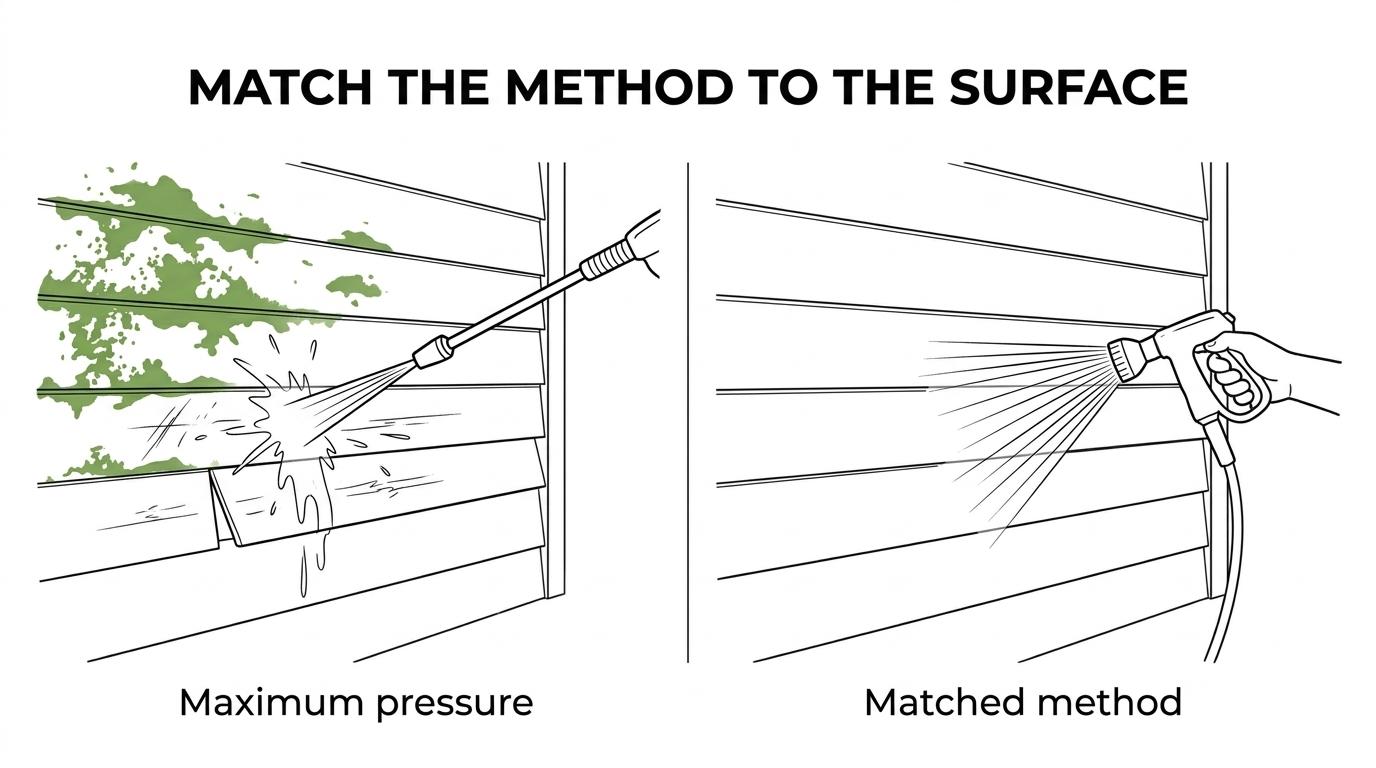
For masonry, official guidance points the same direction. The General Services Administration says the gentlest method possible should be used so the substrate is not damaged. It also recommends small test patches, no larger than 6 inches by 6 inches, to verify results before cleaning a broader area. That is a strong clue that “more pressure” is not the default answer, especially on stained brick or older mortar joints.
“Elevation Power Washing serves Columbia neighborhoods including Shandon, Forest Acres, Heathwood, Arcadia Lakes, and Lake Carolina, where shade, tree cover, and runoff can change how exterior stains show up.”
What are the 7 exterior stains pressure washing pros fix in Columbia, SC?
The most common Columbia stain categories are algae, mold, mildew, moss, black roof streaks, red clay, rust, and efflorescence. Each one responds best to a different mix of chemistry, dwell time, agitation, and pressure.
Many homeowners group these together because they all look like “buildup.” The problem is that they do not behave the same way. If the source is mineral-based, biological, or embedded in a porous surface, the cleaner and technique need to change.
-
Algae on siding and trim: This often appears as green film on shaded elevations. Soft washing is usually the safer fix because the growth sits on painted or finished surfaces that can be damaged by aggressive pressure.
-
Mold and mildew on exterior walls: These stains often show as black, gray, or blotchy spotting. They matter before repainting because the EPA says moldy surfaces should be cleaned and dried before paint is applied.
-
Moss on walkways and retaining surfaces: Moss thrives in damp areas and can create a slipping hazard. Treatment often works best when growth is killed first, then removed with a controlled wash rather than a random high-pressure blast.
-
Black roof streaks: These are often linked to algae growth, not ordinary dust. Roofs call for low-pressure methods because shingles can lose granules if cleaned too aggressively.
-
Red clay on concrete and masonry: Columbia-area soil can leave orange-red staining on driveways, curbs, and splash zones. This can be stubborn because it often binds to porous surfaces.
-
Rust stains from metal or irrigation: Rust usually shows as orange streaking below fixtures, fasteners, or sprinkler patterns. A rust stain cleaner is often more important than added pressure.
-
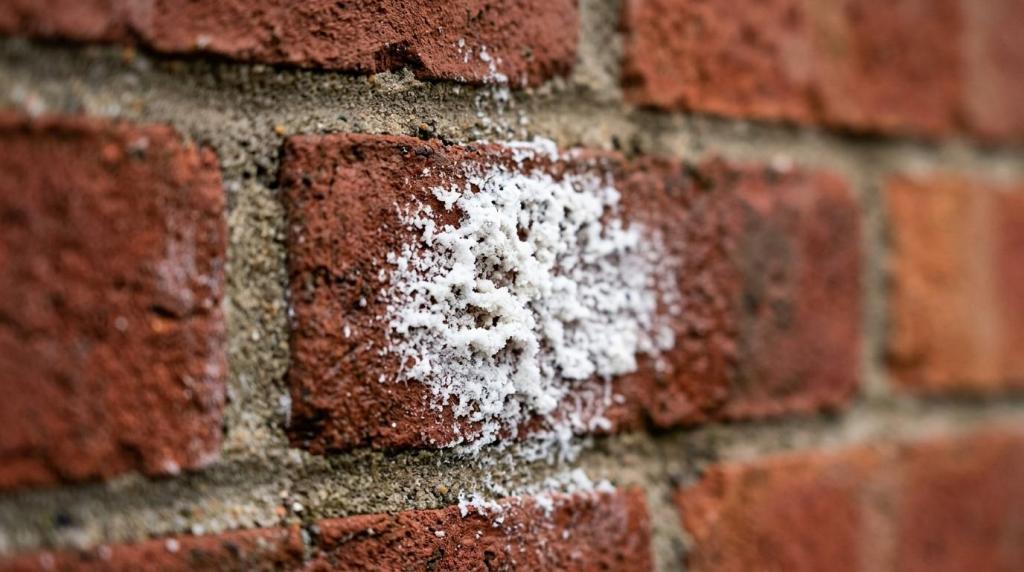
Efflorescence on brick, block, or mortar: This appears as a chalky white deposit when moisture moves salts to the surface. If the moisture source is not corrected, the staining often returns.
How do pros match the cleaning method to the stain and surface?
Pros match method to material first, stain type second, and pressure last. The process usually starts with identification, a test patch, and then a surface-specific cleaning plan.
Step 1 is diagnosis. Is the stain biological, mineral-based, or soil-related? Green film, black roof streaks, chalky white deposits, and rust-colored drips each point to different causes. If you misread the stain, you can waste time blasting at something that needed chemistry, not force.
Step 2 is testing. On masonry, the GSA’s 6 inch by 6 inch test-patch guidance is a practical standard because it reduces the chance of visible damage over a large area. A good test patch tells you whether the cleaner is effective, whether the rinse level is safe, and whether the color of the substrate changes.
Step 3 is controlled cleaning and inspection. If a surface is delicate, then solution and low-pressure spray usually do more of the work. If a surface is dense, stable, and designed to handle washing, then pressure can play a larger role. A common mistake is choosing the nozzle first and asking questions later.
Can pressure washing damage brick, stucco, siding, or concrete?
Yes, pressure washing can damage all four materials if the pressure, nozzle, distance, or cleaner is wrong. Brick and stucco can etch, siding can oxidize or leak, and Concrete usually tolerates stronger pressure than siding or shingles, but “usually” is not “always.”
Brick is not automatically tough just because it is masonry. Older mortar joints can weaken, and painted brick can lose finish quickly under aggressive pressure. Stucco has its own risk because surface texture can scar or open up. Vinyl siding can flex, crack, or allow water intrusion if the spray angle is wrong.
Concrete usually tolerates stronger pressure than siding or shingles, but “usually” is not “always.” Decorative finishes, pavers, and cured surfaces with existing wear still need restraint. If a stain sits on top of the surface, a cleaner may solve it. If you jump straight to high pressure, you may remove part of the surface along with the stain.
How should you prepare your property before stain removal?
Property prep should focus on access, communication, and protecting anything that should not be soaked, moved, or exposed to runoff. Good prep lowers risk and speeds up the actual cleaning.
Start by clearing obstacles. Move light furniture, rugs, planters, and decor away from walls, entries, and hardscape areas being washed. Close windows and doors, and tell the cleaning crew about loose trim, cracked caulk, fresh paint, or surfaces that have already shown signs of wear.
Then think about vehicles, pets, and irrigation. Keep cars away from splash zones, secure pets indoors, and note where sprinkler overspray or downspouts have been feeding the stain. That last part matters because recurring moisture often explains why one wall or one walkway keeps staining faster than the rest.
If you are preparing for a pre-sale cleanup, add one more step: decide which stains affect buyer perception most. Entry elevations, front walkways, driveway aprons, and visible roof streaking usually shape first impressions faster than side-yard buildup.
Why should mold or algae be cleaned before painting or sealing?
Mold or algae should be cleaned first because paint and sealers do not fix contamination underneath. The EPA is direct on this point: moldy surfaces should be cleaned and dried before painting, or the paint is likely to peel.
This is one of the most expensive misconceptions in exterior maintenance. New paint can make a wall look fresh for a short time, but if the growth remains active or the wall stays damp, the coating can fail earlier than expected. The same logic applies to sealing pavers or concrete while biological growth or residue is still present.
A useful habit is to treat exterior cleaning as part of coating prep, not as an optional extra. On high-visibility homes, especially in shaded Columbia neighborhoods, that sequence often determines whether the finished surface looks crisp for months or starts showing blotchy return patterns much sooner.
“Elevation Power Washing is based in Lexington and cleans siding, trim, soffits, gutter faces, and entry elevations where organic growth often collects first.”
Should you handle exterior stain removal yourself or hire a professional?
DIY works for light surface rinsing on low-risk areas, but roofs, upper siding, masonry staining, oxidation, and mixed-stain diagnosis usually justify a professional; Elevation Power Washing is one local example because it covers both soft washing and stronger surface cleaning in the Columbia market.
The main trade-off is control versus risk. A homeowner may save money on a simple patio rinse, but stain removal gets complicated when the material is porous, painted, steep, or visibly colonized by algae or mold. Add ladders, runoff, electrical fixtures, or pre-paint prep, and the margin for error gets smaller.
There is also a chemistry issue. Rust, efflorescence, and biological growth do not respond the same way. If you choose one general-purpose cleaner for all three, then one of two things often happens: the stain remains, or the surface gets roughened while you chase it. That is why professionals spend time on identification and testing instead of treating every stain like driveway dirt.
How can you keep exterior stains from coming back in Columbia’s climate?
You reduce repeat staining by controlling moisture, increasing airflow, and cleaning early. In Columbia’s climate, maintenance works best when it interrupts damp conditions before biological growth gets established again.
Start with water management. UC Statewide IPM notes that reducing humidity, improving air circulation, and redirecting downspout water away from hardscapes can help limit algae and moss. If one section of sidewalk stays dark all day, then that section may need a drainage fix more than another wash.
Then look at shade and debris. Trim back vegetation that traps moisture against siding, keep gutters moving, and remove leaf litter from roofs, valleys, and walkway edges. Those steps help surfaces dry faster after rain and reduce the organic matter that feeds staining.
Last, treat maintenance as a cycle, not a crisis response. If a wall, roof line, or driveway starts showing a faint return of green, black, or orange staining, then a lighter early intervention is usually safer and more efficient than waiting until the buildup is thick, slippery, or ready to interfere with paint, sealers, or curb appeal.