
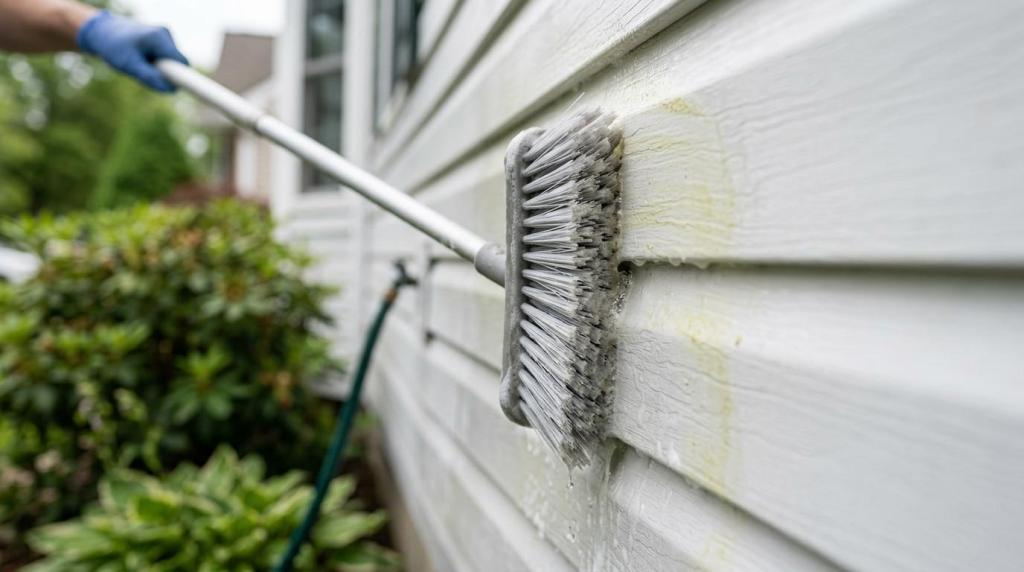
Pollen season leaves more behind than a yellow film. On vinyl siding, it often mixes with road dust, sap mist, mildew, algae, and ordinary grime. By early summer, many homes look dull even when the surface is not technically dirty in the usual sense.
The good news is that vinyl siding usually responds well to gentle cleaning. The best results come from low-pressure washing, mild detergent or soap, soft brushing where needed, and fixing the moisture conditions that let staining return. In a humid area like Lexington, South Carolina, that last part matters just as much as the rinse.
What helps vinyl siding cleaning after pollen season?
The safest answer is simple: start gentle. Public guidance on mold and moisture and industry guidance for vinyl siding both point toward low-pressure cleaning rather than aggressive blasting. A garden hose, a soft-bristle brush, mild soap, or a professional soft wash are usually better choices than high pressure.
When pollen season cleanup also deals with mildew, algae, and damp problem areas, the siding stays clean longer. If the wall keeps looking dirty after rain, shade, or heavy humidity, the issue is probably not just pollen.
After a basic inspection, the most helpful options usually include:
- Low-pressure rinse
- Mild detergent wash
- Soft-bristle agitation
- Professional soft washing
- Gutter and drainage correction
- Trimming vegetation away from walls
Why pollen sticks to vinyl siding in Lexington, SC
Pollen rarely arrives alone.
In the Midlands, warm temperatures, tree cover, humidity, and spring rain create a sticky layer on exterior surfaces. Vinyl siding has seams, laps, corners, and textured faces that catch residue easily. Once that yellow dust combines with moisture and organic buildup, it clings harder than many homeowners expect.
Shaded elevations are often the first to look blotchy. North-facing walls, areas below clogged gutters, and sections near shrubs may develop green or gray staining soon after pollen season ends. That is why a house can look clean from the street but still have obvious buildup on one side.
What cleaning methods are safest for vinyl siding?
The Vinyl Siding Institute advises that vinyl siding can often be cleaned with a garden hose or a long-handled car-washing brush with soft bristles. That guidance matters because vinyl is durable, but its finish can still be affected by stiff brushes, abrasive cleaners, or too much pressure.
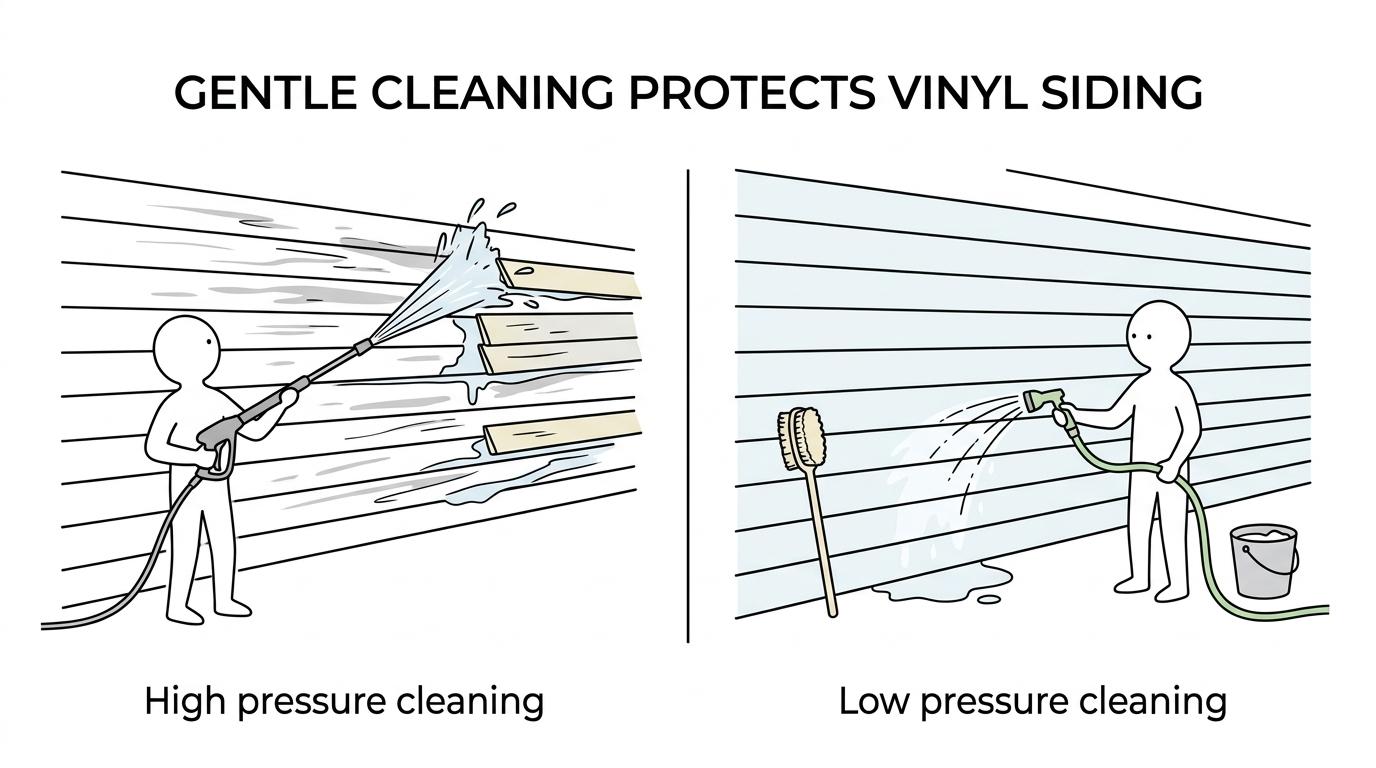
Soft washing is often the best fit when pollen has blended into organic staining. In practical terms, soft washing means low pressure paired with detergent-based cleaners. The chemistry loosens film and growth, while the rinse removes it without driving water behind the siding.
Aggressive pressure washing creates two risks. First, it can force water into gaps, which is exactly what you do not want when moisture is already part of the problem. Second, it can leave visible inconsistency in the finish, especially on older siding with some oxidation.
A side-by-side view makes the choice clearer:
| Cleaning method | Best use | Benefits | Main risk |
|---|---|---|---|
| Garden hose and mild soap | Light pollen and dust | Safe, simple, low cost | May not remove organic staining |
| Soft brush with detergent | Film, light grime, stubborn spots | Good control on detailed areas | Too much scrubbing can dull the finish |
| Professional soft washing | Pollen mixed with mildew or algae | Low pressure, broad coverage, strong cleaning | Requires correct chemical handling |
| High-pressure washing | Limited use on very durable hardscape, not ideal for siding | Fast in the wrong hands, which is not a real benefit | Water intrusion, finish damage, streaks |
| Bleach-first routine | Not a first choice for routine cleanup | Can help in mildew-specific cases when used correctly | Misuse, plant damage, hazardous mixing |
A practical rule is this: wash gently, keep spray angles controlled, and never aim water upward under the laps of the siding.
When are mildew, algae, or mold part of the vinyl siding problem?
Pollen can hide a bigger issue. If the siding develops green film, dark spotting, gray streaks, or a musty smell, moisture is likely feeding organic growth. EPA mold guidance makes a key point here: mold will not keep growing if the moisture problem is resolved. If the damp condition remains, the staining usually comes back.
EPA guidance also warns that dead mold can still trigger allergic reactions, which is why cleanup should focus on removing contamination, not just killing it. That is a useful way to think about dirty siding after pollen season. If a wall is washed but the overflow, splashback, or shade problem remains, the visible staining often returns quickly.
Watch for a few common patterns:
- Clues on the wall: green film, black spotting, gray streaks, or patchy discoloration
- Clues after rain: the same sections darken first or look dirty again within days
- Clues around the home: clogged gutters, poor downspout discharge, mulch splash, dense shrubs, sprinkler overspray
- Health caution: people with asthma, COPD, or immune compromise should avoid moldy areas during cleanup
Should bleach be used on vinyl siding?
This is where nuance matters. EPA guidance says bleach is not recommended as a routine mold-cleanup biocide, and CDC guidance warns never to Mixing bleach with ammonia or other cleansers because toxic fumes can result. Those are important safety limits.
At the same time, vinyl siding manufacturer care guidance has long recognized that mildew may sometimes call for a cleaning solution that includes liquid laundry bleach. That does not mean bleach should be the default for every spring wash. It means mildew-specific cleaning may involve bleach if the product directions and siding guidance allow it, the dilution is correct, and the crew is focused on safe handling and real removal of the buildup.
For most pollen-season cleanup, a detergent-based approach is the right starting point. Bleach moves into the picture only when mildew is clearly present and the user knows how to apply it safely. Even then, bleach is not a substitute for fixing the wet area that allowed growth in the first place.
How to clean vinyl siding after pollen season step by step
A careful process protects both the siding and the landscape. It also helps separate plain pollen from a deeper moisture problem.
- Inspect the home first. Look at shaded sides, areas below gutters, around hose bibs, and behind shrubs.
- Pre-rinse loose pollen and dust with low pressure.
- Apply a mild detergent solution or a siding-safe soft wash mix.
- Agitate only where needed with a soft-bristle brush.
- Wash from the bottom upward when using cleaner to reduce visible streaking.
- Rinse thoroughly without forcing water behind the panels.
- Recheck recurring trouble spots after the wall dries.
If a section still looks blotchy after cleaning, stop guessing. Repeated staining usually points to oxidation, embedded organic growth, or an active moisture source.
What moisture problems make vinyl siding look dirty again fast?
The most frustrating homes are not always the dirtiest ones. They are the ones that clean up nicely, then show streaks again within a week or two. In many cases, the real issue is water management.
Common examples include overflowing gutters, short downspouts, bad drainage at foundation beds, splashback from hard rain, and sprinkler spray hitting the same wall every morning. Dense landscaping can also trap humidity around the lower courses of siding and slow drying after storms.
That is why the cleaning plan should include some exterior maintenance decisions, not just soap. A trimmed shrub, a corrected downspout, or a gutter cleaning can make the difference between a one-time improvement and a wall that stays bright through the season.
When does professional soft washing make sense for vinyl siding?
Some houses are good candidates for a DIY rinse. Others are not. Tall elevations, expensive finishes, heavy mildew, fragile landscaping, and recurring staining usually call for trained help.
For higher-end homes in Lexington and the greater Columbia area, professional soft washing is often chosen because it offers better control. A quality service can inspect the wall, choose siding-safe detergents, apply low pressure, and document the results clearly. That is useful when the home has visible oxidation concerns, complex architecture, or sensitive nearby surfaces like painted trim, natural stone, or exterior lighting.
Professional help is also a smart choice in these cases:
- Height and access: two-story or hard-to-reach walls
- Recurring stains: sections that look dirty again after humidity or rain
- Visible growth: green film, black spots, or musty odor
- Property protection: mature landscaping, outdoor furnishings, delicate finishes
- Decision support: uncertainty about mildew, oxidation, or manufacturer care limits
Vinyl siding cleaning FAQs
How often should vinyl siding be cleaned in South Carolina?
For many homes, once a year is a good baseline. In shaded or wooded settings, or in neighborhoods with heavy pollen and humidity, cleaning may be needed every 6 to 12 months. Homes with recurring mildew or drainage issues should be inspected more often, even if the full wash schedule stays annual.
Can pressure washing damage vinyl siding?
Yes, it can. The biggest concern is not only surface damage. High pressure can drive water behind the siding, which can feed hidden moisture issues. It can also create uneven appearance on older vinyl if the finish is stressed. Low-pressure methods are usually the safer choice.
Will pollen stains keep coming back?
If the surface is only dusty, a gentle wash may solve it for a long stretch. If the siding also has mildew, algae, or repeated dampness, the staining may return until the moisture source is corrected. Gutters, downspouts, shade, drainage, and landscaping often decide how long the result lasts.
Is hand cleaning better than soft washing?
It depends on the condition of the siding. Hand cleaning works well for light soil and targeted areas. Soft washing is usually better for large surfaces and organic buildup because it relies on cleaning solution rather than force. The best method is the one that removes residue safely without pushing water where it does not belong.
What should never happen during siding cleanup?
A few mistakes cause most avoidable problems:
- Spraying upward under the siding laps
- Using stiff or abrasive brushes
- Mixing bleach with ammonia or other cleansers
- Treating moisture stains as if they were only cosmetic
For homeowners dealing with post-pollen siding cleanup, that framework keeps the decision simple: start with low-pressure cleaning, use gentle products, address mildew only when it is truly there, and fix the damp conditions that let stains come back.