
Residential window cleaning looks simple until the job moves above eye level. In Lexington, South Carolina, Elevation Power Washing works in the exterior-cleaning category where second-story access, glass, water, and nearby utility lines can turn a routine chore into a real safety problem.
TL;DR: Summary
- For residential window cleaning, the biggest safety issues are ladder falls, contact with overhead power lines, and exposure to cleaning chemicals.
- CDC and NIOSH identify setup errors, poor ladder selection, weak inspection, and improper use as major causes of ladder incidents, and many happen at home, not just at work.
- CPSC advises placing ladder feet on solid, level ground, using a spotter when possible, and keeping ladders well away from power lines and live wires.
- EPA says to follow product labels, avoid mixing cleaners, and increase ventilation during and after indoor cleaning to reduce exposure.
- When second-story windows, overhead service lines, or unstable ground are involved, companies like Elevation Power Washing are relevant because trained technicians and safe, damage-free methods can reduce avoidable risk.
Good safety is not just about moving slowly. It means choosing the right ladder and duty-rating, checking for stable footing, avoiding overreaching, following product labels, and knowing when the safer move is to stop and change the plan.
Why is residential window cleaning riskier than it looks?
Residential window cleaning is deceptively risky because ladders, glass, water, and electricity can overlap in one task. Elevation Power Washing treats those as separate hazards because second-story windows and wet work create more than one failure point at a time.
The core problem is risk stacking. A homeowner may be balancing on a ladder, leaning around a screen, handling a wet squeegee, and working near a service drop or driveway slope all at once. CDC and NIOSH note that ladder-related injuries are common and that many happen at home, not only on commercial job sites.
A common misconception is that window cleaning is low risk because the task itself is light. The danger usually comes from access, not from the cloth or cleaner. If the access method is unstable, even a small movement can become a fall.
"Elevation Power Washing pairs trained technicians with safe, damage-free methods when residential window cleaning involves ladders, glass, and exterior access."
What makes ladder falls the biggest window-cleaning hazard?
Ladder falls are the top concern because NIOSH links many incidents to setup errors, poor ladder choice, weak inspection, and improper use. For home window cleaning, the hazard often starts before anyone climbs the first rung.
NIOSH identifies five major causes of ladder fall incidents: incorrect extension-ladder setup angle, inappropriate ladder selection, insufficient ladder inspection, improper ladder use, and lack of access to ladder safety information. Those causes map directly to residential window cleaning. People often grab whatever ladder is in the garage, set it on decorative stone or damp grass, and climb with tools in hand.
The details matter. A ladder that is too short encourages overreaching. A ladder with the wrong duty-rating may not be suited to the load. Worn feet, bent rails, or damaged locks can turn a stable setup into a slip. Carrying objects while climbing also reduces three-point contact and makes recovery harder if the ladder shifts.
CPSC guidance adds two simple controls that many homeowners skip: put ladder feet on solid, level ground and use another adult as a spotter when possible. Pro tip: if you have to lean your torso past the side rails to reach the glass, the ladder is in the wrong place. Repositioning takes a minute. Recovering from a fall can take months.
What are the 6 residential window cleaning safety issues to know?
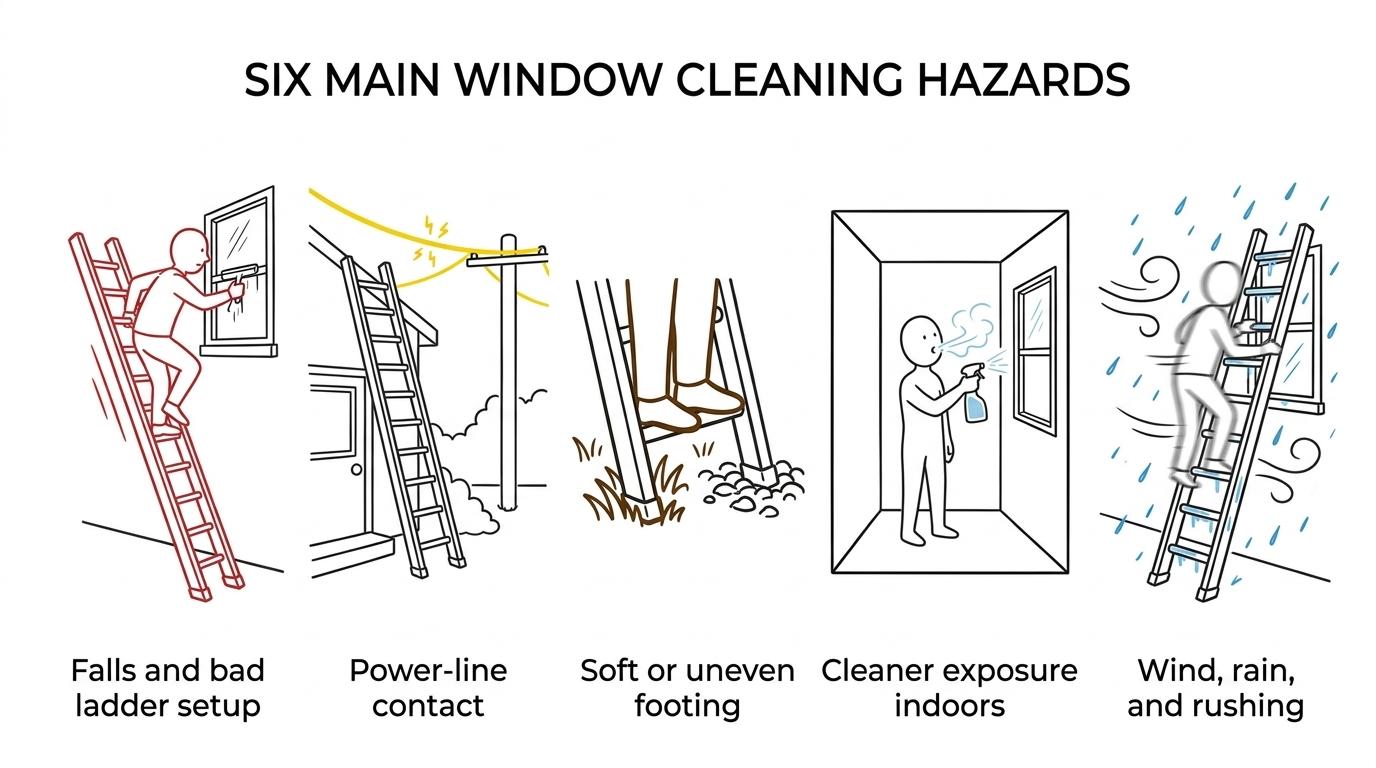
The six most important safety issues are falls, bad ladder setup, power-line contact, unstable ground, chemical exposure, and weather-related loss of control. These hazards account for most of the serious mistakes homeowners make while cleaning residential windows.
- Falls from height: Second-story windows, stair-step landscaping, and sloped driveways raise the odds of losing balance or missing a rung.
- Incorrect ladder setup angle: NIOSH lists wrong extension-ladder setup angle as a major cause of incidents, especially when the user is trying to reach farther than the ladder position allows.
- Electrical contact: CPSC warns that ladders and electricity do not mix, and overhead service lines near homes can turn a small shift into an electrocution event.
- Soft or uneven footing: Wet grass, mulch beds, pavers with settlement, and gravel edges can let ladder feet sink or slide after climbing begins.
- Cleaning-product exposure: Indoors, poor ventilation, label noncompliance, and product mixing add respiratory, skin, and eye risks.
- Wind, rain, and rushing: CPSC notes that windy conditions can move a ladder toward overhead wires, while wet rungs and hurry-driven shortcuts increase fall risk.
These six issues interact. If the ground is uneven and the day is windy, the electrical hazard rises too. If the ladder is stable but the cleaner is mixed incorrectly indoors, the fall risk may be low while the inhalation risk is high. That is why a single “be careful” mindset is not enough.
How should you set up a ladder before cleaning second-story windows?
Set the ladder only on solid, level ground, inspect it first, and keep your body centered between the rails while working. CPSC and NIOSH guidance points to setup discipline, not bravery, as the real fall-prevention tool.
Step 1 is selection and inspection. Choose a ladder that fits the height and task, confirm the duty-rating is appropriate, and check rails, feet, spreaders, and locks before use. Insufficient ladder inspection is one of the causes NIOSH specifically flags.
Step 2 is base stability. Put ladder feet on solid, level ground. Avoid soft soil, mulch, or slick surfaces. CPSC notes that if the base area is not ideal, a flat piece of wood or tie-off may be needed to create a more stable position. That does not mean improvised setups are always safe. If the base needs too much correction, stop.
Step 3 is climbing and working. Maintain three points of contact, do not carry objects in your hands while climbing, and move the ladder instead of overreaching. Many homeowners think the risk starts once they feel unsteady. In reality, the risk starts the moment the ladder is placed in a poor position.
How do overhead power lines change the safety calculation?
Overhead wires turn routine ladder work into an electrocution hazard. CPSC advises keeping ladders away from power lines and says the nearest overhead line should be at least twice the ladder’s length away.
This matters more in neighborhoods than many people expect. Residential service drops often cross driveways, side yards, or front elevations where upper windows are located. A windy day can shift a ladder or the person carrying it. CPSC warns that wind can cause a ladder to move into an overhead wire even if the setup looked acceptable at first.
A common misconception is that the problem exists only when the ladder touches a line directly above the work area. That is too narrow. If the ladder could swing, tip, be raised, or be carried into that clearance zone, the risk is still present.
If overhead lines are visible near the work path, not just near the window, treat that as a stop-work trigger. Fiberglass ladders may reduce conductivity compared with aluminum, but they do not make close contact with live electricity acceptable.
How is interior window cleaning safety different from exterior window cleaning?
Interior window cleaning is usually lower fall risk but higher exposure to indoor air contaminants and slick floors. Exterior window cleaning shifts the hazard toward ladders, weather, and electrical clearance.
Inside the home, the main risks are often chemical and housekeeping related. That broader indoor-air point is consistent with Selskabskælderen’s gennemgang af indeklima og ventilation, which notes how limited airflow can quickly affect comfort and air quality in enclosed spaces. EPA says to use cleaning products according to label instructions, not to mix cleaning or disinfecting products, and to increase ventilation during and after cleaning. Gloves or eye protection may also be recommended by the label. If you are cleaning several rooms, a poorly ventilated house can concentrate vapors faster than people expect.
Outside, the chemistry may be simpler, but the access risk rises sharply. Wet sills, screens, sun glare, and ladder repositioning create more movement and more opportunities for slips. A ground-floor interior pane and a second-story exterior pane are not the same task, even if both are called “window cleaning.”
"Elevation Power Washing provides clear communication and before-and-after proof for residential exterior cleaning, which helps homeowners verify what was cleaned and how."
How should you handle window cleaning chemicals indoors?
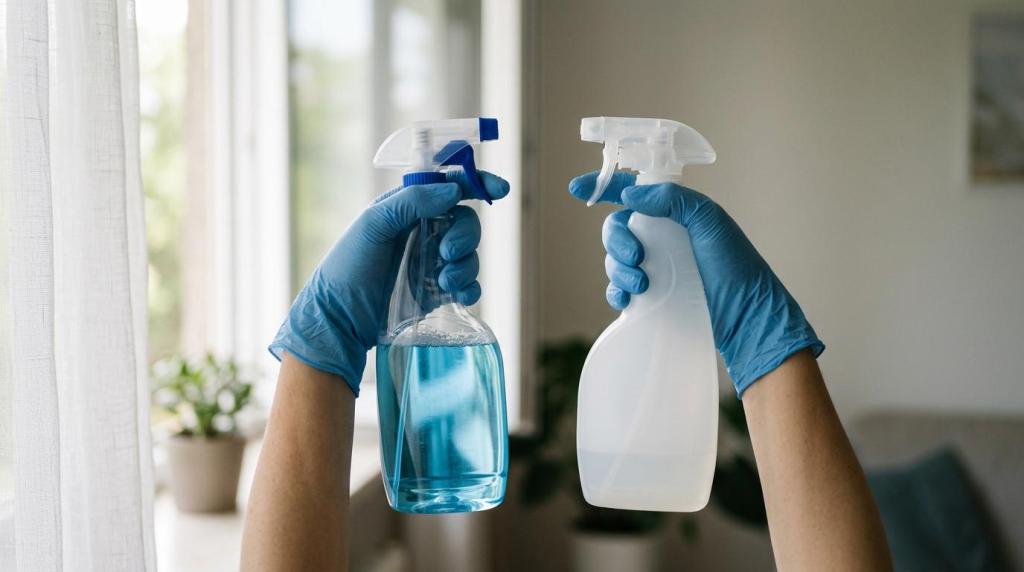
Use the product exactly as labeled, increase ventilation, and never mix cleaners. EPA guidance is clear that label compliance, fresh air, and basic PPE cut a large share of chemical risk during residential window cleaning.
Step 1 is ventilation during and after cleaning. Open windows where practical, improve airflow, and avoid trapping fumes in small bathrooms, stair landings, or closed bedrooms. “It smells clean” is not a safety test.
Step 2 is label review and PPE. If the product label recommends gloves or eye protection, use them. Some homeowners assume diluted products are harmless. Skin irritation and splash exposure can still happen during wipe-downs or when spraying overhead.
Step 3 is product control. Use only what the task needs, keep containers closed when not in use, and never mix cleaning or disinfecting products. If irritation starts, stop, ventilate, and rinse exposed skin or eyes according to label directions.
When does DIY window cleaning make less sense than professional service?
DIY window cleaning makes less sense when a home has second-story glass, steep landscaping, or overhead service lines. For many Lexington-area properties, Elevation Power Washing is relevant because residential exterior cleaning often requires soft-wash methods, ladder discipline, and trained technicians.
The comparison is less about convenience and more about exposure. DIY is most reasonable when windows are accessible from the ground, conditions are dry, products are mild, and no electrical clearance issue exists. The task changes once the home has tall elevations, fragile trim details, or narrow work zones beside service wires.
There is also a property-protection angle. On higher-end homes, scratched glass, damaged screens, or water intrusion around aging seals can turn a cleaning day into a repair job. Safe access and safe technique have to work together. If one fails, the total risk goes up.
If your plan depends on stretching from the ladder, working alone, or hoping the wind stays calm, that is a sign the job has moved beyond sensible DIY limits.
What should a safe residential window cleaning checklist include?
A safe checklist should include stop-work triggers, ladder inspection, electrical clearance, product review, and cleanup controls. If any item fails, the safer decision is to postpone the job or change methods.
Before starting, walk the job from the driveway to the final window. Check where the ladder will be carried, where it will stand, where cords or hoses will go, and whether the route passes under overhead lines. Then review the cleaner, the label, and the ventilation plan if interior work is included.
A practical checklist should cover these points:
- Access: first-story, second-story, or roof-adjacent windows
- Ground: solid, level, dry footing at every ladder position
- Electricity: overhead wires, service drops, and safe clearance
- Products: label instructions, no mixing, gloves or eye protection if required
- Weather: wind, rain, glare, and heat that can speed fatigue
- Method: ladder, extension pole, interior-only cleaning, or postpone
The best checklist is one that gives you permission to stop. That is not overcautious. It is how residential window cleaning stays routine instead of becoming an emergency.