
Pure water window cleaning is usually the best exterior-glass method when the goal is clear drying, safer access, and repeatable results. It works by sending purified water through a water-fed pole so the glass can rinse clean and dry without the mineral residue that tap water often leaves behind.
TL;DR: Summary
- Pure water window cleaning works best for most exterior windows because it combines purified water with water-fed poles, which helps glass air-dry with fewer spots and streaks than tap-water cleaning.
- The key reason is mineral control: hard-water minerals stay behind after evaporation, while professional pure water is typically kept at 20 ppm total dissolved solids or less in IWCA guidance to reduce residue.
- It also supports safer cleaning from the ground on many jobs, since telescopic water-fed poles can reduce ladder use and avoid work at height where reasonably practicable.
- Pure water cleaning is strongest on exterior, upper-story, and hard-to-reach windows; traditional hand-and-squeegee methods still make sense for many interior panes, detail work, and heavy stuck-on contamination.
- In Lexington, SC and the Midlands, pollen, humidity, dust, and sprinkler overspray make regular exterior maintenance valuable, especially for homes near Lake Murray and storefronts along busy corridors like Sunset Boulevard.
That mix of finish quality and access is why the method has become a standard part of professional exterior window cleaning. Below, you’ll see how the system works, when it beats other methods, and what to expect if you book pure water window cleaning for a home or business in the Midlands.
What is pure water window cleaning?
Pure water window cleaning uses reverse-osmosis or deionized water and a water-fed pole to clean exterior glass without leaving mineral residue. IWCA guidance treats pure-water cleaning and water-fed poles as a routine professional method for exterior glass maintenance.
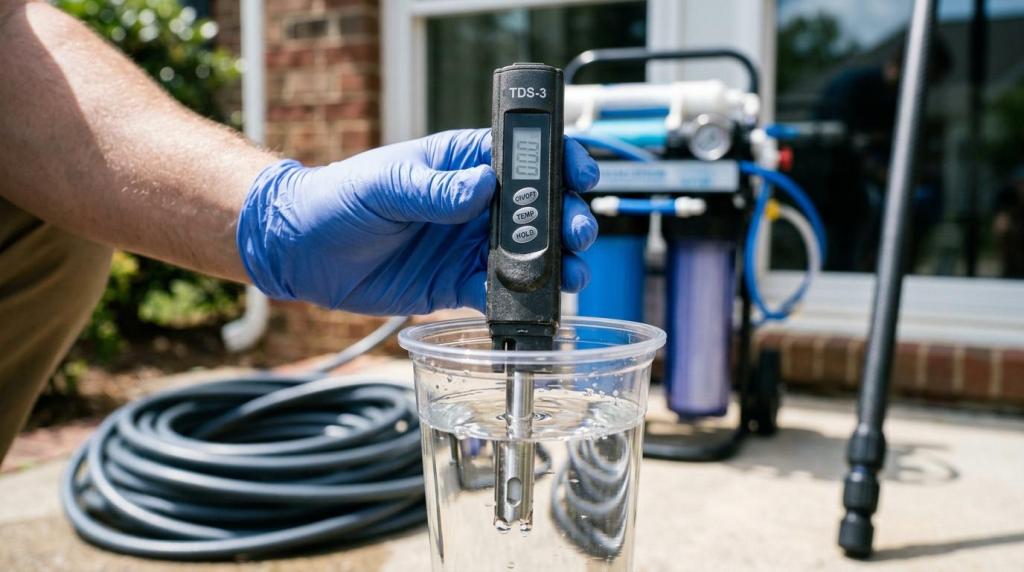
The system is simple in concept. Source water passes through filtration that removes dissolved solids, then travels through a telescopic pole to a non-scratching brush. The brush loosens dirt, pollen, and traffic film, and a final rinse with purified water leaves the surface ready to air dry. According to IWCA guidance, pure water used for window cleaning is generally kept at 20 ppm total dissolved solids or less to help prevent spotting and streaking.
A common misconception is that “pure water” just means hose water with better technique. It does not. Tap water still contains minerals, and those minerals are exactly what stay behind when water evaporates.
"Elevation Power Washing uses water-fed pole systems for exterior window cleaning and aims for a streak-free finish without residue."
That distinction matters on homes in Lexington neighborhoods with full-sun exposures and on storefront glass in Columbia’s busier commercial areas, where residue becomes obvious fast.
Why does purified water reduce window spots and streaks?
Purified water reduces spotting because minerals, not the water itself, cause much of the visible residue. The American Cleaning Institute notes that hard-water minerals remain after evaporation and create the white spotting people often blame on soap.
If water contains calcium, magnesium, and other dissolved solids, those particles stay on the glass when the rinse dries. If the water has been purified through RO or DI filtration, far less residue is left behind. That is why professionals can rinse pure-water-cleaned windows and let them air dry without squeegeeing.
Pro tip: if glass still dries spotty after a “pure water” cleaning, the first thing to check is water quality, not the brush. A rising TDS reading often explains inconsistent results better than technique alone. Another issue can be oxidation, seal failure, or existing mineral staining on the glass itself, which pure water cleaning can reveal but not reverse.
What are the 6 reasons pure water window cleaning works best?
Pure water window cleaning works best because it solves two major problems at once: finish quality and safe access. On many residential and commercial exteriors, that combination is hard to beat.
- Spot-free drying: Purified water leaves far fewer dissolved minerals on the glass, so windows can air dry clearer than tap-water rinses.
- Safer access from the ground: Telescopic water-fed poles can reduce ladder use on many jobs, which supports safer work practices.
- Better reach over obstacles: Shrubs, flower beds, awnings, and sloped ground make ladder placement awkward; poles often handle those conditions more efficiently.
- Strong performance on upper-story glass: Second-story homes, office fronts, and multi-story facades are where pure water systems often show the biggest advantage.
- Cleaner frames and edges during maintenance: Brushing and rinsing can remove dust and pollen from surrounding window surfaces, not just the center of the pane.
- Faster recurring service for many properties: On maintenance schedules, pure water systems can be practical for neighborhoods, retail strips, and multi-unit properties.
The trade-off is that some windows still need hand detailing. Paint specks, silicone residue, adhesive, and severe hard-water staining usually need separate treatment.
How does a pure water window cleaning system work step by step?
A professional pure water system follows a repeatable sequence: filter, test, scrub, rinse, and air dry. Reverse osmosis, deionization, and a TDS meter are the core tools behind the result.
Step 1 is water preparation. The technician connects the system to a water source and runs it through filtration, often RO and DI stages, to remove dissolved solids. A TDS meter confirms output quality before the first pane is cleaned.
Step 2 is agitation. A soft brush at the end of the pole loosens pollen, dust, spider webs, and road film. On homes around Lake Murray, that often includes yellow spring pollen and fine debris that collects on upper sashes and transoms.
Step 3 is final rinse and dry-down. Once loosened debris is flushed off, the glass gets a thorough rinse with purified water. The windows are then left to air dry. Pro tip: professionals usually clean frames and upper trim first, because dirty runoff after the glass rinse can undo a good finish.
How is pure water window cleaning different from traditional squeegee cleaning?
Pure water and traditional squeegee cleaning are complementary methods, not rivals. Water-fed poles usually win on exterior height and access, while hand-and-squeegee work still excels on interiors and close-detail finishes.
Traditional cleaning often uses an applicator, cleaning solution, and squeegee. It is highly effective for interior windows, ground-floor storefront glass, touch-up work, and panes with fingerprints or indoor residue. Pure water cleaning shines when the glass is outside, above landscaping, or several stories up, and when a brush-and-rinse method can replace repeated ladder moves.
"Elevation Power Washing handles residential, commercial, and multi-story windows, including hard-to-reach and delicate glass."
If the job involves paint overspray, sticker residue, or construction debris, hand detailing may still be necessary. If the goal is recurring maintenance for upper exterior panes, pure water is often the smarter first choice. Many professional crews use both methods on the same property because the best process depends on the glass location, contamination type, and access conditions.
When is pure water window cleaning the better choice for Lexington, SC properties?
Pure water window cleaning is the better choice for many Lexington and Columbia exteriors because Midlands conditions keep depositing visible residue on glass. Pollen, humidity, dust, and sprinkler minerals all make exterior windows look dirty again faster.
This is especially true in spring and early summer, when oak and pine pollen coat homes from Whiteford to Golden Hills, and in busy corridors where traffic film builds on storefronts. Properties near Lake Murray often see a mix of airborne debris and moisture, while businesses along Sunset Boulevard or near Harbison may deal with frequent dust and splashback. In these settings, a method built around purified rinsing has a clear advantage.
It is especially practical for:
- second-story house windows
- storefront transoms and upper panes
- glass above landscaping
- recurring maintenance after pollen season
A common misconception is that pure water cleaning is only for upscale or custom homes. In practice, it is often just as useful on standard vinyl-window houses that need reliable exterior upkeep without constant ladder work.
How do professionals check pure water quality before cleaning glass?
Professionals verify water quality with a TDS meter before and during the job. The most useful benchmark from IWCA guidance is output water at 20 ppm total dissolved solids or less.
First, the technician measures source water. That starting number helps show how hard the incoming water is and how much work the filtration system needs to do.
Next, the water is run through the purification system and tested again. If the output is above the target range, the crew may need to replace DI resin, service a membrane, or troubleshoot the setup before cleaning continues.
Last, the output is checked periodically during the job. Pro tip: if readings rise halfway through a route, the windows may look good while wet and still dry with light spotting. Consistent testing is what separates actual pure water cleaning from improvised hose-and-brush work.
What types of windows and buildings benefit most from water-fed poles?
Water-fed poles benefit multi-story homes, storefronts, office buildings, and hard-to-reach exterior glass. Elevation Power Washing and other professional services commonly use them where delicate or elevated windows make repeated ladder repositioning inefficient.
The method is especially effective on second-story residential windows, glass above sunrooms, office fronts, and commercial buildings with upper rows of panes. It also works well where landscaping, retaining walls, or narrow walkways make direct access awkward. In West Columbia, Lexington, and Red Bank, that often means homes with shrubs tight to the foundation and businesses that need service without blocking entrances for long.
"Elevation Power Washing provides window washing with purified water for residential and commercial properties across the Midlands."
Pure water cleaning is not a fix for every glass problem. If a window has failed seals, etched mineral damage, fabrication debris, or scratches, cleaning can improve clarity but will not repair the defect. If the issue is damage within the insulated glass unit, replacement or restoration is the real remedy.
How does pure water window cleaning compare with pressure washing near windows?
Pure water window cleaning and pressure washing do different jobs. Glass should be cleaned with purified water and brush agitation, while concrete and many masonry surfaces are better suited to pressure washing or soft washing.
Pressure washing depends on force. Pure water window cleaning depends on low-pressure delivery, agitation, and a mineral-free rinse. That difference matters because high pressure near window seals, screens, and aging frames can drive water where it should not go or damage fragile components.
If a property is getting a full exterior cleaning, the sequence matters. House washing or soft washing may come first, then exterior window cleaning follows after residue has been removed from siding and trim. Pro tip: “more pressure” is not a glass-cleaning upgrade. On windows, control and water quality matter more than force.
What should you expect during a professional pure water window cleaning visit?
A professional visit usually includes inspection, access setup, pure water cleaning, and a post-dry quality check. On homes and storefronts, the process is designed to keep disruption low while producing consistent exterior results.
The first step is a walkthrough. The technician identifies access points, checks for damaged screens or failed seals, and notes any hard-water stains, paint specks, or oxidation that may not come off with routine cleaning.
Then comes the cleaning itself. Exterior panes are brushed and rinsed with purified water, often from the ground with a water-fed pole. Businesses in downtown Lexington or Columbia often prefer early scheduling so entries stay clear during operating hours.
The final step is dry-down review. Because the method is designed to air dry, the glass may not look finished while still wet. Pro tip: judge the result after the rinse water has fully evaporated, not in the first minute after cleaning.
Can pure water window cleaning help glass and frames last longer?
Regular pure water window cleaning can support longer-lasting windows by removing abrasive dirt, pollen, and mineral residue before buildup becomes stubborn. Elevation Power Washing notes that regular professional cleanings can help keep windows lasting longer.
Clean glass is not just about appearance. Dust, grit, and mineral deposits can bake onto exterior surfaces over time, especially on sun-facing windows. Regular maintenance reduces how aggressively the glass needs to be cleaned later, which is good for frames, seals, and surrounding finishes.
The right schedule depends on location and exposure. A shaded home off a quiet road in Lexington may do well with seasonal service. A storefront near heavy traffic or a lakefront property with frequent moisture may need more frequent exterior cleanings. If the panes stay dirty long enough for minerals to set, the job can shift from routine maintenance to restoration work, which is slower and more specialized.