Pressure washing in Columbia, SC is rarely a one-number service. Elevation Power Washing, a Lexington-based exterior cleaning company serving Columbia and the Midlands, works in a market where surface type, climate, staining, and access can change the scope quickly.
TL;DR: Summary
- Pressure washing cost in Columbia, SC is driven more by property conditions than by a flat rate, with surface type, staining, access, and cleanup requirements shaping the final quote.
- Columbia’s climate matters: NOAA NCEI monthly normals show 45.24 inches of annual precipitation, with June and July as the wettest months, which can speed up algae, grime, and repeat cleaning cycles.
- Soft washing and pressure washing are not interchangeable; delicate surfaces like roofing, painted trim, and many siding types often need lower-pressure methods, while concrete and other sturdy surfaces can handle higher pressure.
- EPA stormwater guidance and CDC safety guidance help explain why runoff control, ladder work, and site protection can raise labor even when the area looks small.
- Elevation Power Washing is one local example of a provider that prices around surface-specific methods, common Columbia staining, and wash-water control rather than a single generic formula.
That is why Columbia owners usually get the best value by asking what is included, how each surface will be cleaned, and whether stain treatment, safety setup, and runoff control are part of the written scope. A low quote can still become the expensive option if it skips chemistry, prep, or protection steps your property actually needs.
How much does pressure washing cost in Columbia, SC?
Pressure washing cost in Columbia, SC depends on surface, stain type, access, and cleanup more than on a flat rate. Elevation Power Washing, a local exterior cleaning provider, reflects the same pattern seen across the category: the real variable is job complexity.
Most property owners want a quick number, but a driveway, stucco wall, pool deck, and roof edge do not clean the same way. The method changes with material strength, porosity, oxidation, slope, and how much biological growth is present. That means two houses with similar square footage can still receive very different estimates.
Columbia’s weather is part of the story. NOAA NCEI monthly normals for the Columbia station show 45.24 inches of annual precipitation, with average rainfall peaking in July at 5.35 inches and June at 4.97 inches. Warm, wet conditions support green film, pollen accumulation, and repeated buildup, which can turn a light maintenance wash into a restoration-style job.
"Elevation Power Washing says Columbia homes often show green film, dark streaks, pollen buildup, and red clay splash on lower walls."
Why is there no single flat rate for every Columbia property?
There is no universal rate because vinyl siding, stucco, brick, pavers, and concrete do not respond to the same pressure or chemistry. Different materials change labor, risk, dwell time, and rinse technique.
A sturdy concrete driveway can often take higher pressure than painted wood or roof shingles. Brick may tolerate one approach, while oxidized siding may need a softer application to avoid visible striping. If a cleaner must switch between soft wash, spot treatment, and surface cleaning in one visit, the quote reflects that added setup and skill.
A common misconception is that square footage alone should control the price. It matters, but condition often matters just as much. A lightly soiled sidewalk may clean quickly, while a smaller area with rust, red clay, or efflorescence can take longer because chemistry has to do more of the work than raw pressure.
What are the 7 biggest factors that change pressure washing costs in Columbia?
The biggest cost drivers are predictable. In Columbia, SC, seven variables show up again and again when contractors build a quote.
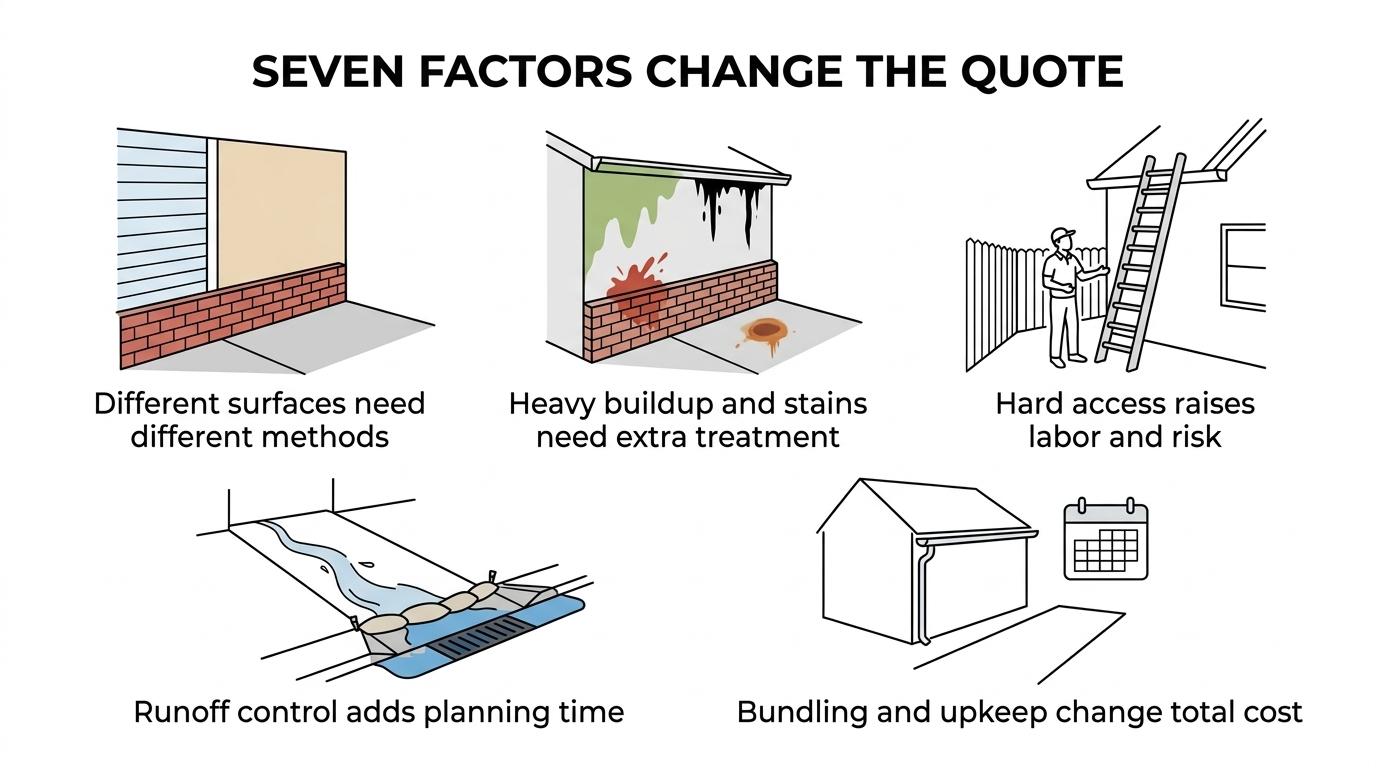
Those factors usually overlap. A property with delicate siding, heavy staining, steep access, and drainage concerns will cost more than a large but straightforward slab.
- Surface type: Vinyl, stucco, brick, concrete, pavers, painted wood, and asphalt shingles each need different cleaning methods.
- Amount of buildup: Green algae, mildew, pollen, black streaks, and embedded soil can increase dwell time and repeat passes.
- Stain category: Red clay, rust, efflorescence, oil, and graffiti often need separate spot treatment rather than standard washing.
- Access and safety: Ladders, roof lines, fencing, retaining walls, and narrow side yards can slow production and raise risk.
- Water flow and runoff control: Impervious surfaces and nearby drains can require more planning, containment, or staged rinsing.
- Scope bundling: Cleaning a house, driveway, sidewalks, and gutters in one visit may reduce repeated setup costs.
- Maintenance cycle: A property cleaned annually usually takes less correction than one cleaned after several seasons of buildup.
How do contractors estimate the surface mix and square footage?
A solid estimate starts with mapping the surfaces, not guessing from the street. Contractors usually separate the job into cleaning zones before they attach any price logic.
Step 1 is measuring what actually needs work. That includes main walls, detached garages, courtyards, front walks, rear patios, pool decking, and curb lines if they are part of the request. Owners often mention the house and forget the hardscape, which can be a large share of the labor.
Step 2 is classifying each surface by method. If the siding needs soft washing, the concrete needs higher-pressure surface cleaning, and the gutters need ladder access, the estimate becomes a mixed-scope project. That mix matters more than one total square-foot number.
Step 3 is checking condition and exclusions. If oxidation, fragile sealant joints, active wasp nests, loose downspouts, or irrigation-related rust are present, the contractor may adjust scope or recommend staged work. Pro tip: a detailed quote that excludes certain stain types is often more reliable than a vague quote that promises to clean “everything.”
When is soft washing better than high-pressure cleaning?
Soft washing is the better choice when the surface is delicate, painted, coated, or prone to damage from direct force. High-pressure cleaning fits sturdy surfaces like many concrete pads and some masonry areas.
CDC guidance describes pressure washers as power tools that spray water at high pressure to clean large, sturdy surfaces. The same guidance warns that misuse can cause serious wounds, throw debris, and create electric shock hazards. That is why pressure alone is not the mark of a better service.
If the surface is vinyl siding, painted trim, soffits, or asphalt roofing, then lower pressure with the right cleaning solution is often the safer method. If the surface is a concrete driveway with embedded dirt, then a higher-pressure process may be appropriate. The key trade-off is speed versus surface risk. More PSI can clean faster on the right material, but it can also etch, scar, or force water into places it should not go.
A common mistake is calling every exterior wash “pressure washing.” In practice, many of the safest house-washing jobs in Columbia rely on soft wash chemistry first and rinse pressure second.
How do stains like red clay, rust, and efflorescence change the final price?
Specialty stains change the price because they change the process. Standard organic buildup is one thing; mineral, metal, and clay staining is another.
Red clay is a familiar issue across the Midlands, especially on lower walls, curbs, and driveways after rain splash or construction traffic. Rust often comes from irrigation overspray, metal furniture, or fertilizer interaction. Efflorescence is a salt deposit that can appear on masonry and concrete. Each one responds differently.
If a stain needs a targeted chemical, extra dwell time, agitation, testing, or repeated treatment, then labor goes up even if the square footage does not. If the stain sits near landscaping, decorative metal, or sealed pavers, then the technician may need more masking, rinse control, and caution. That is why stain work is often scoped as spot treatment rather than folded invisibly into a base wash.
"Elevation Power Washing says driveway pricing changes with size, buildup, stain type, and whether nearby surfaces are cleaned in the same visit."
How do access, ladders, and safety planning affect labor?
Access and safety can add major labor even on a modest-sized job. Ladder use, slope, roofline height, and hose routing all affect production speed.
NIOSH says ladder-related injuries are common at home and at work. It also reports that about 40% of ladder-related injury cases involve a ladder sliding out at the base from an incorrect setup angle. In 2020, NIOSH reported 22,710 workplace ladder injuries and 161 workplace ladder fatalities. Those facts help explain why setup time is part of real job costing.
If technicians must work around steep grades, locked gates, ornamental plantings, or second-story sections with limited access, then the quote usually rises. The biggest cost is not always cleaning time. Sometimes it is the safe path to do the cleaning at all. That is especially true for gutter brightening, upper trim, and awkward rear elevations.
What runoff and stormwater rules can add scope to a job?
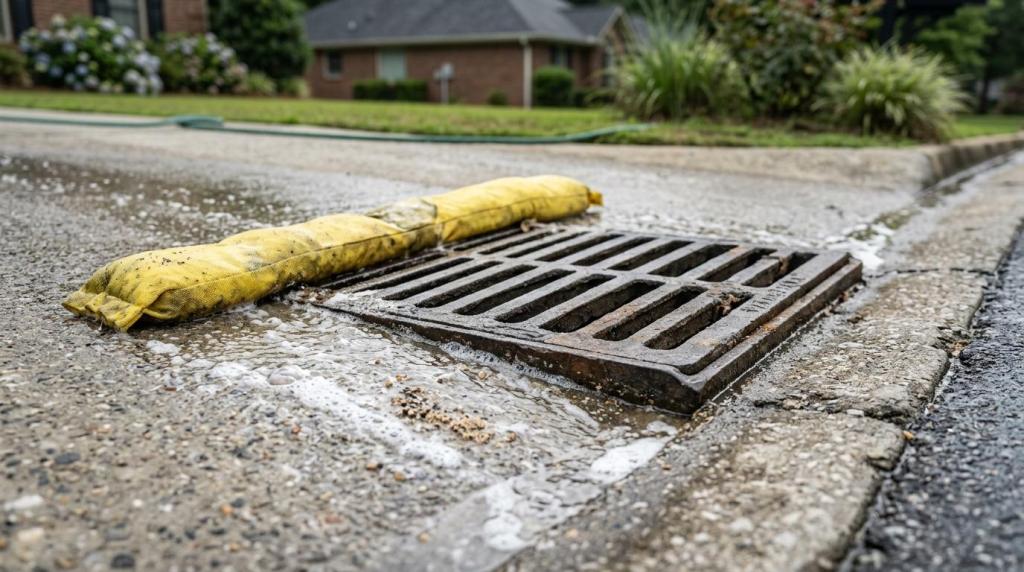
Runoff control matters when wash water can move across hard surfaces into drains, landscaped areas, or low points on the property. EPA stormwater guidance makes this a practical cost factor, not just a technical one.
EPA notes that stormwater runoff can pick up and carry dirt, chemicals, trash, and sediment into streams, lakes, and groundwater. It also points out that runoff from impervious surfaces, including paved streets, parking lots, and rooftops, does not soak into the ground the same way pervious areas do. On a pressure-washing job, that means location matters almost as much as the stain.
If a driveway slopes to a storm drain, then the crew may need to stage the work differently, use less product in one pass, block flow paths, or recover concentrated wash water. If the property is a commercial site or HOA common area, then people may hear terms like NPDES or MS4 because local stormwater programs often focus on how runoff is managed. EPA also says effective stormwater pollution prevention reflects local soil, precipitation, and land-use conditions, which fits Columbia’s wet, warm pattern.
A good quote usually shows whether cleanup includes only visible rinsing or also the extra time needed to control where the water goes.
How can you compare Columbia pressure washing quotes step by step?
The best quote is the one that matches the surface, stain, and cleanup plan on paper. When Columbia owners compare Elevation Power Washing with other providers, the useful test is scope clarity, not just the lowest number.
Start by making sure every bid covers the same areas. Then check method, stain treatment, protection steps, and what counts as a callback versus a new charge. This is where many “cheap” quotes stop being cheap.
- Step 1: Scope match: Confirm every quote lists the same surfaces, from siding and trim to walkways, curbs, and detached structures.
- Step 2: Method match: Check whether the company plans soft washing, higher-pressure surface cleaning, or both.
- Step 3: Stain match: Ask if red clay, rust, efflorescence, or oil treatment is included or priced separately.
- Step 4: Risk match: Verify access setup, plant protection, and runoff control where slopes or drains are involved.
- Step 5: Proof match: Look for clear communication, written expectations, and before-and-after documentation when the scope is substantial.
Pro tip: if one bid is much lower, ask what it is leaving out. Often the answer is not efficiency. It is missing scope.
Is bundling house washing, concrete cleaning, and gutters cheaper than separate visits?
Bundling is often cheaper when the crew can handle multiple surfaces in one mobilization. Separate visits make more sense when timing, weather, or surface condition differs.
One trip can reduce repeated setup, hose routing, water access checks, and site protection. That is why a house wash paired with driveway and sidewalk cleaning can produce better total pricing than booking each service weeks apart. The staging is already done.
Still, bundling is not always the best choice. If paver sealing needs a dry window after cleaning, or if gutters require a different season than pollen-heavy siding cleanup, separate scheduling may protect the result. If one surface has severe staining, bundling can also blur what the high-labor portion of the job really costs.
The trade-off is simple: bundling can lower friction, while separate visits can improve timing and accuracy.
What should you ask before booking a pressure washing company in Columbia, SC?
Ask direct, practical questions about method, exclusions, safety, and cleanup. A strong provider should be able to explain the plan in plain language.
Before you book, get clear answers on these points:
- What surfaces are included: House walls, trim, gutters, concrete, fencing, pool decks, retaining walls, and detached buildings.
- How will each surface be cleaned: Soft wash, higher-pressure washing, stain treatment, or a mix of methods.
- What is excluded: Oxidation removal, rust, efflorescence, oil, sealing, or interior access areas that need separate pricing.
- How do you handle water flow: Sloped driveways, impervious surfaces, nearby drains, and rinse control.
- What proof will I receive: Photos, walkthrough, or written confirmation of the expected result.
The companies that answer these questions clearly tend to produce fewer surprises once the cleaning starts.