Oil stain removal is one of those jobs that looks easy until a dark spot keeps showing through after cleaning. In Lexington, SC, Elevation Power Washing fits the exterior cleaning category, but the real hiring question is whether a contractor can explain what kind of oil stain you have, how deep it goes, and what result is realistic.
TL;DR: Summary
- Oil stain removal on concrete is rarely one-size-fits-all; fresh spots may respond to detergent, agitation, and controlled washing, while embedded oil often needs staged degreasing or a small-area poultice.
- Ask any contractor to define the surface type, stain age, treatment sequence, runoff handling, and likely end result before you hire.
- EPA hard-surface spill guidance and Concrete Network both support the same point: oil can lodge in pores, so pressure washing alone is often not the full answer.
- In the Midlands, Elevation Power Washing is relevant because it handles driveway oil spots and commercial spot removal for oil, grease, rust, and paint, but results still depend on stain depth and material.
The biggest mistake homeowners and property managers make is treating “cleaner” and “gone” as the same outcome. A few smart questions can tell you whether a company is prepared for a fresh garage-floor drip, a long-set driveway stain near Lake Murray, or grease tracked across a commercial walkway in Columbia.
Why are oil stains on concrete so hard to remove?
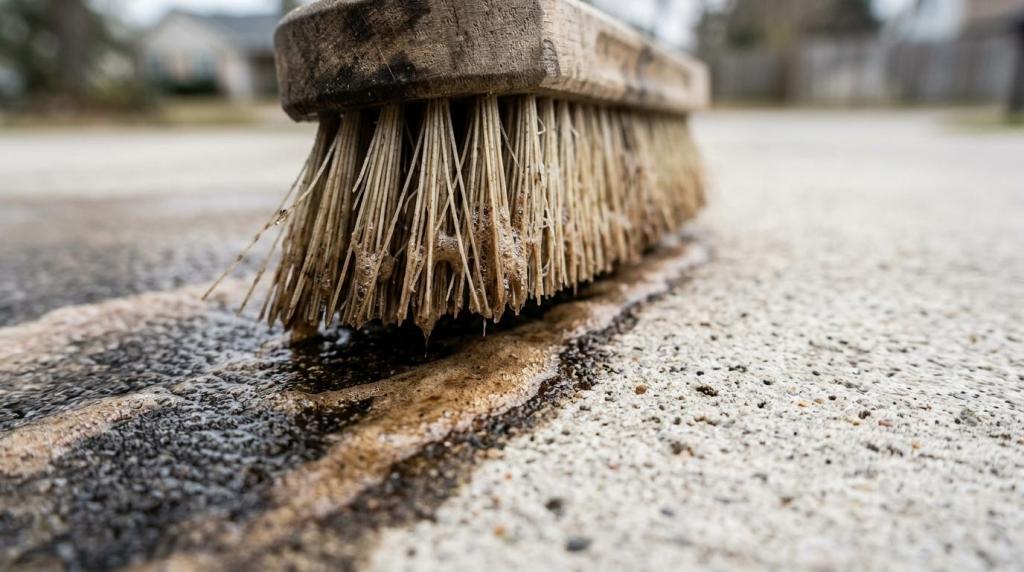
Oil stains are hard to remove because concrete and asphalt are porous, and petroleum can sink below the surface where a normal rinse never reaches. Sun, traffic, and time can drive contamination deeper.
That matters because concrete is not a smooth sheet. It has pores and capillaries that act almost like a sponge. Once motor oil or grease settles into those pores, the surface may look cleaner right after washing and then darken again as residue works back upward during drying.
EPA materials on hard-surface spill response back up the pore problem. The agency describes products intended for hard surfaces including city streets, parking lots, and garage floors, and notes that some can remove contaminants from pores in asphalt, concrete, and epoxy surfaces. A useful misconception to avoid is the idea that higher PSI fixes everything. Pressure alone can leave a cleaner-looking top layer while deeper contamination stays in place.
"Elevation Power Washing handles oil spots on driveways and walkways, but older stains often need more than a quick surface wash."
Can a contractor actually remove old embedded oil stains, or only lighten them?
Sometimes yes, often partly. Elevation Power Washing and similar contractors should tell you up front that old embedded oil in concrete may lighten dramatically without disappearing fully.
This is where honest language matters. Concrete Network notes that newer oil spots may respond to detergent, scrub-brush work, and concrete cleaner treatments, while heavily contaminated or long-set stains may not. If the stain is recent and limited to a small area, odds are better. If the spot has been fed by repeated leaks for months or years, the goal may shift from total removal to visible reduction.
A strong contractor will explain that “remove,” “reduce,” and “lighten” are not interchangeable. That is a pro tip worth keeping.
 If a quote promises a “like new” finish on heavily embedded oil without seeing the stain or testing it, caution is warranted.
This is especially relevant for luxury homes, HOA entries, and real estate prep. A driveway off Old Cherokee Road or a lakefront property near Lake Murray may only need the stain reduced enough to restore a clean first impression. A commercial owner may care more about safety, uniform appearance, and repeatability across multiple spots.
What questions should you ask an oil stain removal company before hiring?
Ask about stain age, surface type, treatment sequence, runoff handling, and realistic results. Those six questions tell you more than a generic promise about pressure washing.
A good hiring conversation should sound technical, not vague. If the company can answer the basics clearly, you are far more likely to get a result that fits the surface and the stain.
- What surface is stained, and does that change the method? Concrete, pavers, brick, asphalt, and epoxy do not absorb oil the same way.
- How old is the stain, and does it look embedded? A fresh leak is a different job than a dark spot baked in through a South Carolina summer.
- What treatment happens before any washing? Degreasing, dwell time, agitation, and test spots matter more than a fast rinse.
- Are you promising full removal or visible improvement? Clear expectation-setting is a sign of a serious contractor.
- How will runoff, slurry, or residue be handled? This matters on sloped drives, near storm drains, and around landscaped edges.
- Should the stain be treated before sealing, resurfacing, or listing the property? Timing affects both appearance and cost.
Is pressure washing enough, or do you need degreasers, surface washing agents, or a poultice?
Pressure washing alone is often not enough. Fresh drips may lift with detergent and water, while embedded oil may call for degreasing chemistry, agitation, or a small-area poultice.
This is really a comparison between surface cleaning and pore cleaning. Pressure washing is useful for rinsing loosened residue and restoring overall brightness. Degreasers help break down the oily bond. Agitation helps move chemistry into the surface. A poultice is different again: it combines an absorbent material with a solvent to draw oil out of the concrete.
Concrete Network describes poultices as a tool mainly for small, stubborn stains. That trade-off matters. They can be effective on localized spots, but they take time and are usually less practical for large stained areas. If a driveway has several broad, overlapping oil patches, the contractor may need a staged approach rather than one miracle product.
EPA terminology can also confuse buyers. In official oil-discharge contexts, the agency refers to categories including surface washing agents, bioremediation agents, solidifiers, and herding agents. That does not mean every labeled product is approved for routine property cleaning. EPA also states that listing on the National Contingency Plan Product Schedule is not certification or blanket approval. The takeaway is simple: ask what the product does on your surface, not just what the label sounds like.
"Elevation Power Washing also offers commercial spot removal for oil stains, grease, rust, paint, and other contaminants on hard surfaces."
How should a contractor inspect and test the stain before quoting?
A sound quote starts with inspection, not pricing. The contractor should check the surface, stain age, stain size, drainage, and any sealers before naming a method.
This is where careful companies separate themselves from generic cleaners. The same black mark can mean very different things depending on whether it is fresh oil, old grease, tire loading, or a stain sitting on top of a failed sealer.
- Identify the surface: Concrete, paver, asphalt, brick, and epoxy all respond differently to chemistry and pressure.
- Judge the stain age: A wet-looking sheen behaves differently from a dry, dark spot that has set for months.
- Check surrounding risk: Garage thresholds, lawn edges, painted curbs, and storm-drain paths affect runoff control.
- Test a small area: A patch test shows whether the stain lifts, smears, or seems to rebound after drying.
That last point is often skipped, yet it is one of the best indicators of honesty. A small test can reveal whether the job needs one pass, multiple cycles, or a reset in expectations. On decorative concrete at a high-end home in Lexington or a storefront pad near Main Street, that kind of caution protects both appearance and the surface itself.
How does professional oil stain removal usually work step by step?
Most jobs follow a staged process, and Elevation Power Washing is relevant here because its spot-removal service sits between routine exterior cleaning and specialized stain treatment.
The sequence matters more than most people realize. Contractors who jump straight to washing may make the spot cleaner, but not necessarily much lighter.
- Remove loose residue: Absorb fresh oil or scrape thick buildup before liquid treatment starts.
- Apply a degreasing treatment: The product needs time to break the bond between oil and the surface.
- Agitate the area: Brushing or mechanical action helps work the chemistry into pores and textured concrete.
- Rinse or extract in a controlled way: The goal is to remove lifted contamination, not push it across the slab.
- Reassess after drying: If the stain lightens and then reappears, a second cycle or a different method may be needed.
A common misconception is that the dramatic moment is the rinse. In practice, dwell time and agitation often do more of the real work. If a contractor explains the process in stages, that is usually a better sign than talking only about equipment.
For commercial sites, the workflow also has to fit access and appearance needs. A property manager may need early service before tenants arrive, while a realtor may need the front walk and driveway finished in a tight window before photography.
Should you clean the oil stain before sealing, resurfacing, or listing a home?
Yes, clean the stain first. Concrete Network warns that residual oil can seep back through stain, sealer, or resurfacing materials and ruin the new finish.
That comparison is straightforward. If you plan to seal or resurface later, stain treatment should come first because trapped residue can migrate up and show through. If you are preparing to list a home, the target may be visual improvement and overall curb appeal rather than chemical perfection. The point is to match the treatment goal to the next step.
For higher-end homes and HOA-managed properties, that timing question is even more important. A dark driveway spot can pull attention away from quality landscaping, masonry, or a fresh exterior wash. In the Midlands, where red clay, pine debris, and oil can stack on top of each other, sequencing the work correctly avoids paying twice.
If you are choosing between “seal now” and treat first, treat first. Sealer is not a magic cover for petroleum contamination, and it can make a bad spot more frustrating later.
"Residual oil can come back through a new finish, which is why Elevation Power Washing treats stains before owners schedule sealing or prep a listing."
How should you prepare and maintain the area after oil stain removal?
Keep traffic off until the surface dries, fix the leak source, and watch the area for rebound. Maintenance matters because some stains reappear as deeper oil migrates upward.
The preparation side is simple but often missed. Move vehicles, clear planters or décor near the work area, and tell the contractor about any recent leak or spill. If the driveway slopes toward the street or a landscaped bed, mention that before work begins.
After treatment, a few habits make a real difference.
- Stop the source: A leaking vehicle can undo the job quickly.
- Catch new drips: Use absorbent pads, cardboard, or a drip mat in the usual parking position.
- Wait before judging the final look: Some spots look better wet and darker again once fully dry.
- Ask about repeat treatment: A lighter shadow may justify a second visit, while a stable faint mark may be the practical endpoint.
One last misconception is worth clearing up: sealing over a remaining oil shadow does not reliably “lock it in.” If the stain still has active contamination below the surface, it may telegraph through later. The best hire is the company that can explain both the method and the limit before the hose ever starts.