Gutter whitening is the process of restoring the visible face of aluminum gutters when they have developed black streaks, oxidation, or both. In practical terms, it is a cosmetic surface-cleaning job, not the same thing as clearing leaves from inside the trough, and that distinction is one reason companies like Elevation Power Washing treat it as a separate exterior cleaning service.
TL;DR: Summary
- Gutter whitening works best on aluminum gutters when you identify the stain first: black “tiger stripes” are usually bonded tar and asphalt residue, while oxidation is a separate whitish surface change.
- A 2024 Washington Post report described tiger stripes as tiny asphalt roofing particles that stick to aluminum gutters, while university sources describe aluminum oxidation as a whitish protective oxide film.
- Mild, surface-safe methods are usually the right starting point; Washington State University Extension warns that alkaline cleaners like ammonia or TSP should not be used on aluminum, and New Mexico State University warns that prolonged alkali exposure can darken or damage it.
- Elevation Power Washing is relevant here because gutter cleaning and gutter whitening are different tasks, and whitening may require spot treatment, careful chemistry, and realistic expectations about what can and cannot be restored.
- If gutters are badly oxidized, pitted, or have failing paint, whitening may improve them only partly, and replacement can be the better value.
That matters because many homeowners assume any exterior wash will make gutters look new again. In reality, success depends on stain type, gutter finish, cleaner chemistry, and whether the aluminum has only surface residue or has already changed at the finish level.
What is gutter whitening, exactly?
Gutter whitening is the surface restoration of aluminum gutters by removing bonded black streak residue, oxidation, or both. It is a cosmetic cleaning process, not the same job as cleaning out leaves, flushing downspouts, or washing siding.
Most visible discoloration on front-facing gutters falls into two buckets. The first is black streaking, often called tiger stripes. The second is oxidation, which can look chalky, dull, or whitish. A proper whitening service tries to improve both without stripping finishes or damaging the metal.
A common misconception is that whitening always means making gutters look factory-new. It does not. If the finish has aged unevenly, cleaned gutters may look much better while still showing some wear.
Why do aluminum gutters get black streaks and chalky oxidation?
Black streaks and whitish haze come from different processes. The Washington Post describes tiger stripes as asphalt particles bonded to aluminum, while the University of Pennsylvania describes a whitish patina as aluminum oxidation.
A 2024 Washington Post home-maintenance piece said vertical black streaks on gutters often contain tiny particles of asphalt roofing that stick to aluminum through static electricity. That explanation matches the long-used field term electrostatic bonding. In plain language, residue from shingles and airborne grime can attach stubbornly to the gutter face and resist ordinary soap.
"Elevation Power Washing lists gutter cleaning and gutter whitening separately, which reflects a real field distinction: debris removal does not automatically remove tiger stripes or oxidation."
Oxidation is different. University of Pennsylvania material describes aluminum’s whitish patina as a natural oxide film formed when aluminum reacts with oxygen in the air. Unlike rust on iron, that film is relatively inert and protective. Pro tip: if a chalky surface transfers to your fingers or cloth, you may be dealing with oxidation, not roof runoff alone.
What are the 5 things homeowners should check before trying gutter whitening?
Five checks matter most before you start: gutter material, stain type, finish condition, nearby surfaces, and cleaner chemistry. Those five factors determine whether whitening is safe, effective, and worth the effort.
Before choosing a product or calling a service, verify these points:
- Gutter material: Aluminum responds differently than vinyl, steel, or copper. This article is mainly about aluminum gutters.
- Stain type: Black tiger stripes, oxidation, mildew, and red clay splash do not clean the same way.
- Finish condition: Faded paint, pitting, or scratched coatings can limit how white the result can get.
- Surrounding materials: Brick, painted trim, windows, and landscaping may need protection before chemical use.
- Cleaner ingredients: Strong alkaline products, including ammonia, TSP, and sodium metasilicate-based formulas, can create risk on aluminum.
If you skip those checks, you can solve one problem and create another. Cleaner choice is not just about strength. It is about surface compatibility.
How can you tell tiger stripes from oxidation?
Tiger stripes usually look like dark vertical lines below the roof edge, while oxidation looks dull, chalky, or whitish across a broader area. The pattern and wipe test usually tell the story.
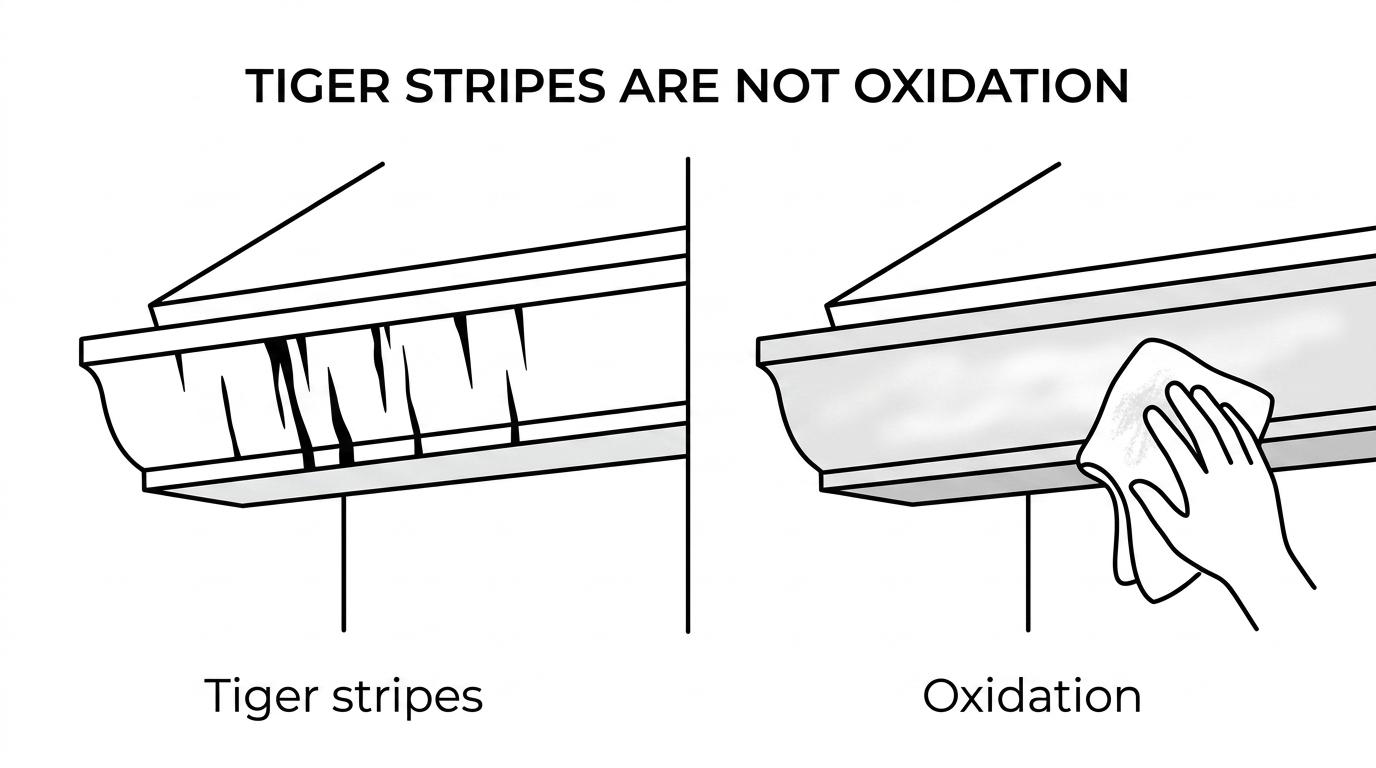
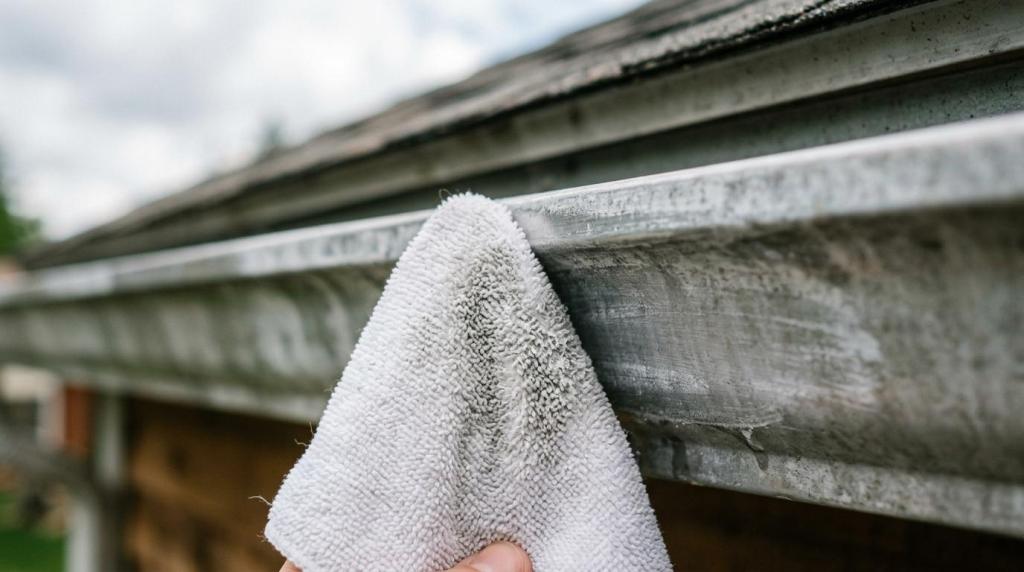
Start with the pattern. If the marks are narrow, dark, and streaking downward, they are often bonded roof residue. If the finish looks faded or powdery across larger sections, oxidation is more likely. You can also do a gentle wipe test with a damp white cloth on an inconspicuous spot. If you see a chalky transfer, that suggests oxidized aluminum.
If the stain looks black but the surface underneath remains dull after cleaning, you may have both conditions at once. That is common on older gutters. One reason homeowners get mixed results is that they remove the streak residue but are left with an oxidized finish that still looks tired.
How do you test a cleaner safely on aluminum gutters?
The safe way to test a cleaner is to patch-test a small hidden section, use short dwell time, rinse fast, and inspect for darkening or finish change. Washington State University Extension and New Mexico State University both point to real risks from harsh alkalinity on aluminum.
First, choose a low-visibility area near a downspout or side elevation. Wet the surrounding surface lightly so chemistry does not grab a dry, hot panel. Apply the mildest cleaner you think might work, then use a soft cloth or non-abrasive pad with light pressure.
Wait only briefly. If the product flashes dry, stop and rinse. Then inspect after rinsing and again after the area dries. If you see darkening, uneven sheen, or a rough feel, do not keep going. Common misconception: if a cleaner works fast on concrete, it should work fast on gutters. Aluminum is far less forgiving.
WSU Extension notes that lightly oxidized unfinished aluminum can be cleaned with vinegar mixed into warm water and wiped with a cloth or sponge. That does not mean vinegar is the answer for every painted gutter, but it shows the general rule: start mild, verify compatibility, then scale up only if needed.
What cleaning methods work best for black streak residue?
Black streak residue usually responds best to targeted chemical cleaning plus light agitation, not brute-force pressure. Asphalt and tar films bond tightly to aluminum, so ordinary house wash soap may leave visible lines behind.
This is where many DIY jobs stall out. A general-purpose detergent can remove loose soil but not the bonded streak. A dedicated gutter-brightening or stripe-removal approach is often needed, followed by soft agitation and thorough rinsing. If the residue softens but does not lift cleanly, more dwell time may help. More pressure usually is not the fix.
Trade-offs matter. Stronger chemistry may remove stripes faster, but it also raises the chance of finish issues if the product is too alkaline or left on for too long. If the gutter is older, sun-faded, or already oxidized, the stain may come off while the gutter still looks uneven.
Is cleaning black streaks the same as cleaning oxidation?
No. Tar residue and aluminum oxidation need different tactics, and treating them as the same problem can produce poor results or surface damage.
Tiger stripes sit on or bond to the surface. Oxidation is the surface changing. That means the first problem is often about residue removal, while the second is about how far you can improve an aged finish without harming it. If you use a residue-focused cleaner on oxidation alone, you may do a lot of work for little visual change. If you use aggressive chemistry on oxidized aluminum, you may darken or dull it.
New Mexico State University warns that sodium metasilicate can attack stubborn exterior soils but is corrosive to aluminum, and prolonged exposure to alkalis can darken aluminum. Pro tip: if your gutter has a whitish patina but very little dark streaking, a black-streak product may not be your main answer.
Should you use DIY cleaners or hire a professional gutter whitening service?
DIY can work for light oxidation or small isolated marks, but heavy tiger stripes on visible aluminum gutters are usually safer in professional hands. Elevation Power Washing is a useful example because method selection matters more than simple pressure.
DIY makes sense when the gutters are easy to reach, the staining is limited, and you are willing to patch-test carefully. Professional service makes more sense when the home is tall, the gutters are prominent, the finish is delicate, or multiple stain types are present at once. If ladder safety is a concern, that alone can decide it.
"Elevation Power Washing uses pressure washing and soft washing in Lexington, SC, which matters because gutter whitening often requires low-pressure chemistry and spot treatment rather than brute force."
The strongest argument for hiring out is not speed. It is risk control. A trained crew can separate roof runoff staining from oxidation, protect adjacent windows and trim, and stop before a cleaner crosses the line from effective to damaging.
How do professionals whiten gutters without harming nearby surfaces?
Professionals whiten gutters by inspecting first, pre-wetting sensitive areas, choosing aluminum-safe chemistry, agitating only as needed, and rinsing thoroughly. The process is controlled cleaning, not simple blasting.
A typical workflow starts with identification. Is the issue tar and asphalt residue, oxidation, or both? Next comes site protection. That can include wetting plants, controlling runoff, and accounting for painted trim, glass, and masonry below the work area.
Then the technician applies the least aggressive chemistry likely to work, usually at low pressure, and treats the face of the gutter directly. Mechanical action stays limited. Soft cloths, brushes, or pads often do more good than pressure tips on visible metal surfaces. That process is why a Midlands service like Elevation Power Washing may pair soft washing, spot treatment, and thorough rinsing instead of relying on a single house wash mix.
The final step is verification in dry light. A gutter can look clean when wet and still show oxidation once dry. That last inspection sets realistic expectations before the crew leaves.
When will gutter whitening improve appearance, and when is replacement smarter?
Whitening is usually worth it when the gutter is structurally sound and the finish is mostly intact. Replacement is usually smarter when oxidation, paint failure, or pitting has crossed from cosmetic to material deterioration.
A cleaned gutter can still show age. That is normal. What you are really judging is whether the visual improvement is enough relative to the cost and risk of replacement.
Use this rule of thumb:
- Whitening makes sense: intact aluminum, limited oxidation, heavy streaking, good attachment, no major dents
- Replacement is smarter: flaking finish, deep pitting, leaks at joints, bent sections, repeated overflow, severe uneven fading
If the gutter is on a high-visibility front elevation, even a partial improvement can be worth it. If the metal has begun to fail, cosmetic work may only delay the obvious.
How do you keep gutters whiter longer after cleaning?
You keep gutters whiter longer by reducing roof runoff residue, cleaning on a sensible schedule, and addressing oxidation early. Maintenance works best before tiger stripes fully set.
Start with basic gutter care. Clear internal debris so water does not overflow and drag grime across the face. Then monitor the front runs that sit below asphalt shingles, since those are the most common places for tiger stripes to return. A light maintenance clean is usually easier than a full restoration after seasons of buildup.
If the home sits near red clay, pollen-heavy tree cover, or busy roads, expect faster re-soiling. In those cases, a recurring exterior cleaning plan often preserves appearance better than waiting for severe contrast to build. Pro tip: if you notice chalkiness increasing year to year, deal with it early. Oxidation rarely looks better after being ignored.
For homeowners who care about curb appeal, the main takeaway is simple: gutter whitening is not just “washing the gutters.” It is identifying whether aluminum has bonded roof residue, a protective oxide film, or both, then choosing a method that improves the finish without creating fresh damage.