
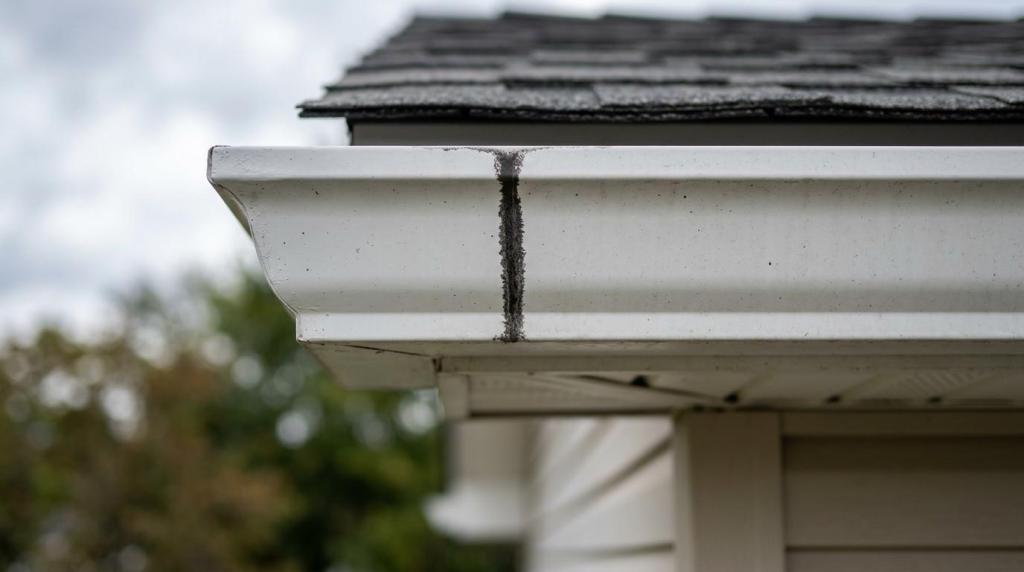
Clean gutters can still look neglected from the street.
That is the frustrating part about black gutter stripes. A home may be freshly washed, the landscaping may be tidy, and the roofline may still show dark vertical streaks that make the whole exterior seem older than it is. Many property owners assume the stripes are just dirt and that a stronger rinse will take care of them. In most cases, that is not what is happening.
These marks are usually a runoff problem, not a simple surface-dust problem. If the source of the residue is still active, the stripes often return even after the gutters are cleaned. That is why gutter whitening exists as its own service. It focuses on restoring the outside face of the gutter while also recognizing that the staining cycle starts higher up and often continues inside the gutter system.
What black gutter stripes actually are
Black gutter stripes are often called tiger stripes in the exterior cleaning trade. The name fits. They usually appear as narrow dark lines running down the front of aluminum gutters, especially below the roof edge where water repeatedly flows.
What makes them stubborn is the way they form. Rainwater moves across shingles and roof edges, picks up residue, and carries that material onto the gutter face. Over time, that runoff leaves behind a stain that bonds to the painted finish rather than sitting loosely on top of it. That bond is a big reason basic washing falls short.
The runoff can carry a surprising mix of material:
- fine shingle grit
- asphalt oils
- algae residue
- pollen and airborne pollutants
- grime from repeated stormwater flow
This pattern fits a broader runoff principle recognized by the EPA: stormwater picks up pollutants as it travels, and long-term control works best when the source is addressed, not just the place where the residue becomes visible.
Why roof runoff keeps recreating gutter stains
A gutter does not create black stripes by itself. The gutter is the landing zone.
Each storm sends new water across the roof and into the gutter line. If that water is carrying organic matter, shingle residue, or oily film, the same streaking process starts again. The visible stain on the outer face is only the final stage of that path.
That helps explain why many gutters look better right after cleaning, then gradually darken again. The outside face was treated, but the runoff path above it kept feeding the same problem. When roof discoloration, debris near the drip edge, or biological growth remains in place, the staining cycle is still active.
Homes in shaded areas often see this happen faster. Tree cover can add more debris, keep surfaces damp longer, and create conditions where residue builds up more quickly. In Lexington, SC and across the Midlands, warm weather, humidity, pollen, and frequent rain events can keep that cycle moving for much of the year.
Why pressure washing usually fails on black gutter stripes
Pressure washing sounds like the obvious fix. It is strong, fast, and visibly effective on many exterior surfaces. Gutters are different.
Because these stripes are bonded to the finish, high pressure often removes less stain than expected while putting the painted surface at risk. A gutter may come out cleaner in a general sense but still show the dark lines. In worse cases, the finish can look duller or chalkier after aggressive washing.
That is why gutter whitening is usually treated as a specialized restoration step rather than a standard pressure washing task. The goal is to break down the bonded staining on the outside face without damaging the gutter material.
A simple comparison makes the difference clearer:
| Cleaning approach | What it can help with | What it often misses | Common result |
|---|---|---|---|
| Basic rinsing | Loose dust, fresh debris | Bonded tiger stripes | Gutters still look streaked |
| High-pressure washing | Surface grime on durable areas | Deep bonded staining on painted gutters | Partial improvement, possible finish wear |
| Gutter whitening | Black streaks on the outside face | Interior clogs if done alone | Brighter appearance, but recurrence remains possible |
| Interior gutter cleaning plus whitening | Visible stripes and drainage issues | Active roof runoff sources if ignored | Better appearance and better control of repeat staining |
The key point is simple: visible streaks and hidden drainage conditions are connected.
How gutter whitening and gutter cleaning work together
Gutter whitening focuses on the exterior appearance of the gutters. It targets the dark bonded residue that ordinary washing leaves behind. When done properly, it can make the gutter line look dramatically cleaner and restore the crisp contrast that frames the roof and siding.
Still, whitening by itself is only one part of the answer. If the inside of the gutter is packed with leaves, mud, granules, and wet organic buildup, water flow becomes less predictable. Instead of moving cleanly to the downspouts, water may back up, creep forward, and spill over the front lip. Every overflow event increases the chance of new staining on the outer face.
A more complete approach looks at the system in stages:
- Outside gutter face: remove bonded staining and brighten the visible finish
- Inside gutter trough: clear debris that traps runoff and encourages overflow
- Downspouts: restore drainage so water exits properly
- Runoff path above the gutter: check for active roof-edge residue that keeps feeding stains
This is where gutter cleaning and gutter whitening complement each other. One addresses the appearance. The other addresses the conditions that help the appearance break down again.
Overflow events make black gutter stripes worse
When gutters clog, water no longer follows the intended path. If that water is carrying organic matter, shingle residue, or oily film, the same streaking process starts again. The visible stain on the outer face is only the final stage of that path.
When gutters clog, water no longer follows the intended path. It may pour over the front edge in sheets or small repeated streams. As that happens, the runoff drags debris and roof residue across the exact surface homeowners want to keep clean. That repeated wash-over can darken the face of the gutter faster than normal rainfall alone.
Even a gutter that has already been whitened can start showing renewed striping when overflow becomes common. That is why properties with frequent clogs often feel like they are stuck in a loop: clean the stripe, get a little relief, then watch it come back after heavy rain.
A one-time cosmetic fix can improve curb appeal for a while. A source-aware plan lasts longer.
Why Lexington SC gutters often need recurring care
The Midlands climate can be tough on exterior surfaces. Spring pollen, summer humidity, shaded roof sections, and regular rain all add pressure to the gutter system. A property near mature trees may collect debris faster, while a roof that gets limited sun can hold moisture longer and contribute more runoff residue.
That does not mean black gutter stripes are unavoidable. It means expectations should be realistic. Some homes will need periodic whitening because the conditions around them naturally create more runoff staining.
A yearly schedule is often a smart baseline, especially for properties with heavy tree cover or recurring discoloration. Some need less. Some need more attention after strong seasonal buildup.
For homeowners and business owners in Lexington, Columbia, Irmo, Chapin, West Columbia, Cayce, Blythewood, Elgin, Gilbert, Batesburg-Leesville, Prosperity, and nearby Midlands communities, local climate knowledge matters. Service timing, cleaning method, and runoff patterns are not abstract details. They directly affect how long the results hold.
What a quality gutter whitening service should address
If a service only promises to spray the outside and leave, it may improve the look for a short time while missing the reason the stripes keep returning.
A stronger service plan should account for both the stain and the water path that created it. That is especially true when the goal is longer-lasting curb appeal rather than a quick visual reset.
Look for a process that includes these priorities:
- bonded stain removal
- safe treatment for painted gutter surfaces
- interior gutter cleaning when needed
- downspout flow checks
- realistic guidance on recurrence
When a company offers both gutter cleaning and gutter whitening, that pairing usually reflects a better grasp of the problem. Elevation Power Washing, which serves Lexington and surrounding Midlands towns, lists gutter cleaning and whitening among its exterior cleaning services. That kind of service pairing makes sense because the issue rarely lives only on the visible face of the gutter.
Signs your gutters need more than a rinse
Sometimes the clues are obvious. Sometimes they are easy to miss until the stripes become hard to ignore from the curb.
If any of these are happening, a rinse alone is unlikely to do the job:
- Dark vertical lines remain after rain: the stain is likely bonded, not loose dirt
- Water spills over during storms: interior buildup may be feeding new staining
- Roof edges look discolored: the runoff source may still be active
- Stripes return soon after cleaning: the visible surface was treated, but the source path was not
Those signs point back to the same idea: black gutter stripes are usually a repeat-runoff issue.
How to get longer-lasting results from gutter whitening
The best results come from treating the gutter line as a system, not a single surface. Clean the outside face, yes. Also keep the interior channels flowing, reduce overflow, and pay attention to roof-edge runoff that continues to drop residue onto the gutters.
That approach is practical, not excessive. It saves repeat effort and protects the appearance of the whole property. Clean gutters frame the roofline, sharpen curb appeal, and make the exterior look cared for in a way people notice right away.
For many properties, the smartest plan is simple: schedule inside gutter cleaning before drainage problems build up, use gutter whitening when the outer face loses brightness, and keep an eye on roof runoff patterns after major pollen seasons and storm cycles.